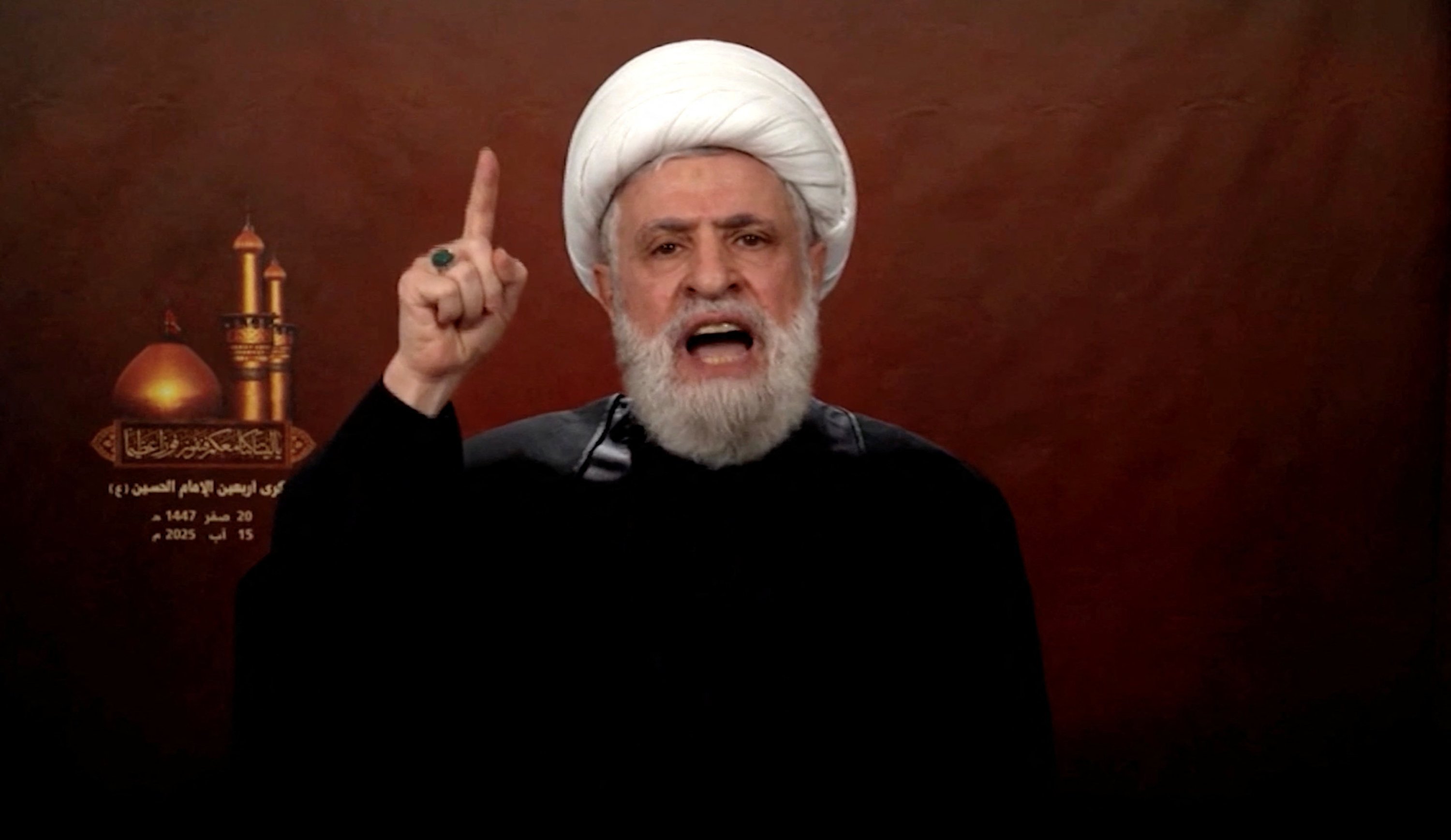
Hezbollah leader Naim Qassem warned that a Lebanese government plan to disarm his Iran-backed group could trigger a new civil war.
Earlier this month, the government tasked the army to draw up the plan by Aug. 31, and approved the "objectives" outlined in a U.S. proposal concerning Hezbollah's disarmament.
Qasim on Friday lashed out at the government, holding it responsible for potential unrest in the country that experienced a 15-year civil war starting in 1975.
"This government is implementing an American-Israeli order on terminating the resistance even if this leads to a civil war and internal sedition," he said in a televised address.
"The government has taken a very dangerous decision violating the charter of co-existence and it [the government] is exposing the country to a big crisis."
Qasim vowed that his group would not hand over its weapons while Israel continues attacks on Lebanon.
The issue of Hezbollah's weapons has long been a flashpoint in Lebanese politics.
Supporters view the group's arsenal as essential for defence against Israel, while opponents argue it undermines state sovereignty and risks dragging Lebanon into conflict.
On Friday, Qasim said Hezbollah and its ally, the Amal movement, had agreed to delay street protests, which could reach the U.S. embassy, against the disarmament plan to allow for discussion with the government
"There would be no life for Lebanon if you stand on the other side," he said.
In response, Lebanese Prime Minister Nawaf Salam rejected what he described as Qasim's veiled threat of civil war.
"No one in Lebanon today wants civil war. Threats and brandishing them are completely rejected," he said on the social media platform X.
Salam defended his government's decisions, saying they are purely Lebanese without foreign dictates.
"There is no party in Lebanon authorized to carry weapons outside the Lebanese state's control," he added.
Last year, Israel invaded southern Lebanon and unleashed deadly airstrikes against Hezbollah's stronghold in Beirut. In September, it killed long-time Hezbollah leader Hassan Nasrallah while he was meeting with other Hezbollah officials underground.
While the militia emerged militarily weakened from the fighting, Hezbollah is believed to still wield significant support among the Shiites in multi-confessional Lebanon.
A cease-fire has been in place between Israel and Hezbollah since late November, but both sides have since accused each other of violations.
Israel attacks its neighbour on an almost daily basis.