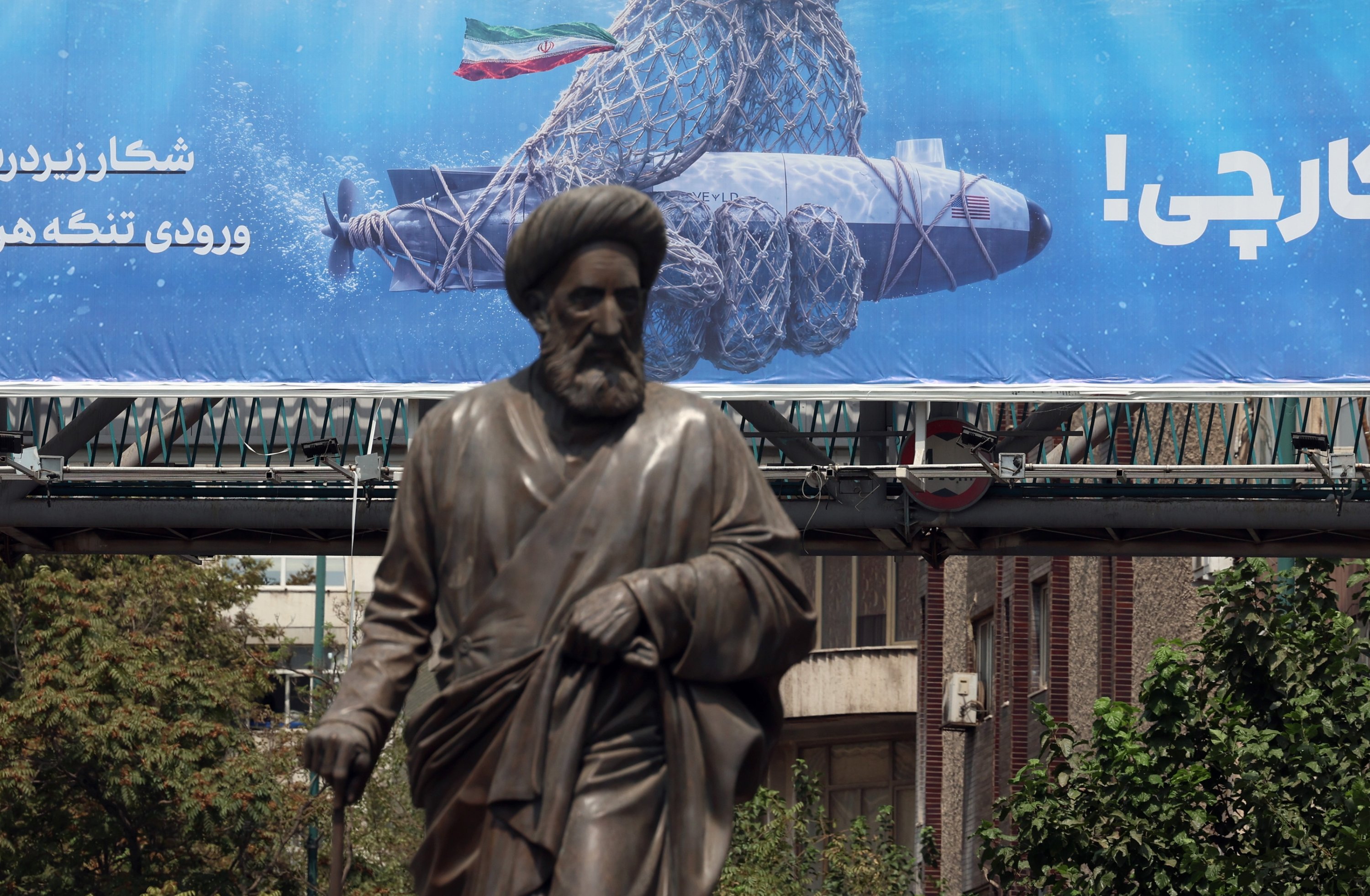
Tensions in the Strait of Hormuz climbed further Sunday when an Iranian cargo vessel was struck off Qeshm Island, killing one person and wounding four others, Iranian state media reported.
The attack comes a day before Tehran was due to brief regional countries on its efforts to manage shipping traffic in the contested waterway.
The events were a deadly reminder of the underlying challenge to global shipping even as attention turns to a new threat, with Iran-backed Houthi rebels in Yemen now perched on the Bab el-Mandeb Strait in the Red Sea.
State-run IRNA news agency quoted the Qeshm governor as blaming a "terrorist enemy." There was no immediate comment by the U.S. military, which has struck Iranian-flagged vessels during its blockade of Iranian ports – while facing a new threat from Iranian ballistic missiles launched at its warships.
Separately, the United Kingdom Maritime Trade Operations monitor said a vessel was hit by a projectile while transiting the strait, later adding that a fire had broken out and local authorities were evacuating those on board.
Qeshm Island, about 14 miles (22 kilometers) from the port city of Bandar Abbas , is key to Iran asserting control over the Strait of Hormuz.
Hours before the attack, Iran's government remained defiant. "Our people can’t be bullied into submission. Iran won’t surrender," President Masoud Pezeshkian said in a U.S.-aimed social media post.
Monday's meeting returns regional attention to the Strait of Hormuz days after the Houthis swept down Yemen's Red Sea coast to apply new pressure to a growing alternative for global shipping.
While the Houthis say they are targeting only neighboring Saudi Arabia, which backs Yemen’s internationally recognized government fighting the rebels, markets are wary.
Global prices of oil, natural gas and related products have been sent even higher.
Commercial ship traffic remains low in the Strait of Hormuz as attacks continue on what was seen as an international waterway before the U.S. and Israel launched the war on Feb. 28.
The U.S. has asserted that plenty of oil is getting out as its military helps to guide ships along Oman's coast, at the risk of attack.
Iran has said foreign ministers from regional countries will meet Monday to discuss efforts by Iran and Oman, located on the other side of the Strait of Hormuz, to manage shipping on it. However, Bahrain has already said it will not attend, citing a lack of diplomatic relations with Tehran.
It was not clear what other nations would be there and there was no new statement from Iran Sunday.
Since early in the war, Iran has expressed interest in having ships pay fees for transit. It has said traffic into the Persian Gulf would pass through Iranian waters, while the outbound route would pass partly through Iranian waters and partly through Oman’s.
But Iran has said reaching an agreement with Oman on the strait doesn’t mean it will open for shipping. "The waterway would be opened up on the condition that the U.S. will terminate its blockade," Iran's president told broadcaster India Today TV on Saturday.
There was some measure of optimism in the region about the planned meeting, with hope that Gulf nations might use it to assert a collective response to a war they had no part in starting. For months, they have faced Iranian attacks that Tehran has claimed target U.S. military assets on their lands.
"Oman is hoping that by presenting this agreement with a reasonable level of regional buy-in, the Trump administration will be forced to recognize that the future of the strait will be decided by regional countries,” Esfandyar Batmanghelidj, who heads the Bourse & Bazaar Foundation, a think tank focused on Iran’s economy, said on social media.
Overnight, the Houthis claimed more attacks with missiles and drones on Saudi Arabia, which supports Yemen's internationally recognized government that's been fighting the rebels.
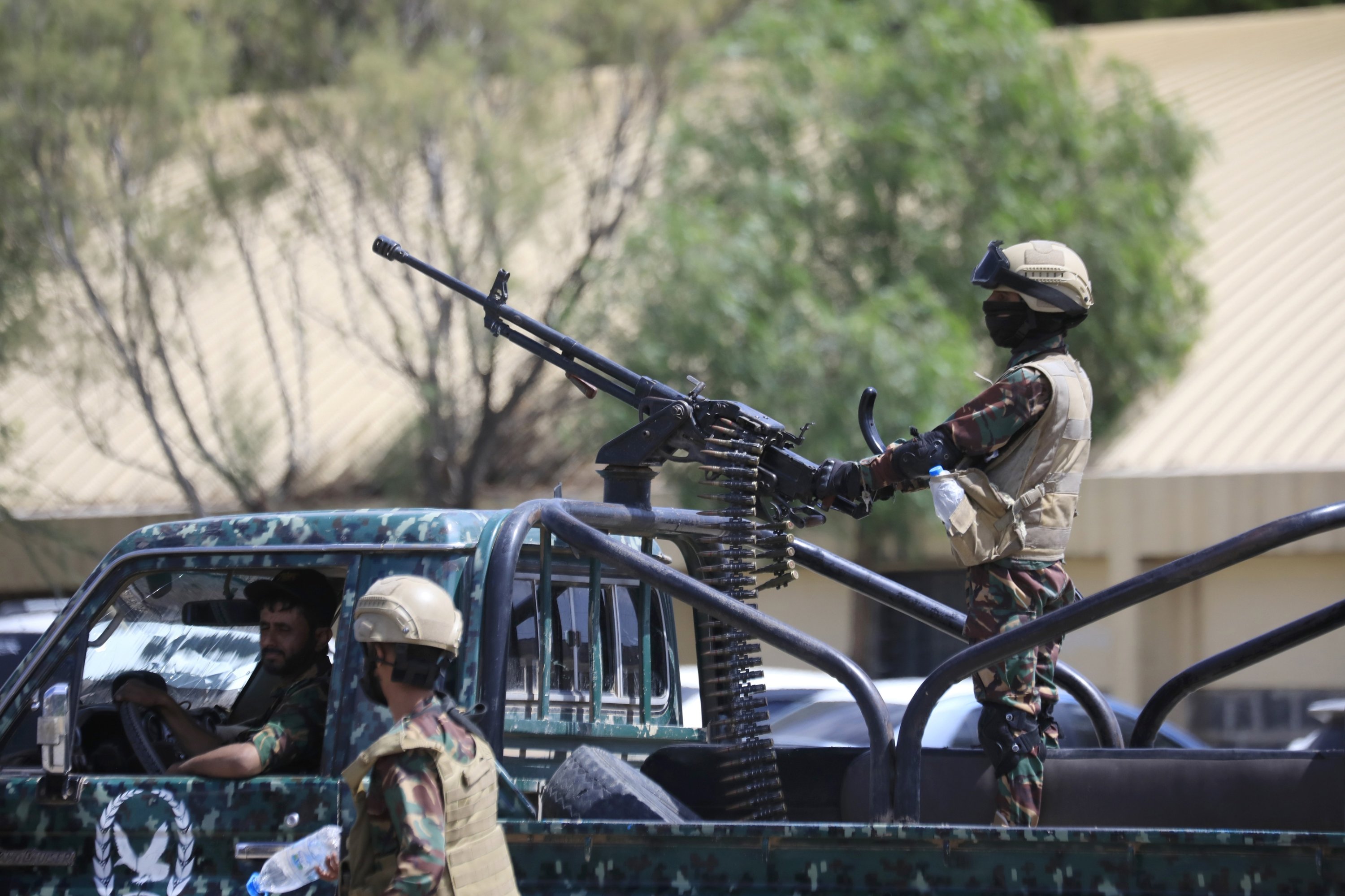
A Houthi military spokesperson, Brig. Gen. Yahya Saree, claimed in a statement that they targeted a military base in Sharurah province in Saudi Arabia's Najran region. He didn't provide evidence or say when the attack occurred.
The Saudi civil defense overnight said a projectile fell in al-Tawwal governorate near the border with Yemen along the Red Sea, injuring two people and damaging a mosque and several other buildings.
The statement blamed the Houthis. It also said sirens went off in Sharurah province but didn't report casualties or damage.
There was no Saudi statement Sunday on any new attacks targeting the Houthis, who have been hitting Saudi oil infrastructure and shipping as part of a recently declared blockade.
Their capture of a key port city and an island on the Bab el-Mandeb Strait, a crucial shipping alternative to the Strait of Hormuz, in recent days has alarmed markets and Yemeni civilians who fear a return to devastating civil war.
A senior government official in Yemen said its forces will return to the Red Sea coast and fight back, after people fleeing the Houthi advance told The Associated Press they saw forces withdrawing and urging people to run.
Sultan al-Arada, a member of the ruling presidential council, described the collapse of government forces in the port city of Mokha and elsewhere on Yemen's west coast as "painful and regrettable."
Al-Arada, also governor of central Marib province, said in the televised interview aired late Saturday that forces "are currently regrouping and will return to the battle in one form or another."
On Friday, a senior military official with Yemen's internationally recognized government blamed "lack of coordination" between Yemen's army and multiple allied militias, saying it gave the Houthis "a priceless opportunity."
The official, who spoke on condition of anonymity because he wasn't allowed to speak to the media, also said they were stunned that the Saudi air force didn't act to prevent the capture of Mokha, about 80 kilometers from the strait.
The National Resistance, a government-allied force, said more than 500 government fighters were killed on the west coast over the past four weeks.
In its first comprehensive toll, the force, which had controlled the coastal areas including Mokha, said about 1,500 others were wounded in the fighting against the Houthis since Aug. 9.
It said in a statement that more than 1,000 Houthis were killed on multiple front lines in the provinces of Hodeida and Taiz.
The National Resistance, which is commanded by Tariq Saleh, a nephew of Yemen's late leader Ali Abdullah Saleh, vowed to fight back, saying that it will "continue its struggle within the ranks of the armed forces ... (until) Yemen is liberated from Iran's proxies."
The rebels' rapid advance has been a major setback both to Yemen's internationally recognized government and Saudi Arabia, which have been battling the Houthis for 12 years. The latest escalation has ended a ceasefire that had largely stopped fighting across Yemen since 2022.
The advance also puts the Iran-backed rebels just 32 kilometers from the U.S. military base in Djibouti, on the other side of the Bab el-Mandeb. It's the main U.S. base in Africa and one of several foreign military bases in Djibouti, including those of China, France and Japan.
The small Horn of Africa nation is already seeing the arrival of Yemenis making the perilous crossing of the strait. More than 2,000 people have reached Djibouti, the International Organization for Migration said Sunday.
Djibouti's Economy and Finance Minister Ilyas M. Dawaleh, said on X that the country's navy, coast guard and other specialized agencies were conducting rescue operations and providing emergency assistance.