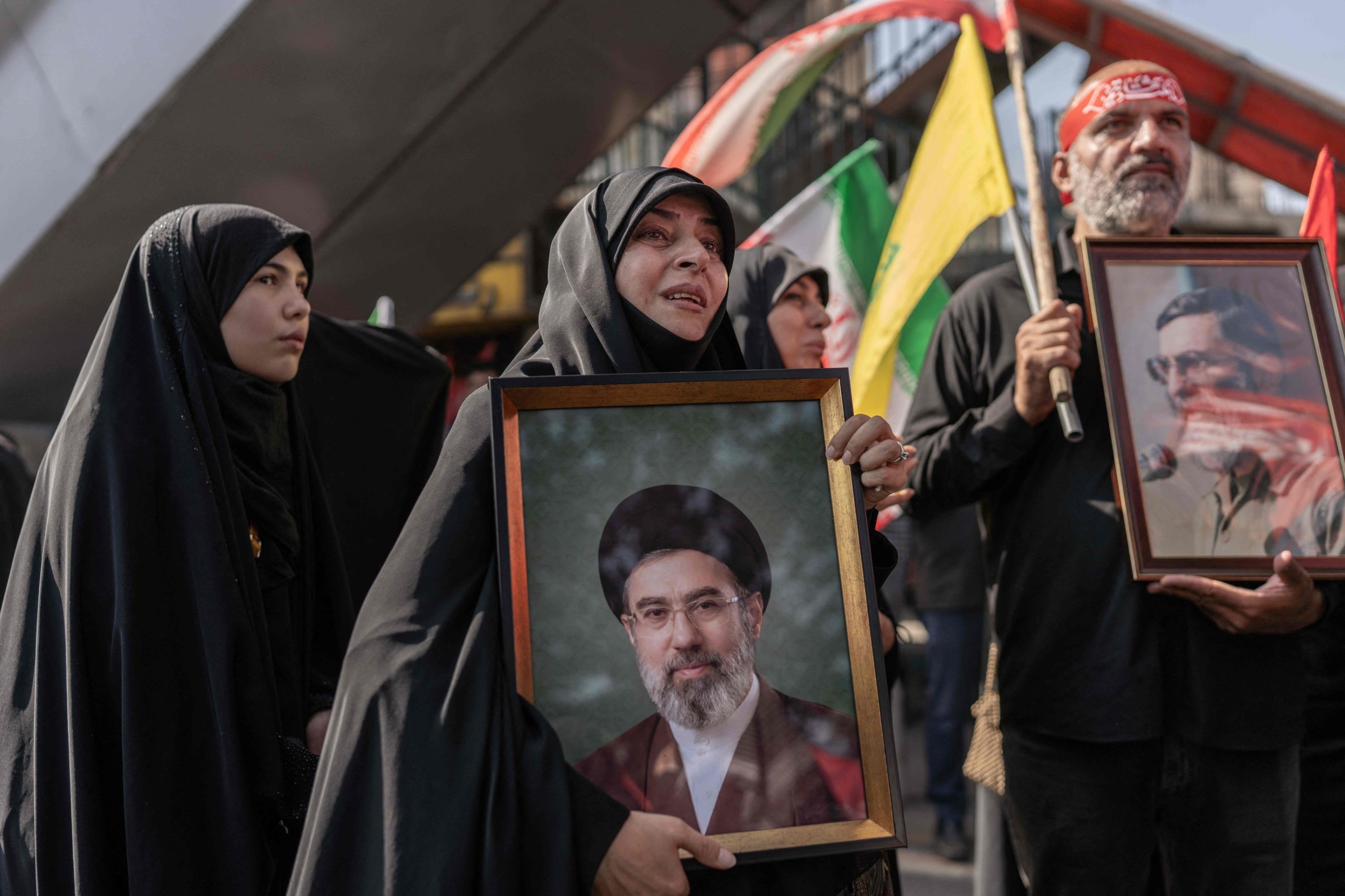
Six months after the airstrikes that triggered the war and thrust a badly wounded Mojtaba Khamenei into the role of Iran’s supreme leader, he remains almost completely absent from public view, creating an unusual vacuum at the center of the country’s leadership.
Questions about Khamenei’s health and ability to govern are becoming increasingly sensitive as Iran faces critical decisions over a war that has destabilized the Middle East and further battered its already fragile economy.
Iranian officials and senior sources familiar with the leadership say Khamenei remains firmly in control, governing largely from the shadows because of security concerns while recovering from injuries that have reportedly left him disfigured.
They say he has delegated much of the day-to-day running of the country to a small group of senior officials.
But Khamenei has not appeared in a photograph or video, nor has he delivered a recorded audio message, since he was appointed supreme leader about a week into the war. His prolonged absence has fueled growing skepticism among Iranians in a political system where the supreme leader is expected to project authority and remain the ultimate voice on matters of state.
“The question is no longer whether Mojtaba is alive, but whether Iran still has a functioning supreme leader,” said Alex Vatanka of the Middle East Institute in Washington.
Khamenei has communicated with the Iranian public only through a small number of written statements read by state broadcasters. He was also notably absent from the elaborate weeklong funeral rites held for his father last month, further intensifying speculation about his health and whereabouts.
Iranian officials and insiders attribute his continued absence to fears of assassination. They insist, however, that he remains actively involved in governing, holding frequent meetings with senior officials, receiving reports on major developments and making the final decisions on key national issues.
President Masoud Pezeshkian said Aug. 10 that he had held a seven-hour meeting with Khamenei.
But even among the Islamic Republic’s most hard-line supporters, doubts are creeping in.
“We need to hear our leader’s voice, or see any sign that he is there on top and leading the country to give us more confidence,” said a member of the Basij volunteer militia in Qom, the seminary city at the heart of Iran’s theocratic state.
The Basij member, who requested anonymity to discuss such a sensitive subject, said he believed Khamenei was still making key decisions. But he said the lack of even a photograph was damaging morale and not in Iran’s interest.
Among Iranians who oppose the ruling hierarchy or want broad reforms, the message is blunter.
“How do we know that Mojtaba has not been killed?” said Shahrokh, a pro-reform businessman in Tehran who also requested anonymity.
“It is not logical that there is not a single sign proving he is alive, let alone evidence that he is involved in decision-making,” he added.
Iran has weathered six months of war with its most powerful enemies to emerge battered but still standing. Its political system has held. Its military retains the ability to choke off global energy supplies and strike U.S. Gulf allies.
The clerical establishment has shown it can absorb the loss of a supreme leader and senior commanders without collapsing, maintaining a political and military chain of command loyal to its theocratic ideology.
But Iran’s economy is buckling under the cost of the conflict and a months-long blockade of its oil exports, which has cratered the rial currency, risking a resumption of the mass protests that authorities crushed in January by killing thousands of demonstrators.
Meanwhile, the ruling establishment has reorganized around a clear imperative: preserve the state, restore deterrence and stop the economic fallout from destabilizing the country.
The Revolutionary Guards, long a powerful force, grew in influence from the start of the war and remain central to strategic thinking at the top of a reconfigured ruling system centered on the Supreme National Security Council, the sources said.
That upper echelon includes top Guards commanders as well as senior political figures such as Pezeshkian and parliament speaker Mohammad Baqer Qalibaf.
Several senior sources reached by Reuters in Iran said Khamenei was holding meetings with those top figures, was fully involved in deliberations and had the final say on all major questions.
A senior Iranian official said only a small number of officials retained direct contact with Khamenei in person and that no details about him had been published for fear of leaking information that could allow the U.S. to target him.
His health is meanwhile improving significantly, said a person close to Khamenei’s inner circle, describing him as sharp and involved in decision-making.
“Despite all the pressures, services to the people have not stopped. Our foreign policy line is unified and our decisions are coherent. All of this shows the supreme leader is in charge,” a second official said.
Even before the war, Khamenei preferred a backroom role as his father’s top aide, shunning public attention. His wounds in the early hours of Feb. 28, when Israel and the United States launched their war with airstrikes that killed his late father, disfigured his face, according to senior sources.
But now elevated to a role seen as conferring divine guidance, and at the country’s moment of greatest crisis since the 1979 revolution, such considerations look unconvincing.
“A genuine deal with Washington requires Mojtaba’s unmistakable approval and so does any decision to sustain a long and costly conflict with the United States,” said Vatanka.
“His prolonged absence has created a dangerous situation in which rival factions can all claim to know what the leader really wants,” he added.