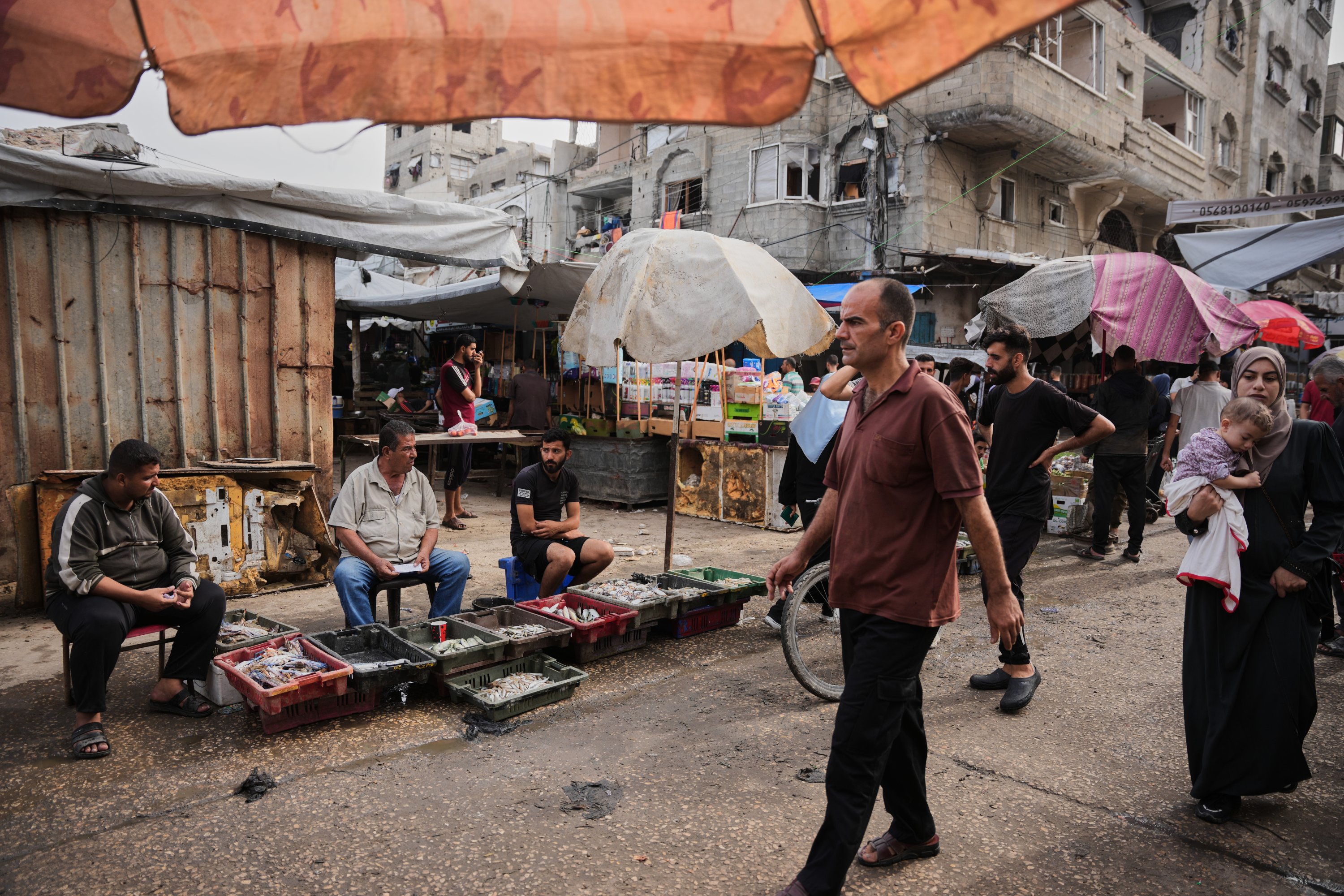
Israel has halted commercial shipments into Gaza for a second consecutive day, cutting off a vital source of food and other essential supplies as Palestinians face worsening hardship and prepare for winter.
Israeli authorities blamed the suspension on Palestinian merchants protesting taxes imposed by Hamas, but Gaza's private truckers union disputed that account, accusing Israel of imposing the restrictions itself.
The suspension threatens to disrupt supplies of fresh food, meat and winter clothing in the war-ravaged territory, where nearly 2 million people depend on goods entering through Israeli-controlled crossings.
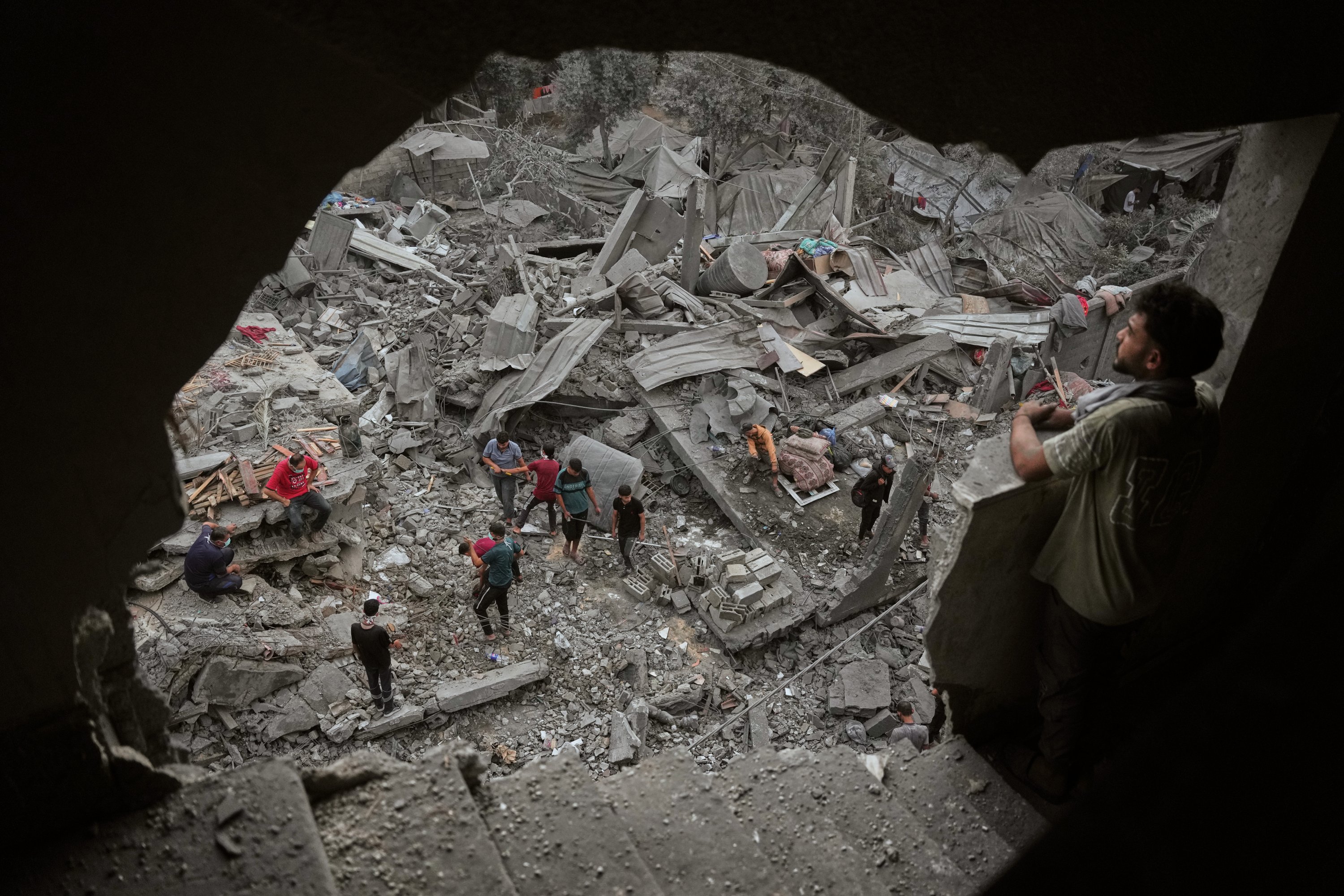
With access to Gaza tightly restricted, any interruption to commercial deliveries risks driving up prices and leaving families struggling to afford basic necessities.
Humanitarian organizations warn that aid deliveries alone cannot meet the population's needs.
While aid agencies generally supply staples such as flour, private merchants play a crucial role in bringing in perishable foods, including fruit and meat, according to data released earlier this year by COGAT, the Israeli military body responsible for coordinating humanitarian affairs in Gaza.
A functioning commercial market is also essential to keeping prices within reach for families who have already endured years of war, displacement and severe shortages.
"The humanitarian sector on its own cannot meet the needs of all the people," said Shaina Low, a spokesperson for the Norwegian Refugee Council. "The markets need to be functioning."
COGAT announced the suspension Wednesday, saying it had followed a decision by Palestinian merchants a day earlier to stop coordinating shipments because of Hamas-imposed charges and alleged threats against importers.
"We were prepared to coordinate the entry of their trucks as usual, but the vendors informed us that they were cancelling the coordination due to Hamas's taxation mechanism and threats against them," said Lt. Daniel Kantorovich, COGAT's deputy spokesperson. "The merchants don't want to bring goods into Gaza."
The agency said no private-sector vendors had attempted to bring goods into the territory since merchants notified Israeli authorities Tuesday.
But Nahed Sheheiber, head of Gaza's private truckers union, rejected Israel's explanation, saying Israeli restrictions, rather than a voluntary decision by merchants, were responsible for the suspension.
"The merchants are not the ones who stopped the shipments," Sheheiber said. "The Israeli coordinator is claiming that Gaza's merchants are responsible, but the truth is that the Israelis are the ones who imposed the restrictions."
Following COGAT's announcement, the union met with Gaza's Ministry of Economy to raise concerns that Israel was using fees charged by the ministry as a pretext to restrict commercial supplies.
Sheheiber said the ministry had asked merchants to pay 10,000 Israeli shekels, or about $3,226, for each truck entering Gaza. During the meeting, ministry Undersecretary Khaled Al-Raqab said the payment was not a tax but a donation intended to help pay civil servants in the territory.
The competing accounts leave uncertainty over the immediate cause of the halt, while the consequences for Gaza's already fragile supply network could be severe.
Israel has long accused Hamas of imposing fees on imported goods to finance its operations. However, the suspension places the immediate burden on Gaza's residents, who rely on shipments approved by Israeli authorities for much of their food and other essential supplies.
It also remains unclear whether aid agencies will be permitted to increase deliveries to offset the loss of commercial goods.
COGAT estimates that Gaza's population of roughly 2 million requires about 250 truckloads of goods each day. That figure is substantially below the minimum of 600 trucks per day stipulated under a ceasefire agreement brokered by the United States a year ago.
The suspension comes despite signs of improvement in Gaza's food security earlier this year. The world's leading authority on food insecurity reported that conditions had improved since famine was declared in the territory in August 2025, but remained at crisis levels, with most families still unable to obtain enough food.
The assessment warned that "even small disruptions to humanitarian access could rapidly reverse recent gains," underscoring the risks posed by the interruption of commercial deliveries.
For families already struggling to secure food, the loss of another supply channel could mean higher prices, fewer choices and greater difficulty obtaining essential goods as temperatures fall.
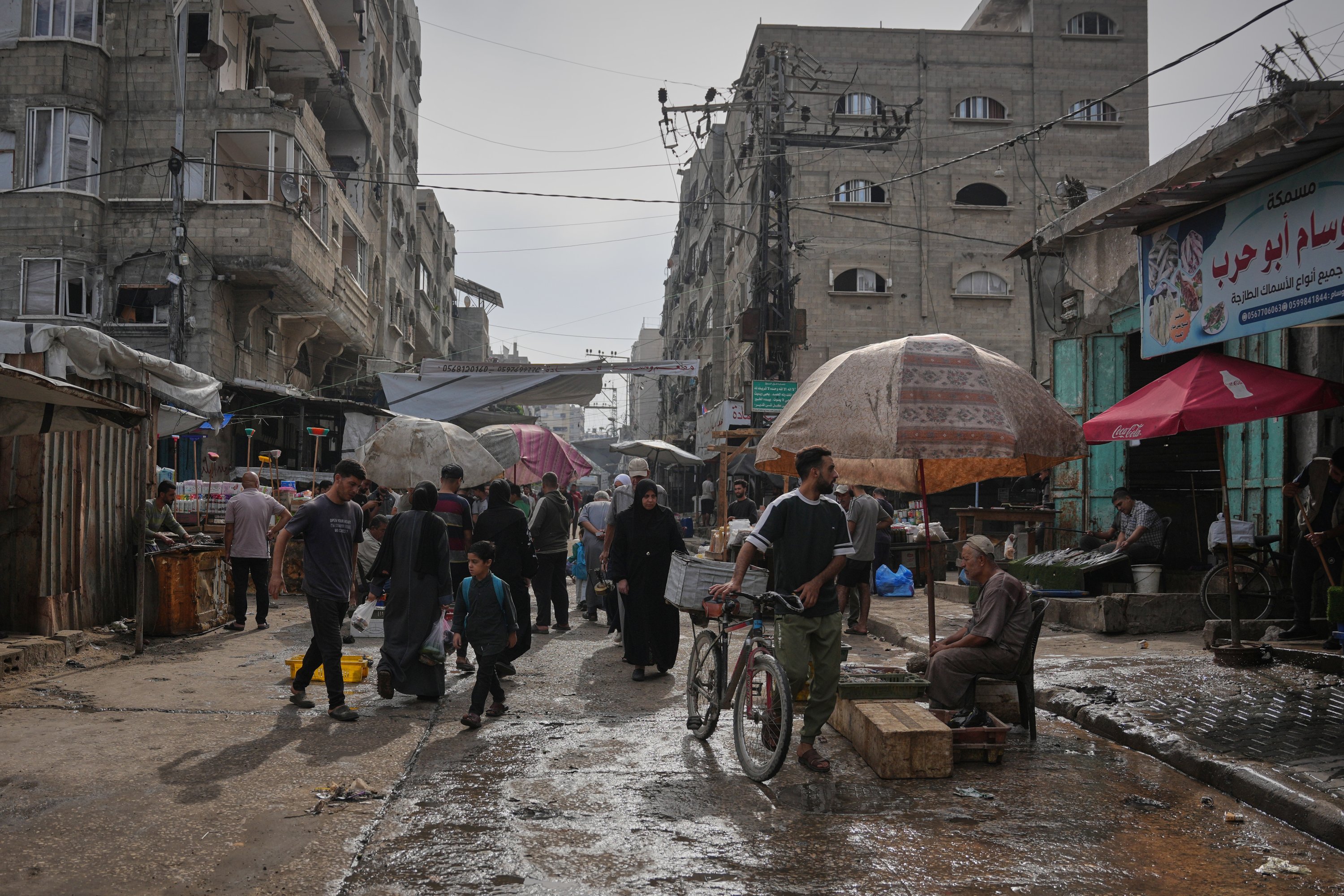
The restrictions also highlight Gaza's dependence on access controlled by Israel. Merchants coordinate with suppliers outside the territory, but their shipments must undergo Israeli military inspections before entering. That system leaves the enclave particularly vulnerable to decisions that interrupt the movement of goods.
The broader humanitarian crisis stems from the war that began Oct. 7, 2023, following Hamas' incursion into southern Israel that killed about 1,200 people in Israel and took 251 hostages.
Israel responded with an extensive bombardment and ground invasion that has killed more than 74,000 Palestinians, according to Gaza's Health Ministry.
The ministry says more than 1,400 Palestinians have been killed since the cease-fire took effect.
Women and children account for about half of those killed, according to the ministry.