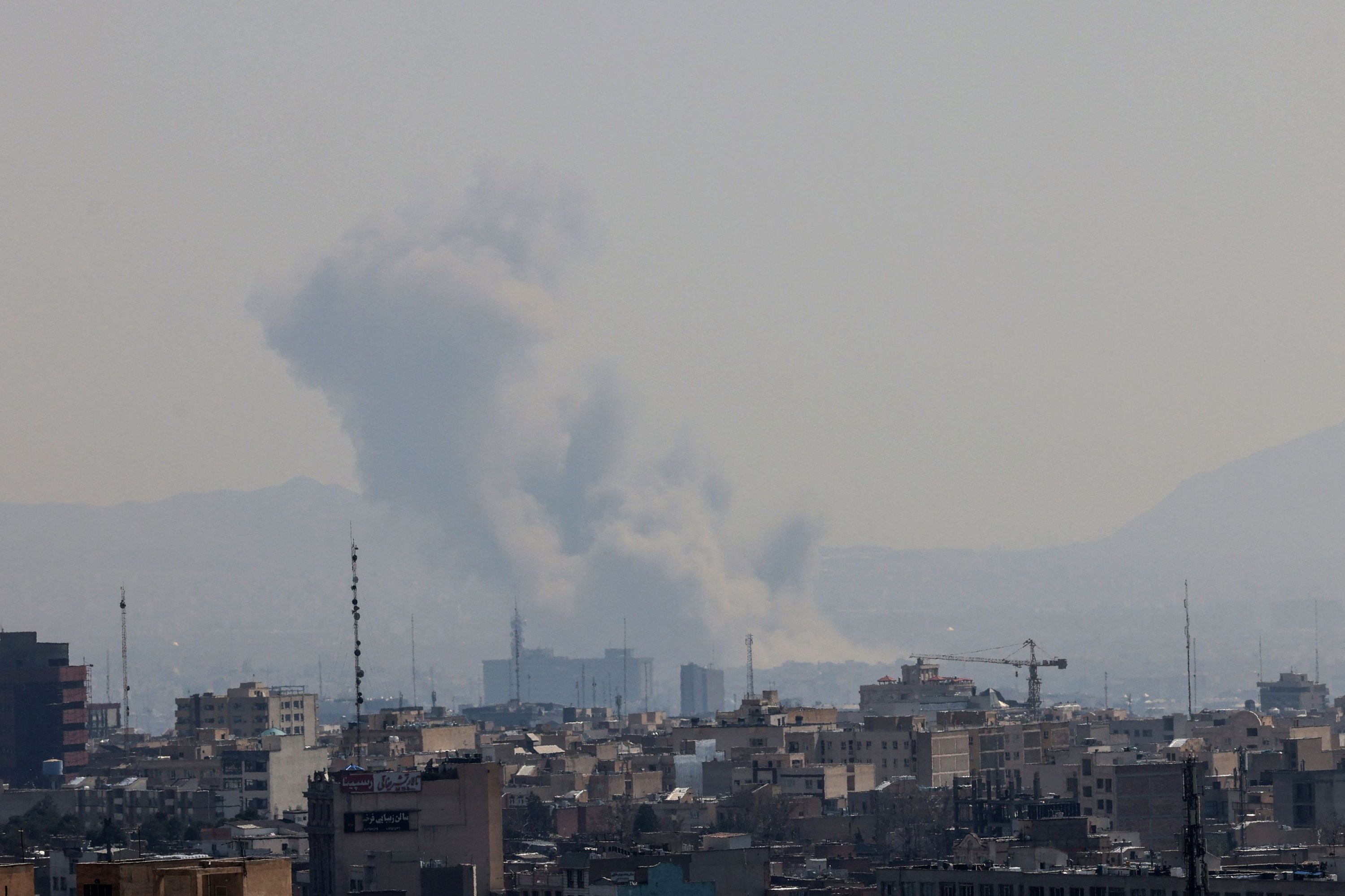
Israel and Iran exchanged fresh missile and airstrikes Friday, broadening a conflict that has killed thousands, disrupted energy markets, and deepened geopolitical tensions across the Middle East.
The escalation came a day after Tehran struck an Israeli oil refinery and following U.S. President Donald Trump’s warning that Israel must avoid attacks on Iran’s South Pars gas field, a key offshore facility shared with Qatar.
Israel said its strikes targeted the “infrastructure of the Iranian terror regime,” though details were sparse. Iran responded with barrages of missiles across Israel, triggering sirens in Tel Aviv and Jerusalem, while explosions echoed from air-defense interceptors.
In a parallel escalation, Israel expanded attacks to Syria, citing protection of the Druze population in southern Sweida province, and continued strikes against Hezbollah in Lebanon.
The war, which began Feb. 28 with a joint U.S.-Israeli campaign that killed Iran’s supreme leader and other top officials, has caused at least 1,300 deaths in Iran, 15 in Israel, and over 500 Hezbollah casualties.
More than 1 million residents in Lebanon have been displaced, while 13 U.S. service members have been killed, underscoring the conflict’s international reach.
Energy infrastructure has become a central battleground. Iran’s strikes on Qatar’s Ras Laffan Industrial City, processing roughly 20% of the world’s liquefied natural gas, have caused damage expected to take years to repair, forcing Qatar to declare force majeure on exports.
Kuwait’s Mina Al-Ahmadi oil refinery, capable of processing 730,000 barrels per day, was hit twice by Iranian drones, igniting fires that crews struggled to contain.
Saudi Arabia’s Red Sea port, a vital oil export hub, also sustained attacks.
Global oil prices spiked to $119 a barrel Thursday before easing slightly Friday after Western nations offered to secure shipping through the Strait of Hormuz and the U.S. announced measures to increase output.
The strikes highlighted Iran’s continued ability to extract a heavy toll for the U.S.-Israeli campaign, exposing vulnerabilities in Gulf air defenses and threatening energy markets worldwide.
Trump, facing domestic pressure from rising fuel costs ahead of November midterms, said he had warned Israeli Prime Minister Benjamin Netanyahu not to repeat strikes on energy infrastructure.
Netanyahu later confirmed Israel acted alone on South Pars, asserting Iran’s capability to produce ballistic missiles had been curtailed. Iran’s military rejected these claims, asserting missile production continues and promising further attacks on energy facilities until Israel’s campaign is fully countered.
Explosions were reported across Tehran, Dubai, and other Gulf cities Friday, coinciding with Nowruz and Eid al-Fitr celebrations.
Iranian Supreme Leader Ayatollah Mojtaba Khamenei warned enemies must have their “security taken away,” signaling no imminent de-escalation.
In Lebanon, the UAE disrupted a network linked to Hezbollah and Iran, arresting five men accused of laundering money to finance operations in the region.
European and other Western powers have pledged limited support.
Britain, Canada, France, Germany, Italy, the Netherlands, and Japan issued a joint statement promising assistance to secure shipping routes and stabilize energy markets.
However, European leaders emphasized reluctance to intervene directly in a conflict they did not seek and over which they exercise limited control.
French President Emmanuel Macron called de-escalation and defending international law “the best we can do,” while German Chancellor Friedrich Merz said any action would follow the cessation of hostilities.
Analysts say the war has strengthened Netanyahu domestically while creating political and economic pressure for Trump, whose Gulf allies face rising risk from continued hostilities.
The conflict has reshaped regional alliances, underlined Iran’s capacity to leverage energy infrastructure for strategic gains, and exposed the limitations of air defenses in protecting critical Gulf assets.