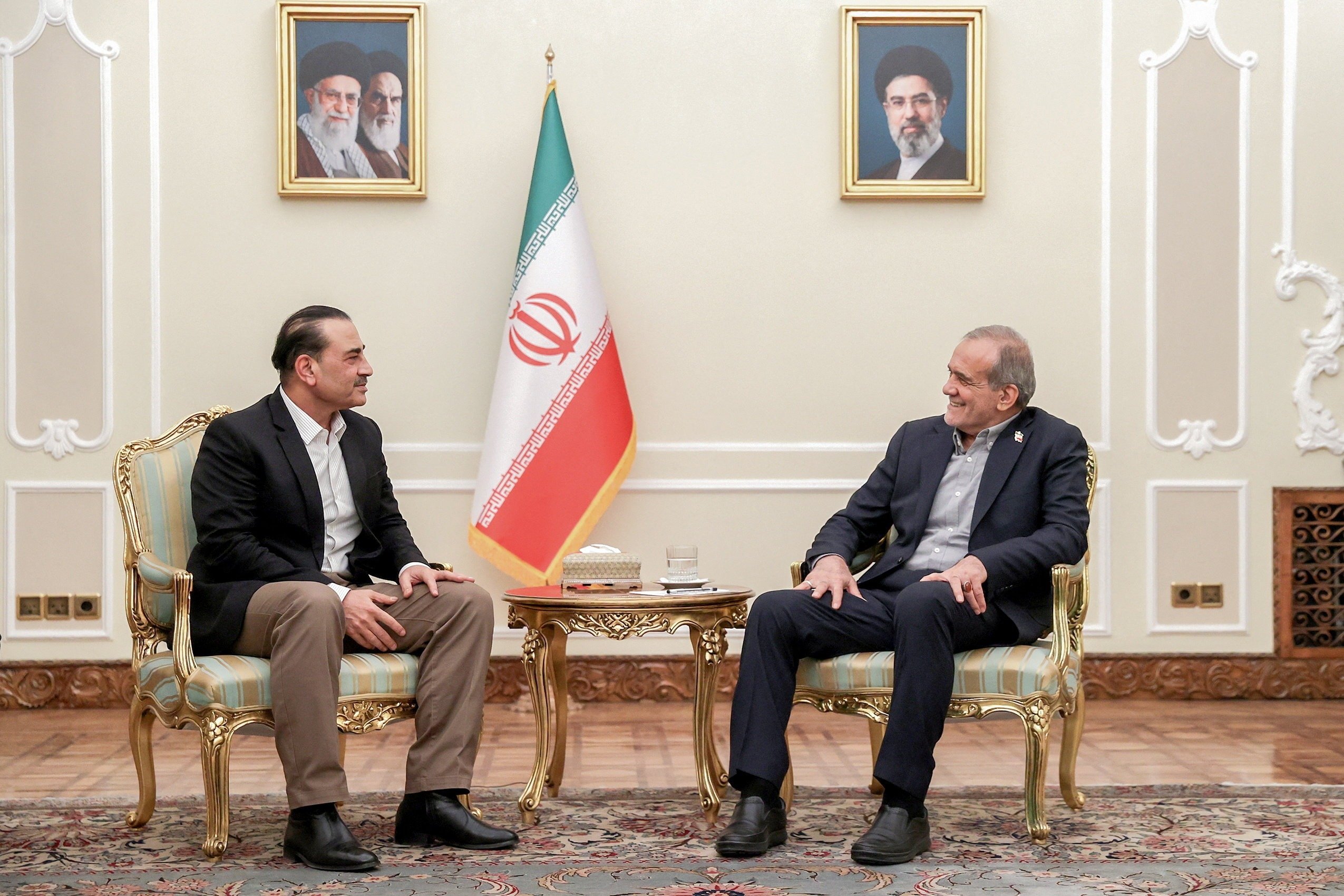
Pakistan and Iran made “significant progress” in talks on the U.S.-Israeli war on Iran and prospects for peace, Pakistani Interior Minister Mohsin Naqvi said Tuesday after a trip to Tehran.
"A very positive and productive meeting" was held with Iranian President Masoud Pezeshkian, Naqvi wrote on X following the visit, led by Pakistani military chief Field Marshal Asim Munir.
"The Iranian President candidly shared his government's perspective and we had a very constructive exchange on the issues involved," he added.
"We remain hopeful that this momentum will help pave the way for further progress and lasting peace in the region," Naqvi said.
Meanwhile, a Pakistani military statement said about the meeting between Munir and the Iranian leadership focused on measures to prevent further escalation, reopening of the Strait of Hormuz and an expedited termination of the conflict.
The two sides also exchanged views on regional peace and the way to arrive at a negotiated settlement to the dispute, the statement added.
Munir also met with Mohsen Rezaee, the newly appointed head of the National Security Council, Parliament Speaker Bagher Ghalibaf and Foreign Minister Abbas Araghchi, the military's statement added.
Iran, in its response, said Tuesday that the Pakistani army chief's visit to Tehran was "highly productive" and yielded "significant diplomatic achievements," with results to "become apparent soon."
"Contrary to some inaccurate media speculation, the visit of Field Marshal Asim Munir, the army chief of friendly Pakistan, to Iran was highly productive and yielded significant diplomatic achievements, the results of which will become apparent soon," Seyed Mehdi Tabatabaei, deputy for communications and information at the Iranian President's Office, said on X.
Abbas Golrou, chairman of the Iranian parliament's Foreign Relations Committee, said Munir carried a message from the U.S. urging Tehran to return to the Islamabad memorandum and revive the stalled political process.
Golrou told the semi-official ISNA news agency that Washington had asked Pakistan to engage with the Iranian side and encourage Tehran to return to the political track.
"Asim Munir conveyed a message to Iran on behalf of the U.S. that Iran should return to the memorandum," Golrou said.
He added Washington was sending direct and indirect messages for negotiations while simultaneously issuing threats and imposing new sanctions.
Golrou added that the main purpose of Munir's visit appeared to be to "revive the stalled political process," adding that it remained to be seen what the main message of the visit was.
The White House and the State Department, on the other hand, did not immediately respond to requests for comment made outside business hours.
Munir had spoken with U.S. President Donald Trump before his Tehran visit, Reuters reported Monday.
Trump, earlier last week, warned of economic consequences against any country that provided "any type of lifeline to Iran" as he seeks to isolate the country. Iran in turn vowed to shut down all oil exports from the Gulf.
The U.S. and Iran had concluded a framework agreement to resolve the conflict in mid-June. The agreement was intended to bring about a cease-fire, the reopening of the Strait of Hormuz and a long-term peace settlement through negotiations within 60 days.
Both sides accused each other of violating the agreement and military clashes occurred repeatedly.
Pakistan is attempting to persuade the parties to the conflict to revive the framework agreement.