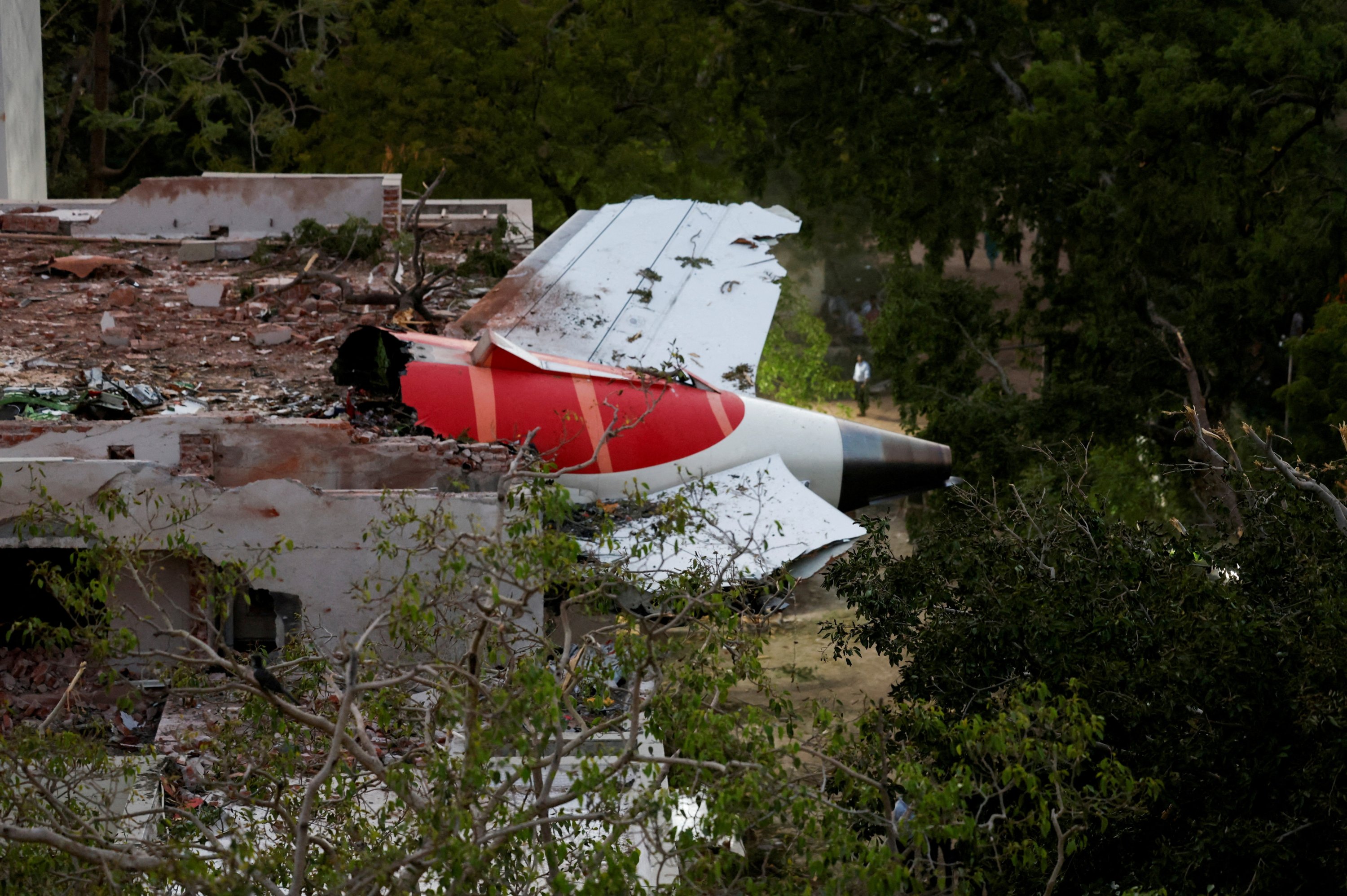
Two major pilots’ unions rejected claims that human error led to the Air India crash that killed 260 people, pushing back against a preliminary report suggesting the plane’s engine fuel switches had been turned off.
The report, issued Saturday by India's Aircraft Accident Investigation Bureau (AAIB), did not offer any conclusions or apportion blame for the June 12 disaster, but indicated that one pilot asked the other why he cut off fuel, and the second pilot responded that he had not.
No more detail about the cockpit dialogue between the pilots was revealed.
The Indian Commercial Pilots Association (ICPA) said it was "deeply disturbed by speculative narratives ... particularly the reckless and unfounded insinuation of pilot suicide."
"There is absolutely no basis for such a claim at this stage," it said in a statement Sunday, adding, "it is deeply insensitive to the individuals and families involved."
"To casually suggest pilot suicide without verified evidence is a gross violation of ethical reporting and a disservice to the dignity of the profession," it said.
The initial probe finding sparked speculation by several independent aviation experts that deliberate or inadvertent pilot action may have caused the London-bound Boeing 787-8 Dreamliner to crash soon after takeoff from Ahmedabad in western India.
The ICPA was referring to a number of aviation experts suggesting engine fuel control switches can only be moved deliberately and manually.
The Airline Pilots' Association of India (ALPA India), another pilots' body with 800 members, also accused the probe agency of "secrecy" surrounding the investigation, saying "suitably qualified personnel" were not involved in it.
"We feel that the investigation is being driven in a direction presuming the guilt of pilots and we strongly object to this line of thought," ALPA India president Sam Thomas said in a statement issued Saturday.
ALPA – which claims 100,000 members worldwide – also requested to the AAIB that it be included as "observers so as to provide the requisite transparency in the investigations."
Meanwhile, Air India CEO Campbell Wilson, in an internal memo on Monday, said that the probe was far from over and it is unwise to jump to any premature conclusions.
The memo, reviewed by Reuters, said the plane's engine fuel cutoff switches flipped almost simultaneously and starved the engines of fuel.
"The release of the preliminary report marked the point at which we, along with the world, began receiving additional details about what took place. Unsurprisingly, it provided both greater clarity and opened additional questions," the memo added.
"The preliminary report identified no cause nor made any recommendations, so I urge everyone to avoid drawing premature conclusions as the investigation is far from over," he said.
The Boeing 787 Dreamliner bound for London from the Indian city of Ahmedabad began to lose thrust and sink shortly after takeoff, according to the report released by India's Aircraft Accident Investigation Bureau (AAIB).
The memo said the preliminary report found no mechanical or maintenance faults and that all required maintenance had been carried out.