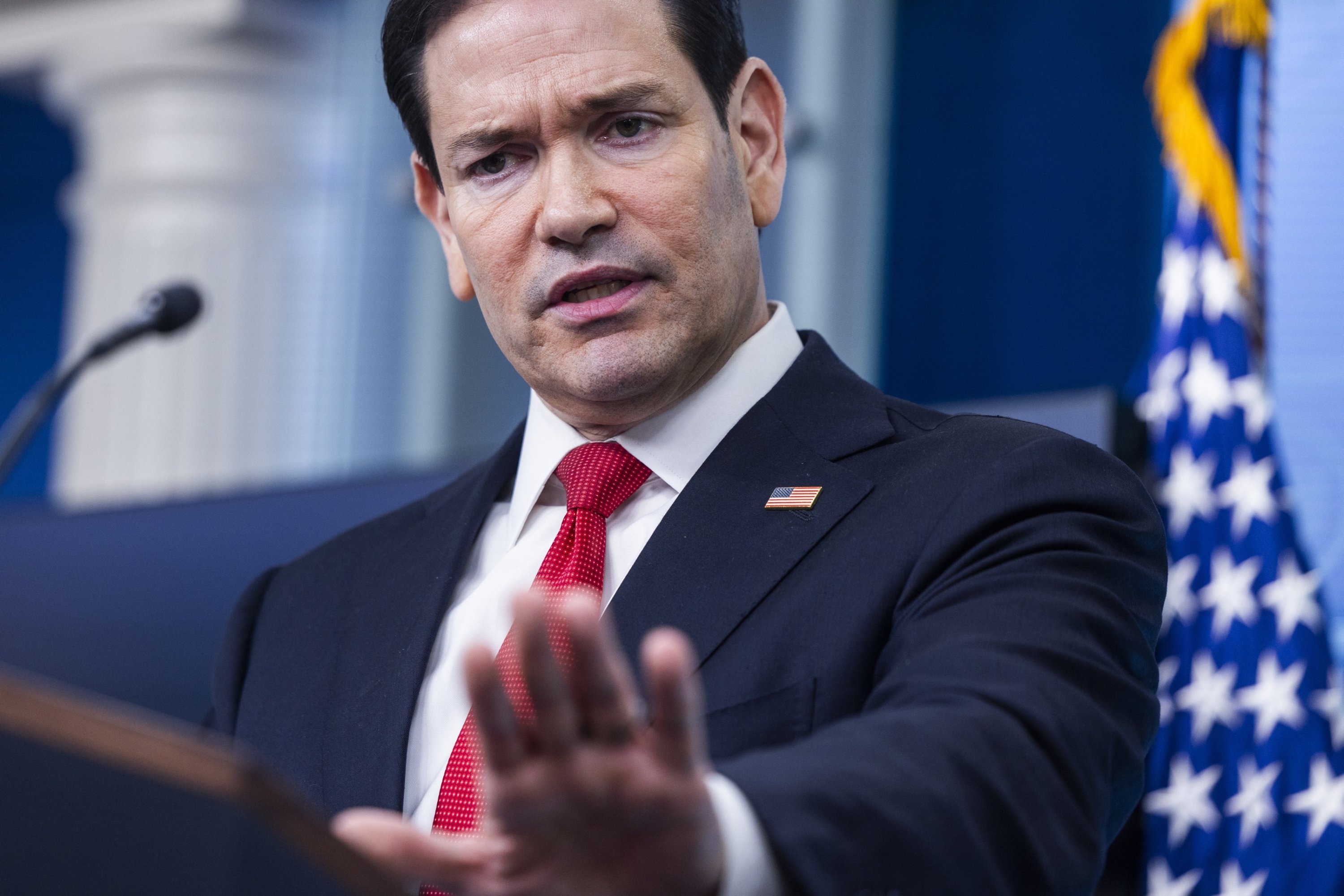
Rubio says US completed offensive stage of Iran war, insisting Washington “achieved its objectives” and acting in self-defense by enforcing blockade of Iranian ports
The U.S. Secretary of State Marco Rubio on Tuesday said Washington completed its offensive operations against Iran, echoing remarks to Congress nearly a month into the cease-fire.
"The operation is over -- Epic Fury -- as the president notified Congress. We're done with that stage of it," Rubio told reporters at the White House.
Earlier the White House had informed lawmakers that the war had terminated due to the ceasefire, avoiding a legal requirement to ask Congress to authorize a conflict that goes beyond 60 days.
Trump nonetheless has threatened Iran with major reprisals if it attacks U.S. ships and on Sunday announced so-called "Project Freedom" to help vessels leave the Strait of Hormuz, the narrow chokepoint to the Gulf where Iran has seized control in response to being attacked.
"This is not an offensive operation; this is a defensive operation," Rubio said.
"And what that means is very simple, there's no shooting unless we're shot at first."
Israel and the United States attacked Iran on Feb. 28, killing top leaders and destroying major military and economic sites but not forcing the collapse of the Islamic republic, which has responded with missile and drone attacks across the region.
Trump on April 8 declared a ceasefire with Iran that he has since extended even though negotiations with Tehran have been at a standstill.
Rubio said the United States has "achieved the objectives" of the war.
"These guys are facing, they are facing real, catastrophic destruction to their economy," he said, while adding that Trump still preferred a negotiated deal with Iran.
Rubio, a former U.S. senator, also said that he disagreed with the 1973 War Powers Act, which requires the president to notify Congress within 48 hours of sending troops and to seek authorization after 60 days.
"We don't acknowledge the law as constitutional. Nonetheless, we comply with elements of it for purposes of maintaining good relations with Congress," he said.
He also said ten civilian sailors have died due to the ongoing conflict in the Strait of Hormuz.
He said the U.S. would continue to deploy its assets to defend freedom of navigation in the key thoroughfare.
"They're isolated, they're starving, they're vulnerable and at least 10 sailors have died as a result, civilian sailors," Rubio said, without providing additional details.
Rubio said the United States has been in touch with a number of ships about moving out of the strait, echoing remarks made earlier by Defense Secretary Pete Hegseth.
The United Arab Emirates said it was under attack from Iranian missiles and drones on Tuesday, even as Washington said a shaky ceasefire was intact.
Hegseth said hundreds of ships were lining up to pass through the critical waterway. Before the U.S. and Israel attacked Iran on February 28, about 20% of global oil supplies passed through the strait daily.
Rubio said it was time for Tehran to "accept the reality of the situation", adding that U.S. envoys Steve Witkoff and Jared Kushner were continuing to explore a diplomatic solution.
That solution had to address any nuclear material that Iran still had buried "deep somewhere," Rubio said.
"The president's been clear that part of the negotiation process has to be not just the enrichment, but what happens to this material that's buried deep somewhere that they still have access to if they ever wanted to dig it out," he said.
Rubio declined to provide details on what progress had been made and said the actual agreement would not need to be written out in one day.
"This is highly complex, and highly technical, but we have to have a diplomatic solution that is very clear about the topics that they are willing to negotiate on and the extent and the concessions they are willing to make at the front end in order to make those talks worthwhile," he said.