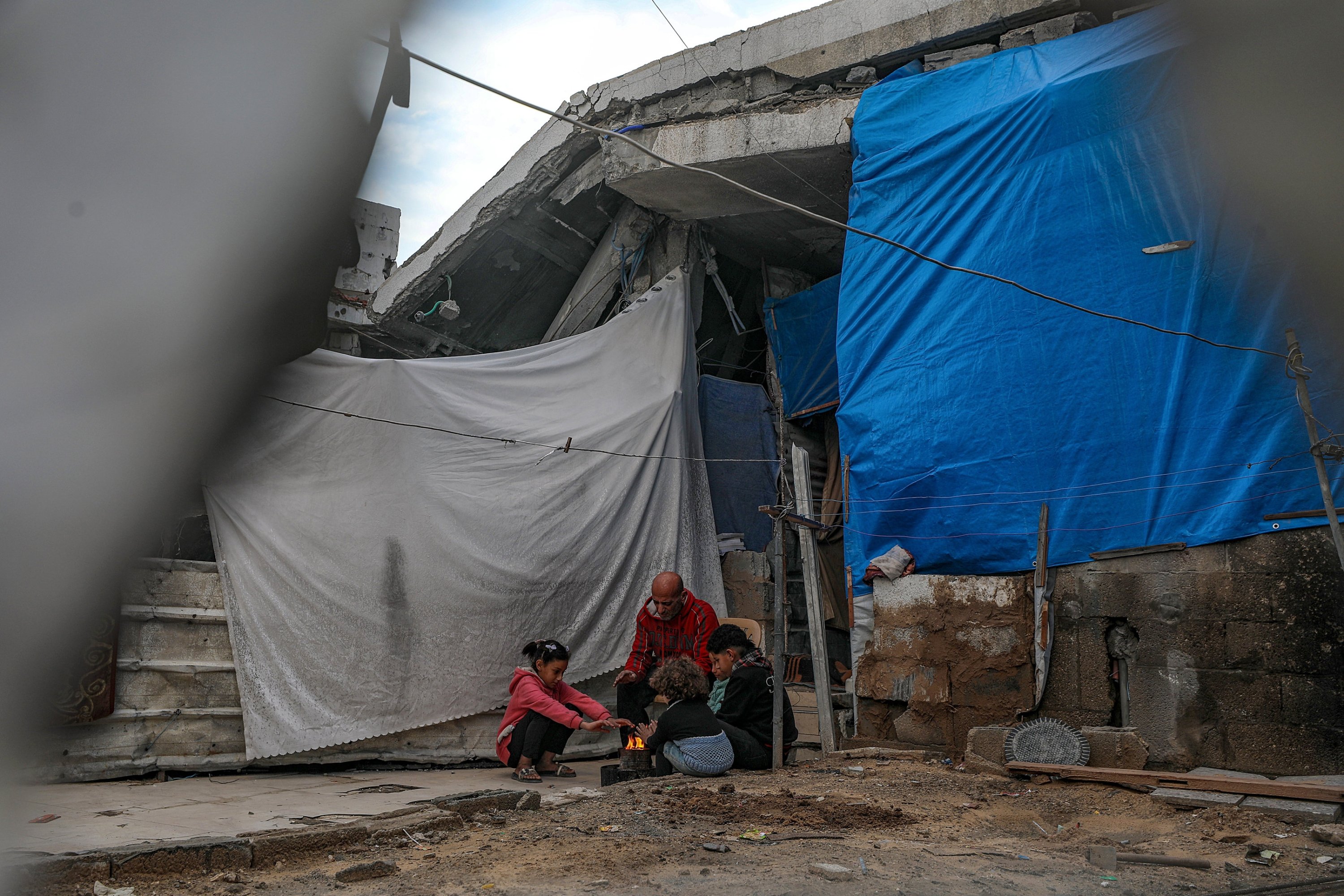
Heavy winter rains swept across the Gaza Strip for a second straight day on Thursday, flooding hundreds of tents and deepening the humanitarian emergency for families already displaced by two years of devastating war.
What began as steady predawn drizzle escalated into hours of unbroken rainfall, overwhelming Gaza’s fragile displacement camps – sprawling clusters of makeshift shelters that now house more than 1.9 million people.
By sunrise, the storm had carved channels of brown water through the camps, pooling in low-lying areas and swallowing entire rows of tents.
Families scrambled to stack belongings on crates and plastic buckets, but the floodwaters rose faster than they could move.
In Rafah, the epicenter of Gaza’s displacement crisis, residents described scenes of panic and exhaustion as the storm intensified.
Civil Defense teams, operating with limited equipment, evacuated dozens of families from completely submerged tents, often carrying children in their arms while wading chest-deep through frigid water.
“We are trying to keep up, but every hour more tents collapse,” said one rescue worker, who noted that several evacuation routes were blocked by mudslides and debris.
Civil Defense spokesman Mahmoud Basal warned that roughly 250,000 families – close to one million people – are at high risk in the coming days.
Many tents, he said, are so degraded that they can no longer withstand even mild winds, let alone heavy storms.
Some shelters, patched repeatedly with tape and plastic, split open as saturated fabric gave way under the weight of pooling rainwater.
Basal added that early reports indicate an uptick in flu, pneumonia and gastrointestinal infections, a trend humanitarian groups fear could accelerate as children spend nights in wet clothing and contaminated runoff spreads.
The Gaza Government Media Office had warned of the approaching polar low-pressure system days earlier, but preparations were nearly impossible.
With almost no temporary shelters available and aid pipelines strained by months of restrictions, most families had no choice but to remain in tents even as forecasts grew increasingly severe.
“Where can we go? Even the streets are flooded,” said a father of three in central Gaza, whose family spent Wednesday night standing upright to avoid the rising water inside their tent.
Across the northern camps – particularly in Jabalia and Beach Camp – the flooding was even more destructive.
Residents described sudden surges of water pouring through alleyways, collapsing makeshift kitchens and washing away food stockpiles stored in plastic bags.
Volunteers attempted to dig drainage channels with shovels and metal scraps, but the ground, heavily compacted by months of overcrowding, absorbed almost nothing.
By Thursday morning, entire neighborhoods of tents resembled shallow lakes dotted with floating blankets, crates and children’s shoes.
This second day of flooding has heightened fears that Gaza is entering its most dangerous phase since the cease-fire took effect on Oct. 10.
Aid groups say the camps were already stretched beyond capacity and the storm has exposed just how little remains of Gaza’s pre-war infrastructure.
Many tents sit on bare sand without insulation, flooring or winterization materials.
Those distributed during early stages of the war were not designed to last more than three months – and now, more than a year later, their fabric is brittle, their poles rusting and their seams splitting under pressure.
Officials estimate the enclave needs nearly 300,000 new tents and prefab units just to meet minimum emergency standards.
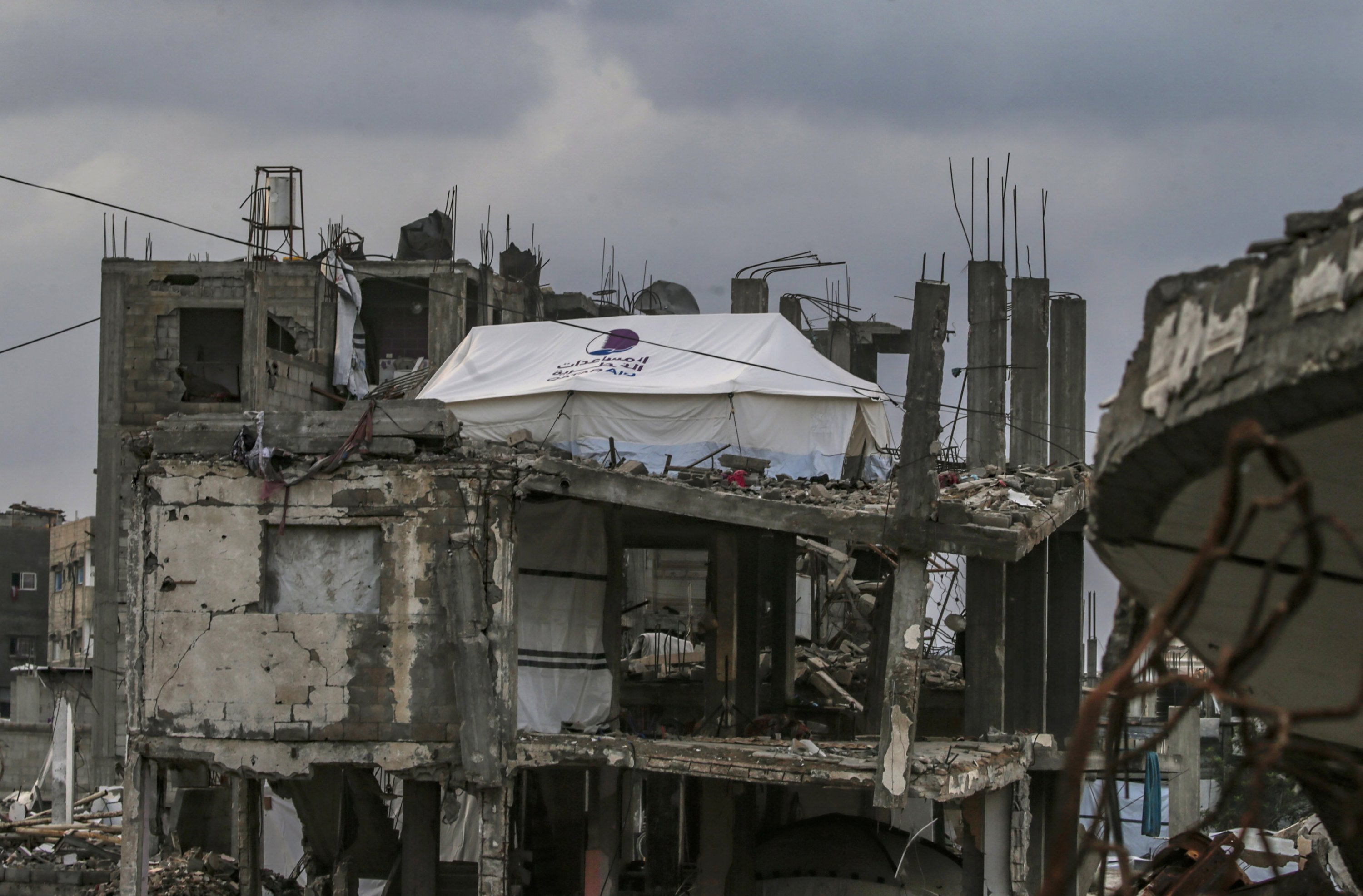
But reconstruction has been slow, largely due to restrictions on the entry of steel, cement, machinery and heavy equipment – materials essential for both temporary shelters and long-term rebuilding.
The United Nations Relief and Works Agency for Palestine Refugees in the Near East (UNRWA) says that even basic shipments of tarpaulins and blankets cannot keep pace with the rising needs as winter deepens.
The broader devastation from the war looms over every aspect of the crisis.
More than 70,400 Palestinians were killed and over 171,000 were wounded, according to Gaza health authorities and U.N. agencies.
Roughly 80% of Gaza’s housing stock was destroyed or rendered uninhabitable and vast swaths of the strip’s water, sewage and power networks remain in ruins.
The cease-fire halted the bombardment but left a landscape that experts say will require at least $70 billion and decades of investment to repair.
That long-term recovery is now the focus of U.S. President Donald Trump’s Gaza plan, which outlines phased reconstruction, a technocratic Palestinian administration to manage essential services and an international stabilization force to prevent renewed conflict.
On Wednesday, diplomatic efforts gained momentum as U.S. Ambassador to the UN, Mike Waltz, met Israeli President Isaac Herzog in Jerusalem to discuss the next phase of implementation.
Waltz said he expects “upcoming announcements” from the Gaza Board of Peace – the oversight body created under Trump’s plan – and emphasized that last month’s UN Security Council resolution has paved the way for more assertive steps.
He cited priorities including restoring water and sewage systems, reestablishing gas distribution, securing a multilateral funding mechanism and supporting a new Palestinian governing structure independent from armed groups.
Herzog underscored the urgency, warning that any vacuum could invite destabilizing forces.
“In the Middle East, if you wait too long, the vacuum fills in,” he said, referring to Iranian-backed groups that have sought influence during previous power gaps.
U.S. officials said both sides agreed on the need to maintain pressure on Iran and to ensure Gaza’s governance excludes armed actors while addressing humanitarian needs rapidly.
Meanwhile, aid groups are mobilizing as quickly as circumstances allow.
UNRWA has distributed tens of thousands of emergency tarps, blankets and hygiene kits, while other agencies attempt to restore damaged latrines and install temporary drainage systems in the camps.
But humanitarian workers warn that without urgent permission to bring in heavy machinery and winterized shelters, even these measures will fall short.