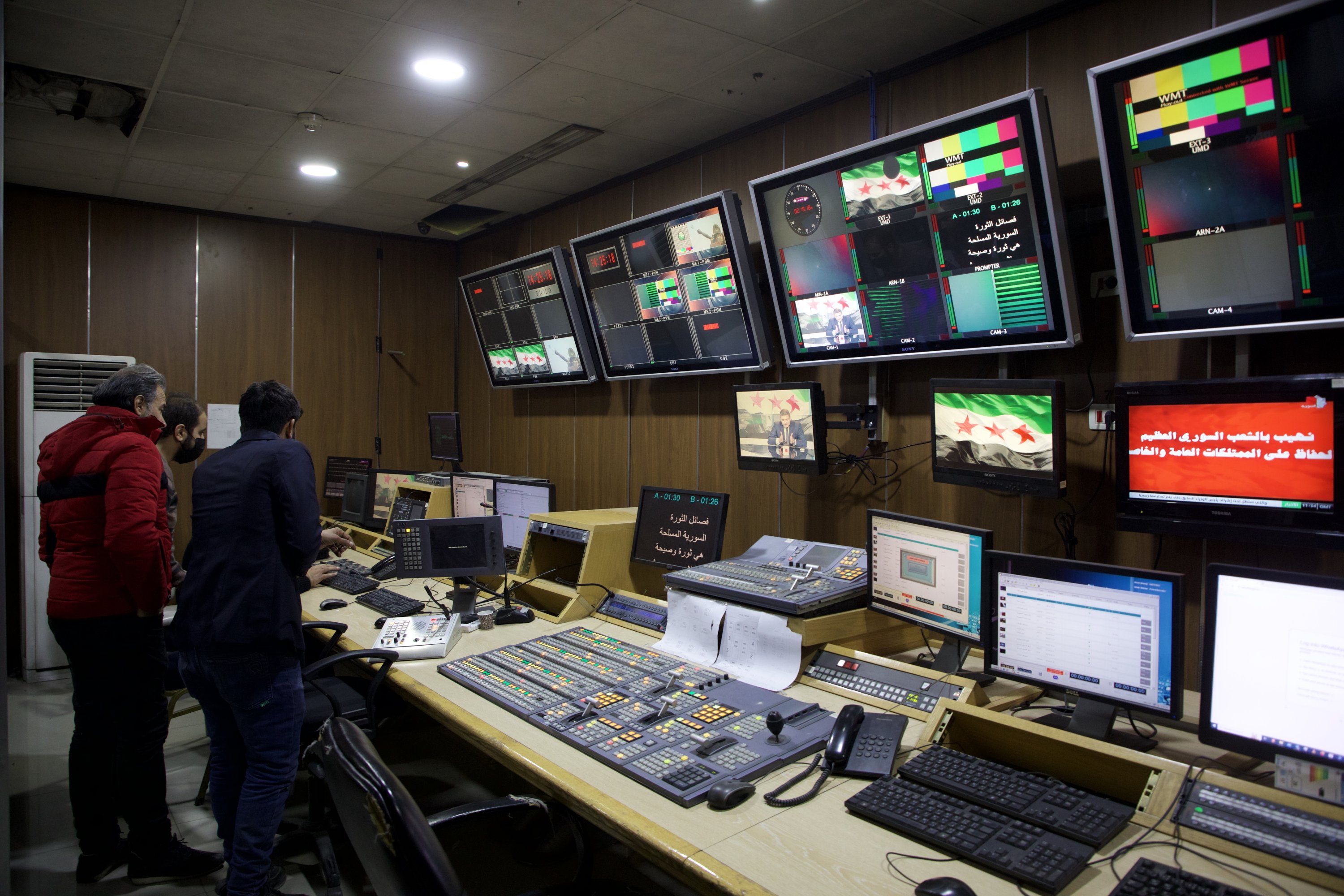
Syria has recorded a significant improvement in press freedom in 2026, rising 36 places to 141st in the latest rankings released by Reporters Without Borders.
In its report published Thursday morning, the organization specified that Syria recorded the most substantial improvement in this year’s ranking.
This remarkable development comes after Syria toppled the Assad regime, which, over decades marked by injustice and the repression of freedoms in all their forms, had driven press freedom in the country to its lowest level.
At the time of the regime’s fall at the end of 2024, Syria ranked 179th out of 180 countries in the Press Freedom Index, placing it second to last.
The report by "Reporters Without Borders" revealed that the fall of the dictator Bashar Assad in December 2024 put an end to more than five decades of brutal and violent repression endured by the press and journalists, while noting that this new state of freedom remains fragile due to political instability and economic pressures.
The report highlights the return of journalists and media professionals, as well as several local media outlets that had previously operated in exile or in areas controlled by the opposition.
Likewise, most international news agencies resumed their activities in Damascus only hours after the fall of the Assad regime.
In its analysis of the political context, the report underscores that, for 50 years, the Assad dictatorship and the Baath Party imposed strict censorship on the Syrian press.
During the uprising that began in 2011, the regime’s violent crackdown silenced the press in areas under its control through assassinations and arrests.
The report also refers to the intimidation and, in some cases, detention faced by journalists in areas controlled by opposition factions.
The new government, established after the fall of the regime in 2024, has pledged to work toward establishing a sustainable framework that guarantees an independent press promotes a "free press" and guarantees "freedom of expression."
The report explains that with the fall of the regime, the legislative framework used by the Assad regime to legitimize its repressive policies ceased to be in force.
In addition to authoritarian laws, the regime relied on arbitrary arrests, enforced disappearances, torture, and extrajudicial executions.
From an economic perspective, Reporters Without Borders noted that the majority of Syrian media under Assad’s rule was funded either by the state or by individuals close to the regime.
The report also recalls the repression exercised by the Assad regime against journalists, arrests, abductions, torture and assassinations, which forced many of them into exile and compelled migration.
Press freedom has reached its lowest level in a quarter of a century, warned Reporters Without Borders in its annual ranking published this Thursday, April 30, 2026, pointing to a general deterioration.
"For the first time in the history" of this annual ranking, created in 2002, "more than half of the world’s countries (94) are in a 'difficult' or 'very serious' situation, whereas they represented only a small minority (13.7%) in 2002," RSF said The organization uses a five-level scale ranging from "very serious" to "good."
At the same time, the share of the population living in a country where the state of press freedom is considered "good" has plummeted from 20% to "less than 1%."
Only seven Northern European countries, led by Norway, fall into this category.