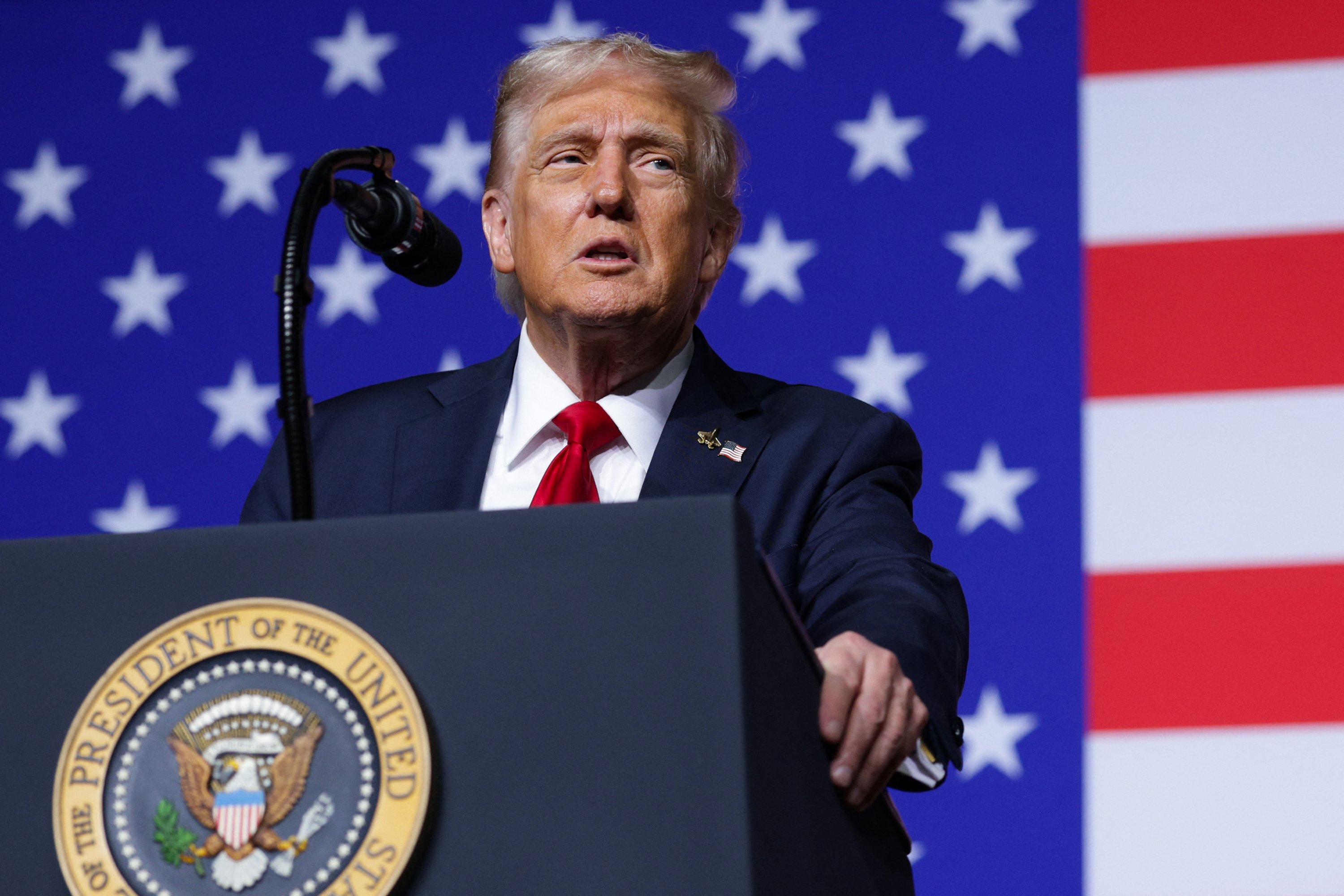
President Donald Trump on Tuesday gave Hamas “three or four days” to respond to his U.S.-backed cease-fire proposal for Gaza, a sweeping plan welcomed by Israel and world powers but met with skepticism on the ground in the war-battered enclave.
The 20-point proposal, unveiled Monday at the White House alongside Israeli Prime Minister Benjamin Netanyahu, calls for an immediate cease-fire, the release of all hostages within 72 hours, the full disarmament of Hamas and a phased withdrawal of Israeli troops.
Gaza would then be run by a transitional authority headed by Trump himself, with former British Prime Minister Tony Blair also playing a role and supported by a temporary international stabilization force.
Trump, standing firm on the timeline, told reporters: “We’re just waiting for Hamas and Hamas is either going to be doing it or not. And if it’s not, it’s going to be a very sad end.”
Hamas leaders, both inside Gaza and abroad, began internal consultations Tuesday, according to a Palestinian source who cautioned that the deliberations “could take several days due to the complexities.”
Qatar, which hosts the group’s exiled leadership, said Hamas promised to study the proposal “responsibly” and would meet with Turkish and Qatari officials to discuss next steps.
The plan demands Hamas members lay down arms and excludes the group from any role in future governance, though it offers amnesty to those who accept “peaceful co-existence.”
Israel would retain a military presence in much of Gaza until the transition is complete.
Still, Netanyahu struck a harder tone after returning to Israel, insisting the army would remain in most of the territory and reiterating his opposition to Palestinian statehood. “We will recover all our hostages, alive and well, while the military will remain in most of the Gaza Strip,” he said in a video message.
Reaction abroad was swift. Arab and Muslim nations, including mediators Egypt and Qatar, praised Trump’s efforts, while European allies such as Britain, France, Germany and Italy expressed strong support.
Russia and China also welcomed the plan.
But in Gaza, weary residents voiced doubt. “It’s clear that this plan is unrealistic,” said Ibrahim Joudeh, a displaced resident sheltering in Al-Mawasi. “It’s drafted with conditions that the U.S. and Israel know Hamas will never accept. For us, that means the war and the suffering will continue.”
The Palestinian Authority cautiously welcomed Trump’s “sincere and determined efforts,” while Hamas ally Islamic Jihad condemned the plan as a U.S.-Israeli attempt to impose by diplomacy what they could not achieve by war.
Even as diplomacy unfolded, Israeli airstrikes and artillery fire continued across Gaza on Tuesday, with heavy bombardments reported in Gaza City and central refugee camps.
The conflict, sparked by Hamas’ Oct. 7, 2023, incursion that killed 1,219 people in Israel, has since left more than 66,000 Palestinians dead, according to Gaza’s Health Ministry figures cited by the United Nations.