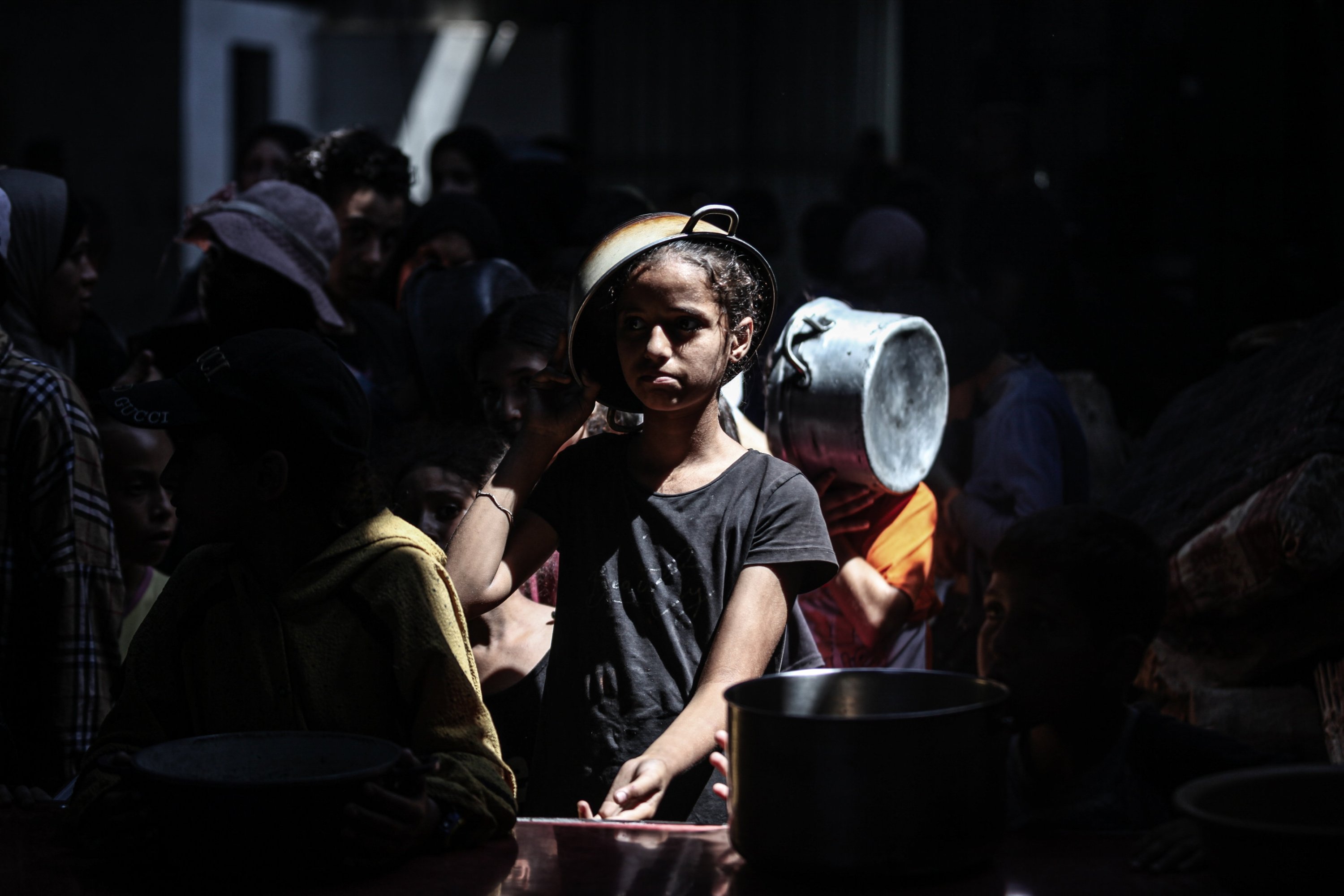
The United Nations warned that “childhood cannot survive” in Gaza as Israel prepares a major ground push into Gaza City, a metropolis already hollowed by famine, bombardment and despair.
UNICEF spokeswoman Tess Ingram, fresh from nine days inside the enclave, described a place where survival itself is collapsing.
“The unthinkable is not looming – it is already here,” she said. “Malnutrition and famine are weakening children’s bodies, displacement has robbed them of shelter and care, and bombardments threaten their every move. This is what famine in a war zone looks like – and it was everywhere I looked in Gaza City.”
Israel has mobilized thousands of reservists and is signaling its intent to capture Gaza’s largest urban center.
Nearly one million people remain trapped there, most of them displaced several times, and aid groups warn that an intensified offensive would push civilians beyond the edge of survival.
Gaza City, once the bustling cultural and economic hub of the territory, now lies in ruins.
Strikes have leveled neighborhoods, leaving families to shelter in rubble or flimsy tents.
Food and medicine are scarce, water systems have collapsed, and overcrowding has turned disease into another deadly threat.
“This is not accidental,” Ingram said. “It is the direct consequence of choices that have turned Gaza City – and indeed the entire Strip – into a place where people’s lives are under attack from every angle, every day. Palestinian life is being dismantled steadily, but surely.”
The collapse is measured in human faces.
At Nasser Hospital in Khan Younis, 18-month-old Ali Abu Azra weighs only three kilograms – a third of what a child his age should.
His skin clings to his bones, stripped of fat and muscle.
His mother, Etemad, says he suffers seizures, chronic diarrhea, rashes and fevers brought on by severe malnutrition and a lack of medicine.
“Within one week, he lost a kilogram,” she said. “There is no milk, no medicine. Every day, he loses more weight. He needs proper food. I pray he can be treated abroad.”
Doctors admit they cannot provide what he needs, and say dozens of children arrive in similar condition every week.
The blockade has made famine inevitable.
Since March 2, Israel has sealed Gaza’s crossings, halting deliveries of food and medicine except for sporadic convoys that barely scratch the surface of need.
Trucks wait at the borders, but most never enter.
On Aug. 22, the U.N.’s food security body declared famine inside Gaza, warning it would soon spread to Deir al-Balah and Khan Younis.
The World Food Program says one-third of the territory’s 2.4 million people now endure entire days without food.
More than one million children are malnourished, and 40,000 infants are at risk of dying. Health officials say at least 370 people – 131 of them children – have already starved to death.
The World Health Organization, alarmed by the spiral, recently delivered formula and nutritional supplies to hospitals, but Director-General Tedros Adhanom Ghebreyesus warned such deliveries are nowhere near enough.
“We continue to call for scaled-up, sustained, and safe access to food and medicines into Gaza,” he said, adding, “The best medicine is peace.”
The crisis traces back to Oct. 7, 2023, following Hamas' incursion on southern Israel, killing about 1,200 people and abducting 250.
Israel’s response has been devastating.
More than 64,200 Palestinians have been killed since then, according to Gaza’s health ministry, in figures the U.N. deems credible.
Neighborhoods have been flattened, infrastructure wrecked and civilians repeatedly forced to flee.
International courts have taken notice: the International Criminal Court has issued arrest warrants for Israeli Prime Minister Benjamin Netanyahu and former Defense Minister Yoav Gallant, and the International Court of Justice is weighing genocide charges against Israel.
Despite global warnings, the death toll rises daily.
On Thursday, at least 46 Palestinians were killed in Israeli strikes across the enclave, according to medical sources.
Families were buried under tents in Nuseirat, children killed in Tel al-Hawa, and aid seekers gunned down in Rafah. Homes, shelters and civilian gatherings were all struck, leaving hospitals once again overwhelmed with casualties.