Iran and the United States are moving within sight of a possible diplomatic framework to wind down a three-month conflict, but officials on both sides are openly acknowledging that the gaps between them remain wide and politically sensitive.
U.S. Secretary of State Marco Rubio said Monday that Washington is still prioritizing diplomacy, but made clear it is not ruling out other options if talks collapse.
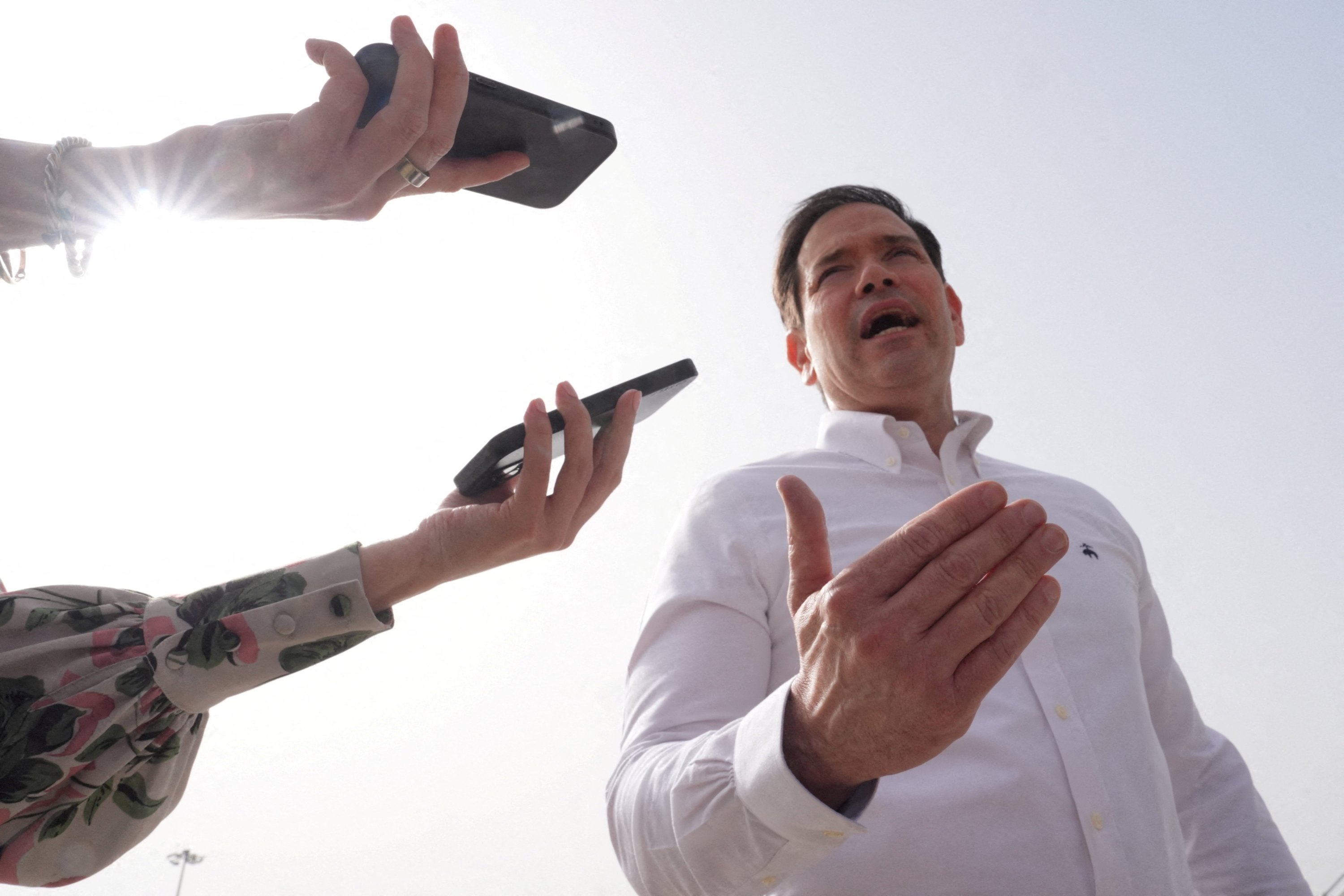
Speaking to reporters in New Delhi, Rubio described the current state of negotiations as an opportunity to test whether a limited but structured deal can hold, particularly around maritime security in the Strait of Hormuz and the start of a time-bound nuclear negotiation process.
Rubio said there is a “pretty solid thing on the table,” pointing to a possible sequence in which shipping access is gradually restored through the strait in exchange for steps on Iran’s nuclear program.
He framed the process as conditional and reversible, stressing that diplomacy would be given room to succeed before Washington considers what he called “alternatives.”
President Donald Trump has also tried to manage expectations, urging negotiators not to rush and insisting that any agreement must be carefully constructed rather than politically accelerated. He has repeatedly emphasized that the process is still fluid and far from completion.
Iranian officials, however, pushed back on the suggestion that a near-term breakthrough is taking shape. Foreign Ministry spokesperson Esmaeil Baghaei said Tehran is engaged in discussions aimed at ending the war, but rejected the characterization that nuclear negotiations are currently underway in the way Washington has described them.
Baghaei said a general framework has been discussed but insisted that no agreement is imminent. He also stressed that key details remain unsettled, including how maritime operations in the Strait of Hormuz would be managed. Iran has argued that the waterway falls under the jurisdiction of coastal states, not external powers.
At the center of the emerging diplomatic architecture is a phased arrangement that links de-escalation on the battlefield with economic and nuclear concessions. The Strait of Hormuz, through which roughly a fifth of global oil and liquefied natural gas flows, is being treated as a key leverage point in the talks.
Under the outline being discussed, U.S. officials say naval restrictions and shipping controls would be eased gradually if Iran agrees to specific nuclear steps, including the reduction or removal of its stockpile of highly enriched uranium. That material, enriched to levels close to weapons-grade, remains one of the most contentious issues in the negotiations.
American officials have suggested the stockpile could be either diluted under international supervision or transferred abroad, with technical oversight from global nuclear monitors. A senior U.S. official said compliance would be required before any meaningful sanctions relief is implemented.
Iran continues to insist its nuclear program is peaceful and maintains that enrichment is legal under international agreements for civilian energy use. Western governments, however, argue that Iran’s enrichment levels and accumulated stockpile have moved beyond what is needed for non-military purposes, raising long-standing proliferation concerns.
Another pillar of the discussions involves sanctions relief and access to frozen assets held in foreign banks. Iranian officials have made clear that economic relief is a central requirement for any agreement, particularly access to oil revenues that have been restricted under U.S. and allied sanctions regimes.
According to officials familiar with the discussions, a possible 60-day negotiation window is being considered to convert an initial framework into a binding agreement. During that period, both sides would attempt to lock in sequencing on maritime access, nuclear compliance and financial easing.
Beyond the immediate U.S.-Iran channel, the broader regional dimension remains highly complex. The war has drawn in multiple fronts, including Israel’s military actions in Lebanon against Hezbollah and wider instability involving Iran-aligned groups in Iraq, Syria and Yemen. These dynamics have made it difficult to isolate a single theater of negotiation.
Some elements of the draft framework reportedly address limits on regional escalation and indirect constraints on armed groups aligned with Tehran, but officials say many of these provisions remain loosely defined or politically premature. More sensitive topics such as missile programs and U.S. military deployments in the region are not part of the current working outline.
One senior U.S. official, speaking on condition of anonymity, said Iran has agreed “in principle” to open the Strait of Hormuz in exchange for a phased lifting of naval restrictions and sanctions pressure, and to engage on the disposition of its enriched uranium stockpile. The official also suggested there is a shared understanding at senior levels of leadership, though this has not been publicly confirmed by Tehran.
Iranian sources, meanwhile, have indicated that future stages of negotiations could explore technical solutions for the nuclear material, including dilution under International Atomic Energy Agency supervision. Even so, Iranian officials have emphasized that no binding commitments have been finalized.
A key point of dispute remains verification. Washington is insisting on enforceable monitoring of any nuclear rollback, while Tehran is wary of conditions it views as intrusive or open-ended. That mistrust has repeatedly slowed previous diplomatic efforts.
Despite these tensions, markets reacted quickly to signs of possible de-escalation. Oil prices dropped on expectations that reduced military risk in the Strait of Hormuz could stabilize global energy flows and ease pressure on shipping routes that are central to global trade.