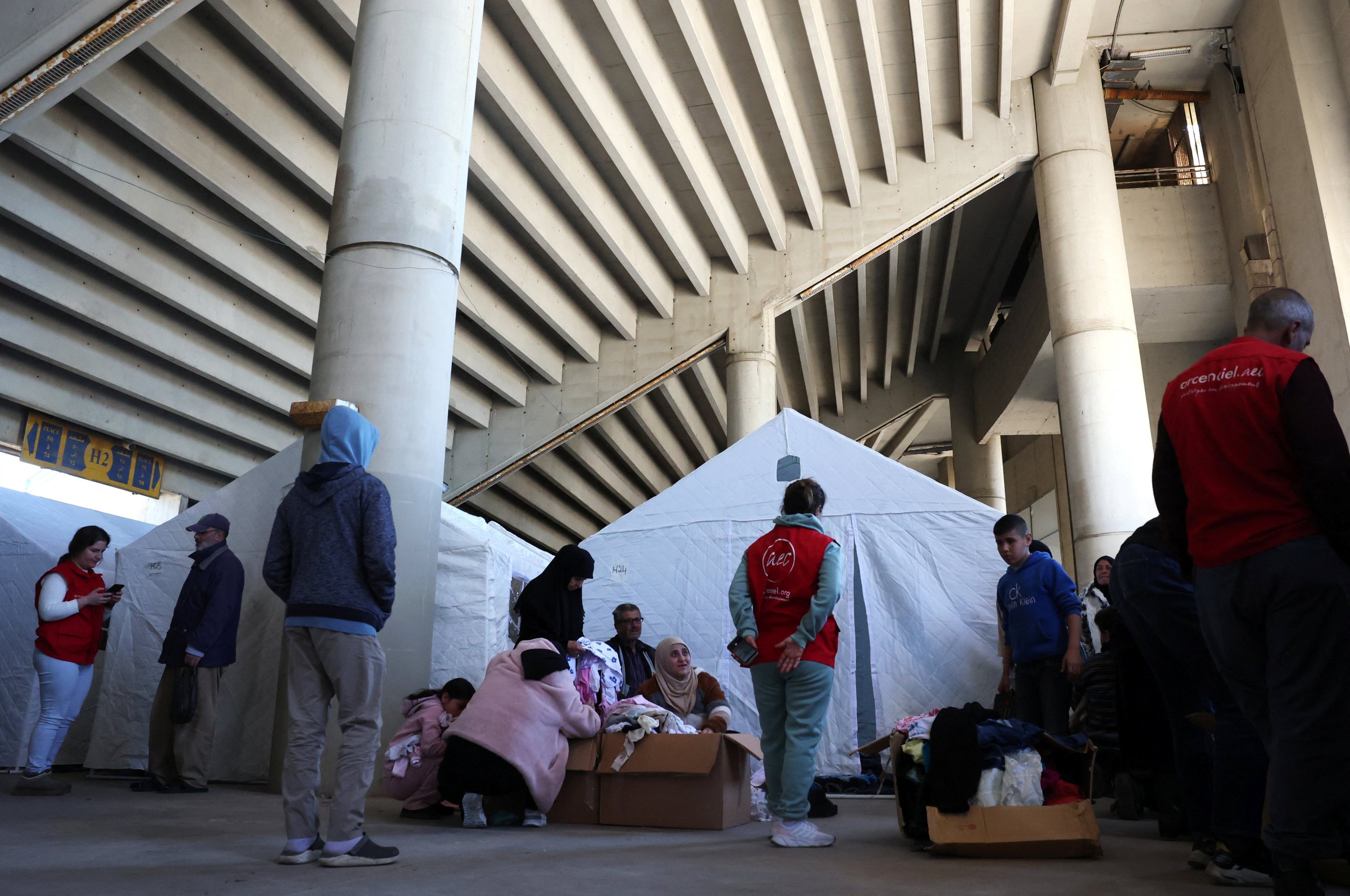
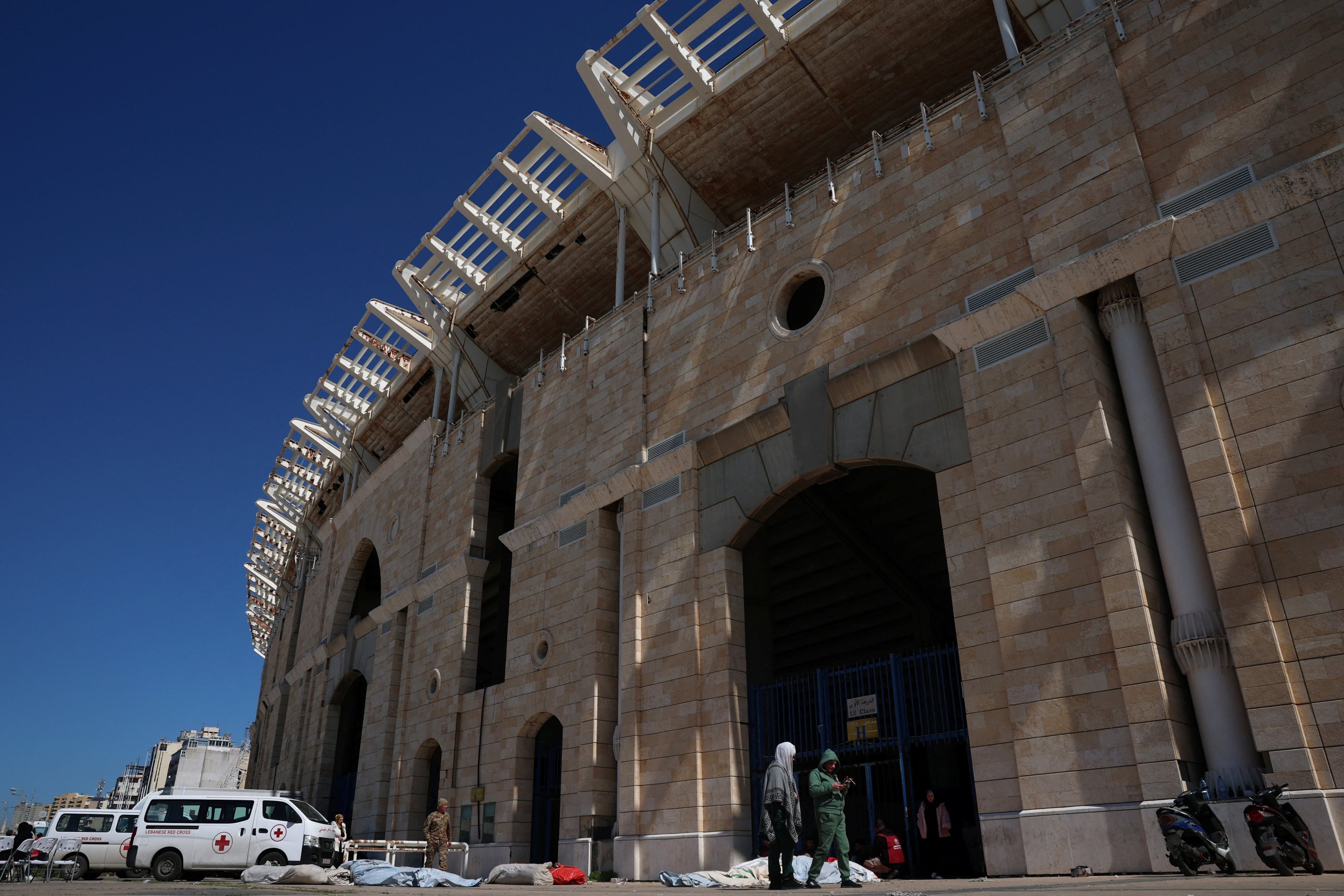
Inside Beirut’s largest football stadium, the chants and thunder of matchday crowds have been replaced by the quiet shuffle of hundreds of displaced families trying to sleep on thin mattresses spread across cold concrete.
Plastic bags filled with hastily packed belongings sit beside blankets and baby bottles.
Children drift between sleep and restlessness while parents scroll through their phones, searching for news from the homes they abandoned as airstrikes intensified.
The stadium, once a symbol of sport and celebration, has become a temporary refuge in a country once again pulled into war.
The renewed conflict between Israel and the Lebanese group Hezbollah has pushed Lebanon deeper into crisis, tied to the broader regional war involving Iran.
Israeli airstrikes have struck across the country in recent days, targeting what Israel says are Hezbollah positions but also hitting densely populated neighborhoods.
Lebanese state figures say more than 600 people have been killed and nearly 816,700 displaced since the latest escalation began.
For many of the families now sheltering inside the stadium, the upheaval feels painfully familiar.
Lebanon has endured decades of conflict, from the 1975-1990 civil war to repeated confrontations between Israel and Hezbollah. Each cycle has left scars across communities that are now reliving the trauma again.
Fatima, 35, stands near the center of the crowded hall holding her 1-year-old son Mustafa, who squirms in his sleep as people move past them.
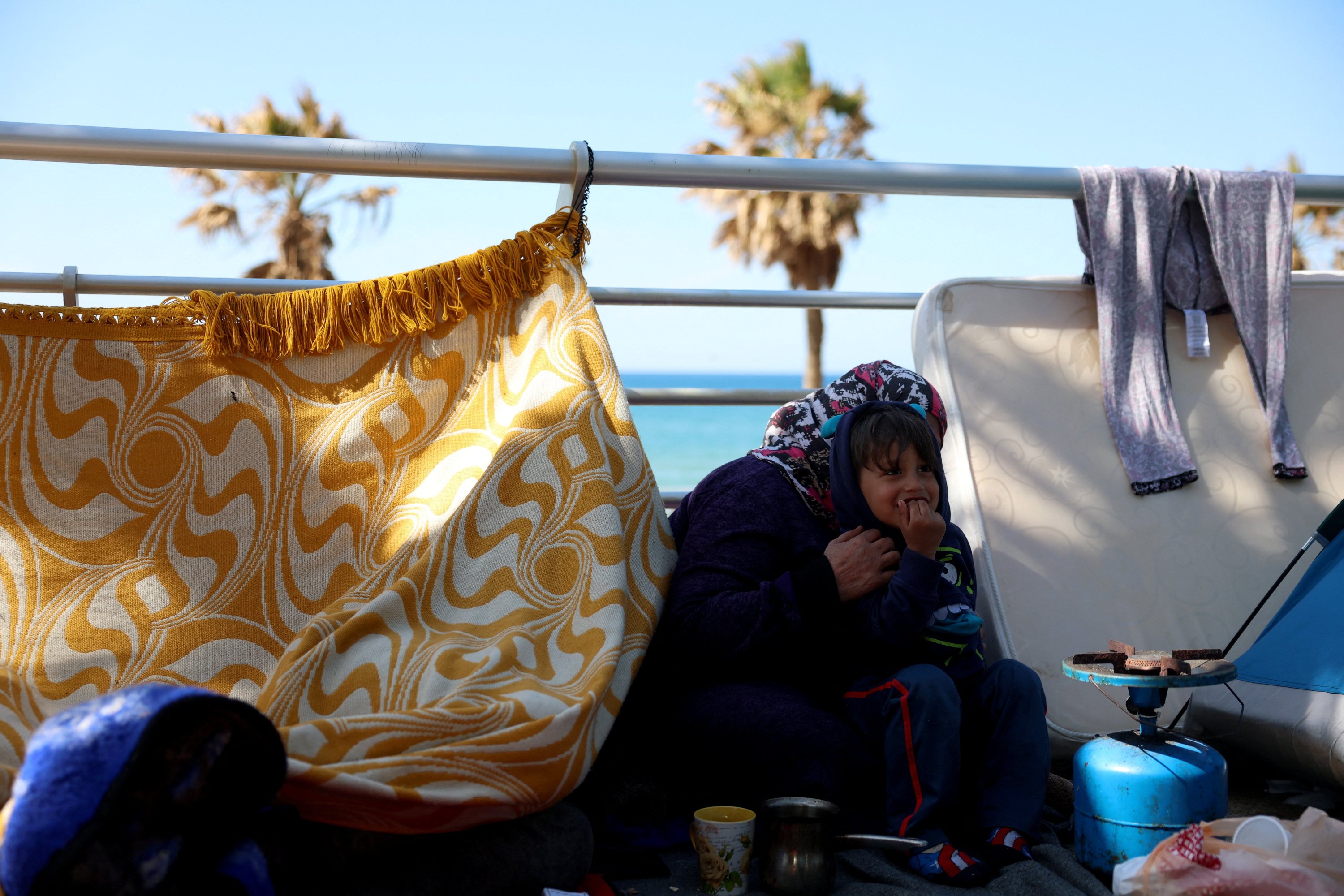
“We were born in war,” she says softly. “I don’t want my son to grow up the same way.”
Fatima fled her home in Bourj el-Barajneh in Beirut’s southern suburbs when the first explosions echoed across the city.
At first, she stayed with relatives, but as the strikes intensified, she joined hundreds of others seeking shelter in the stadium.
Life there is harsh, she says.
The nights are cold and the blankets are thin. Bathrooms are crowded and poorly maintained.
“I cannot bathe my son here,” she says. “Sometimes I take him to a friend’s house to wash him because I’m afraid he will get sick.”
Her voice drops as she looks around the hall.
“I just wish this war would end.”
Across the hall, 77-year-old Dawiyeh Akel shifts uneasily beside her grandson Khalil, an orphan she has raised since his parents died.
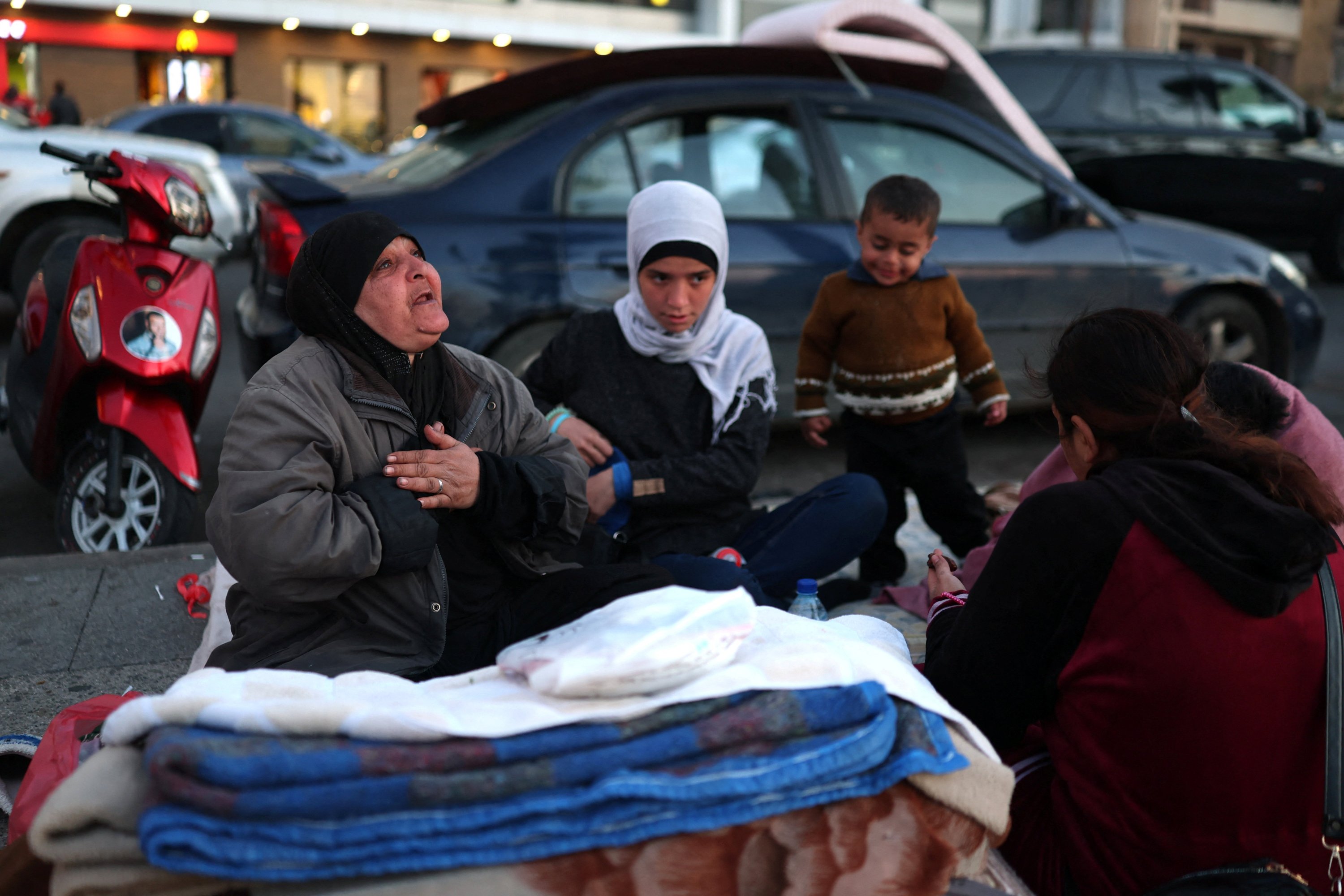
They fled their village of Libbaya in the Bekaa Valley after nearby airstrikes rattled the region.
“I have lived through all the wars,” she says.
“In 1982 we ran to the fields when Israel invaded. In 2024 we were displaced again. And now this.”
Getting to Beirut was exhausting. She traveled by van with almost nothing.
“I only had the clothes I was wearing,” she says.
For people like her, renting an apartment in Beirut is impossible.
“We are poor,” she says. “We have nowhere else to go.”
Ahmad Reda, 40, sits in a wheelchair near one of the tents erected inside the stadium.
He has not returned to his home in the southern Lebanese village of Markaba since the war in 2024, saying Israeli forces still control areas along the border.
“For people like me, the situation could not continue forever,” he says.
Residents in southern Lebanon had grown increasingly frustrated with continued Israeli strikes despite the ceasefire, he adds.
“You cannot see attacks happening every day and remain silent.”
His sister Zeinab agrees.
“If Israel leaves our land, no one will fight,” she says. “But we cannot live without our rights.”
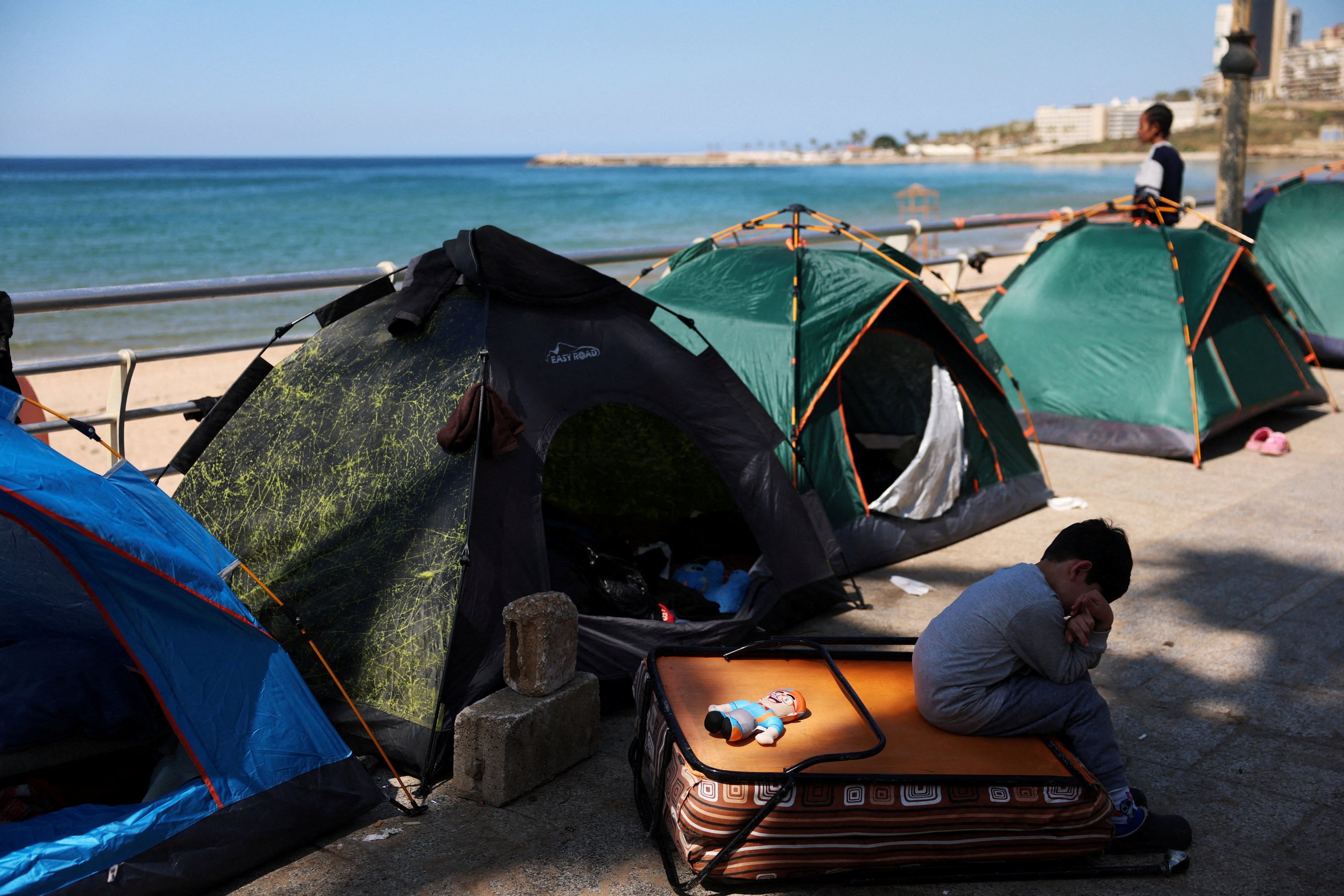
Outside the stadium, the crisis spills into the surrounding streets.
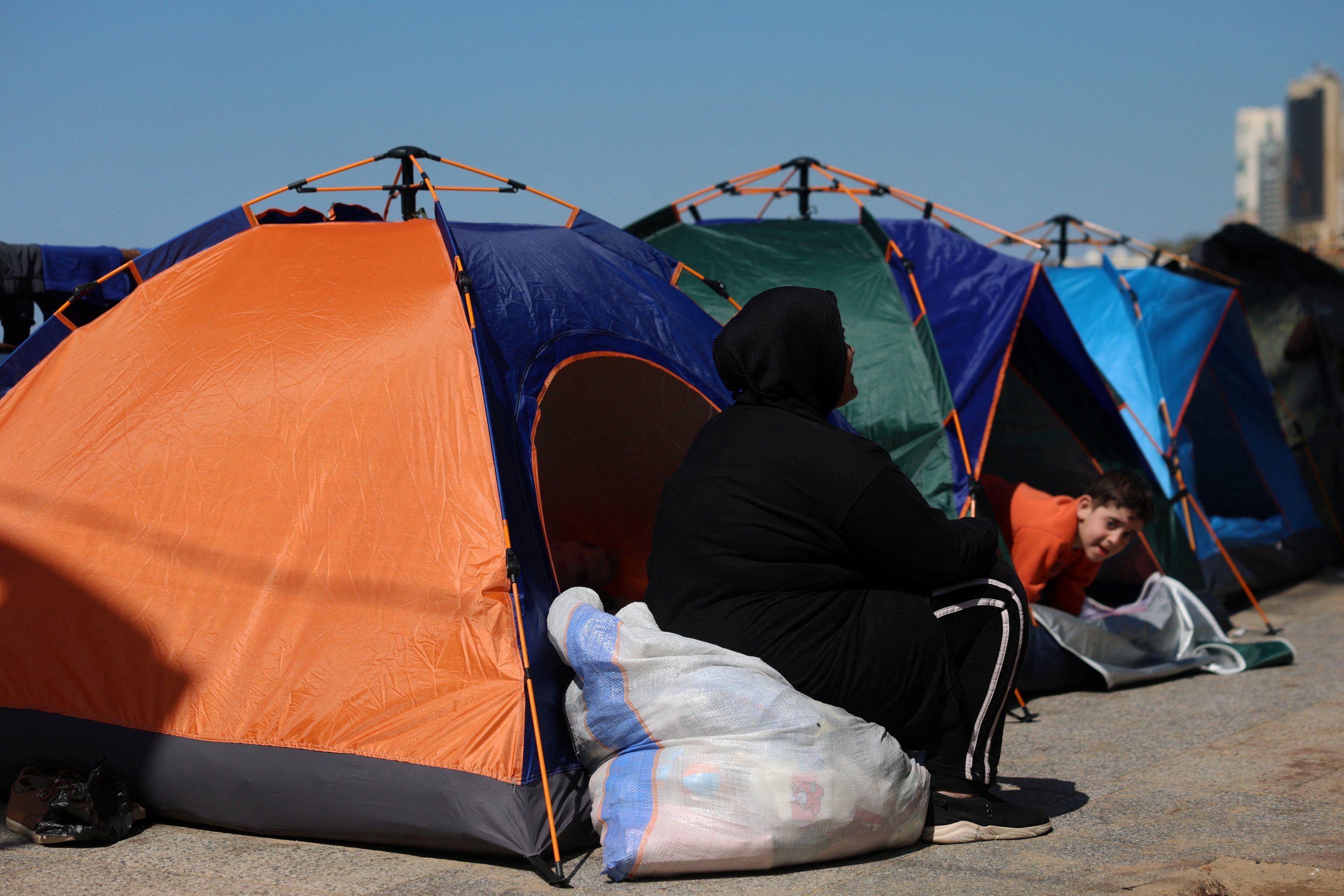
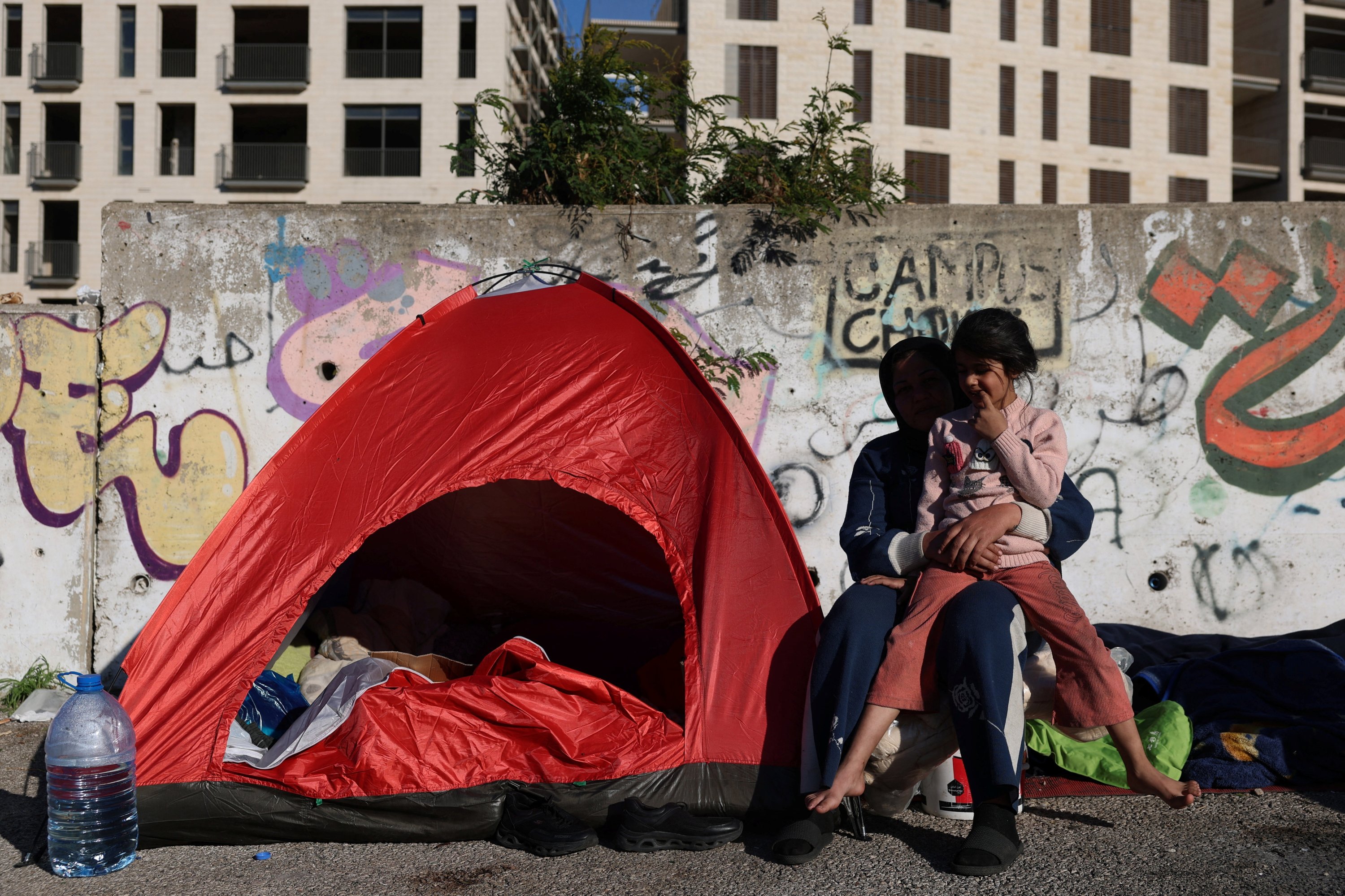
Small tents have appeared between parked cars in the seaside parking lot as new arrivals search desperately for space.
Mohamed Saleh stands beside one of them. He bought the tent for $35 after spending his first night sleeping inside his car.
“This is not living,” he says.
Saleh and his wife fled their Beirut home when rockets began falling. Their daughter is staying with relatives for safety.
His wife, Fatima, originally from Aleppo in Syria, had already experienced displacement once during the Syrian civil war.
Before the escalation, the couple say they lived ordinary lives.
“We had homes and work,” Saleh says quietly, looking around the parking lot.
“Now we have nothing.”
He pauses before adding, almost pleadingly:
“Lebanon is a small place. Let people live.”
While many displaced families avoid criticizing armed groups openly, anger and frustration are rising across Beirut.
The latest regional war began after the United States and Israel launched large-scale strikes against Iran on Feb. 28, killing Iran’s supreme leader Ayatollah Ali Khamenei.
Iran retaliated with attacks against Israel and energy facilities in Gulf states aligned with Washington.
In support of its ally Iran, Hezbollah fired rockets toward Israel, drawing heavy Israeli airstrikes across Lebanon.
Many Lebanese residents say they now feel trapped between powerful forces far beyond their control.
In the Beirut neighborhood of Aisha Bakkar, fruit and vegetable vendor Randa Harb did not hide her anger.
“Hezbollah must surrender its weapons to the state, period,” she said.
Others blame both sides.
“They are all just killing each other,” said Amal Hisham, 46, as she surveyed the shattered windows of her cousin’s apartment after a nearby strike.
“Who will compensate these people?”
Lebanon remains deeply divided along sectarian lines, with Hezbollah rooted in the Shiite community while many Sunni and Christian areas have grown increasingly critical of the group’s military role.
Even within Shiite communities, frustration is growing.
“No one wanted this war,” said Lina Hamdan, a Shiite lawyer who believes the conflict could mark a turning point for Hezbollah after the government moved to outlaw its military activity.