World leaders, including the head of the U.N., will converge on Sharm el-Sheikh Monday when U.S. President Donald Trump and his Egyptian counterpart Abdel-Fattah el-Sissi chair a historic Gaza peace summit.
The gathering comes after a cease-fire and a hostage release deal was reached earlier in the week between Israel and the Palestinian resistance group Hamas under a U.S. peace plan.
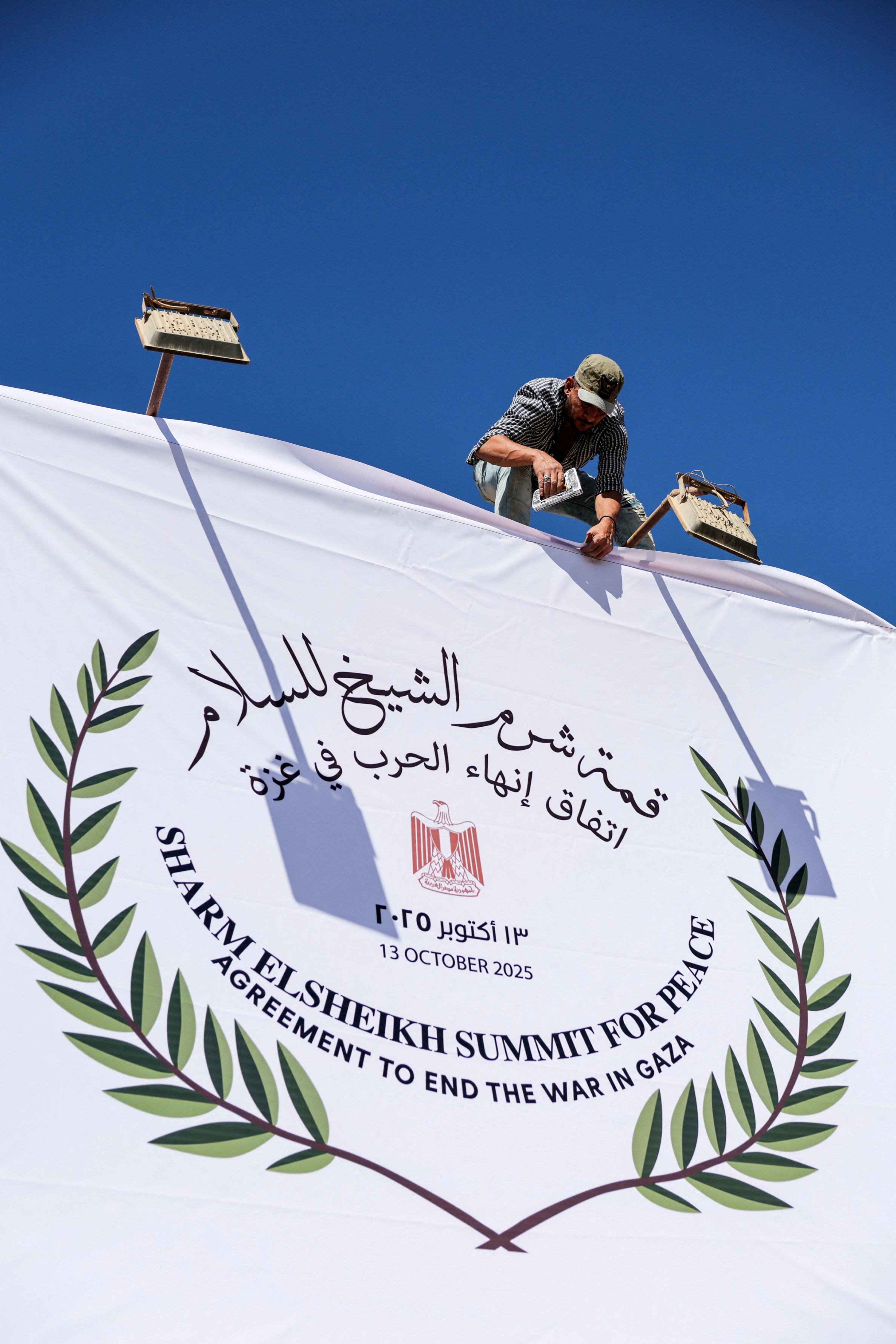
The summit in the Red Sea resort town, officially titled the "Sharm el-Sheikh Peace Summit," will bring together "leaders from more than 20 countries," el-Sissi's office said.
It will seek "to end the war in the Gaza Strip, enhance efforts to achieve peace and stability in the Middle East, and usher in a new era of regional security."
The Egyptian Foreign Ministry on Sunday said a "document ending the war in the Gaza Strip" was expected to be signed during the "historic" gathering.
The summit was aimed at inaugurating "a new chapter of peace and security ... and alleviating the suffering of the Palestinian people" in Gaza, it said in a statement.
U.N. Secretary-General Antonio Guterres said he would attend, as will British Prime Minister Keir Starmer, his Italian counterpart Giorgia Meloni and Pedro Sanchez of Spain.
French President Emmanuel Macron and Turkish President Recep Tayyip Erdoğan will also travel to Sharm el-Sheikh, according to their offices.
German Chancellor Friedrich Merz will also be present, while the European Council will be represented by its president, Antonio Costa, a spokesperson said.
The plan for Gaza "offers a real chance to build a just and sustainable peace, and the EU is fully committed to supporting these efforts and contributing to its implementation," the spokesperson added.
Jordan's King Abdullah II is also expected to attend, according to state media.
There was no immediate word on whether Israeli Prime Minister Benjamin Netanyahu would participate, while Hamas has said it will not take part.
Hossam Badran, a Hamas political bureau member, told AFP in an interview that the Palestinian militant group "will not be involved".
Hamas "acted principally through ... Qatari and Egyptian mediators" during previous talks on Gaza, he said.
Monday's summit will be preceded by the release of Israeli hostages held in Gaza, a top Hamas official told AFP. As part of the deal's first phase, Hamas will free the captives, 20 of whom Israel believes are still alive, in exchange for nearly 2,000 Palestinian prisoners.
"According to the signed agreement, the prisoner exchange is set to begin on Monday morning as agreed," Hamas official Osama Hamdan told AFP in an interview Saturday.
Despite the apparent breakthrough, mediators still have the tricky task of securing a longer-term political solution that will see Hamas hand in weapons and step aside from governing Gaza.
Badran said the second phase of Trump's plan "contains many complexities and difficulties," while one Hamas official, speaking on condition of anonymity, said disarming was "out of the question."
Under the Trump plan, as Israel conducts a phased withdrawal from Gaza's cities, it will be replaced by a multi-national force from Egypt, Qatar, Türkiye and the United Arab Emirates, coordinated by a U.S.-led command center in Israel.
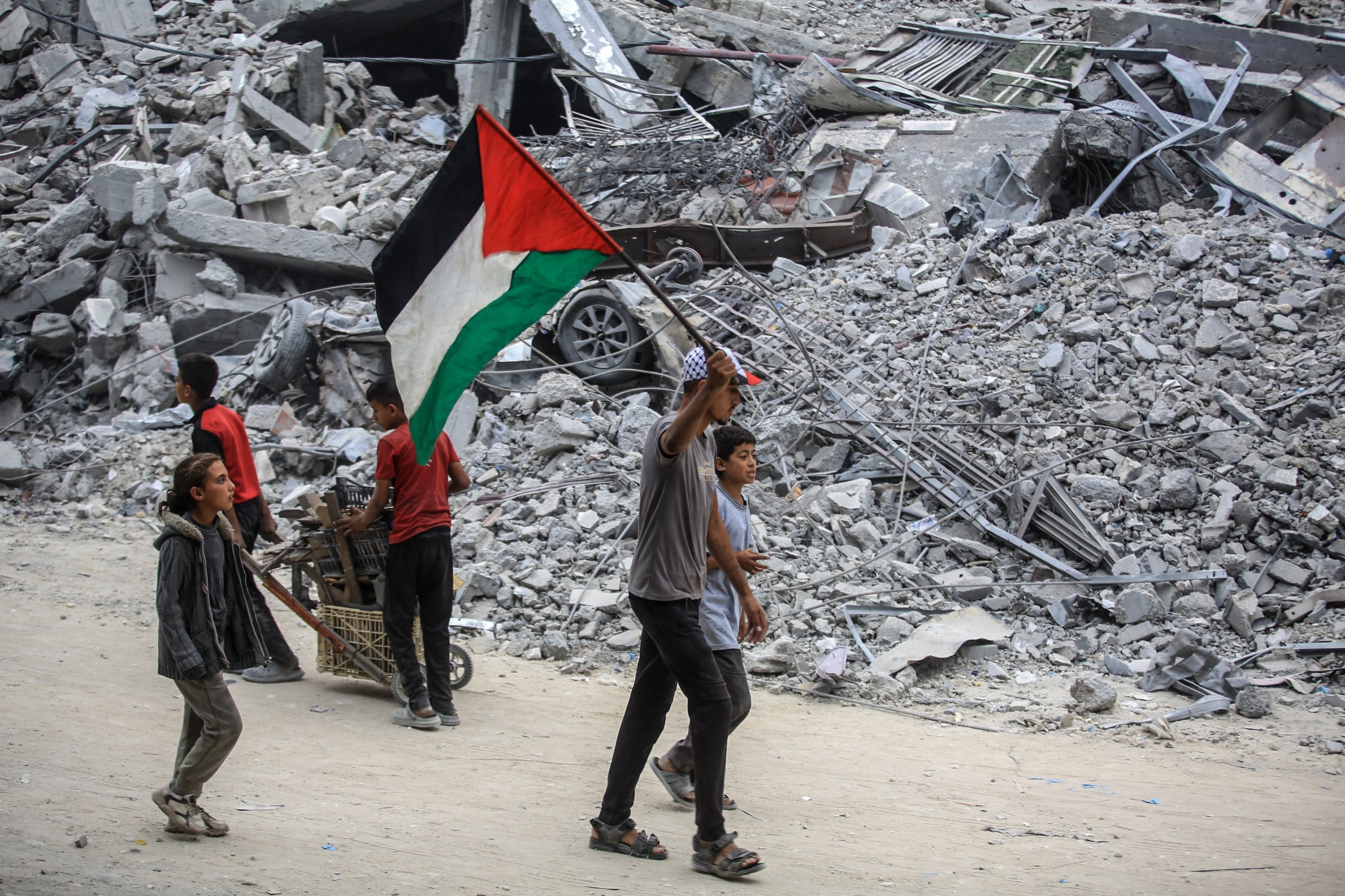
Earlier Saturday, U.S. Central Command (CENTCOM) chief Adm. Brad Cooper, Trump's Middle East envoy Steve Witkoff and Trump's son-in-law Jared Kushner visited Gaza, where hundreds of thousands of Palestinians were again on the move, returning to their devastated homes.
Drone footage shot showed whole city blocks reduced to a twisted mess of concrete and steel reinforcing wire.
The walls and windows of five-storey apartment blocks had been torn off and now lay choking the roadsides as disconsolate residents poked through the rubble.
Israel's genocidal war on Gaza has killed at least 67,682 people, mostly women and children, according to the local Health Ministry, figures the United Nations considers credible.