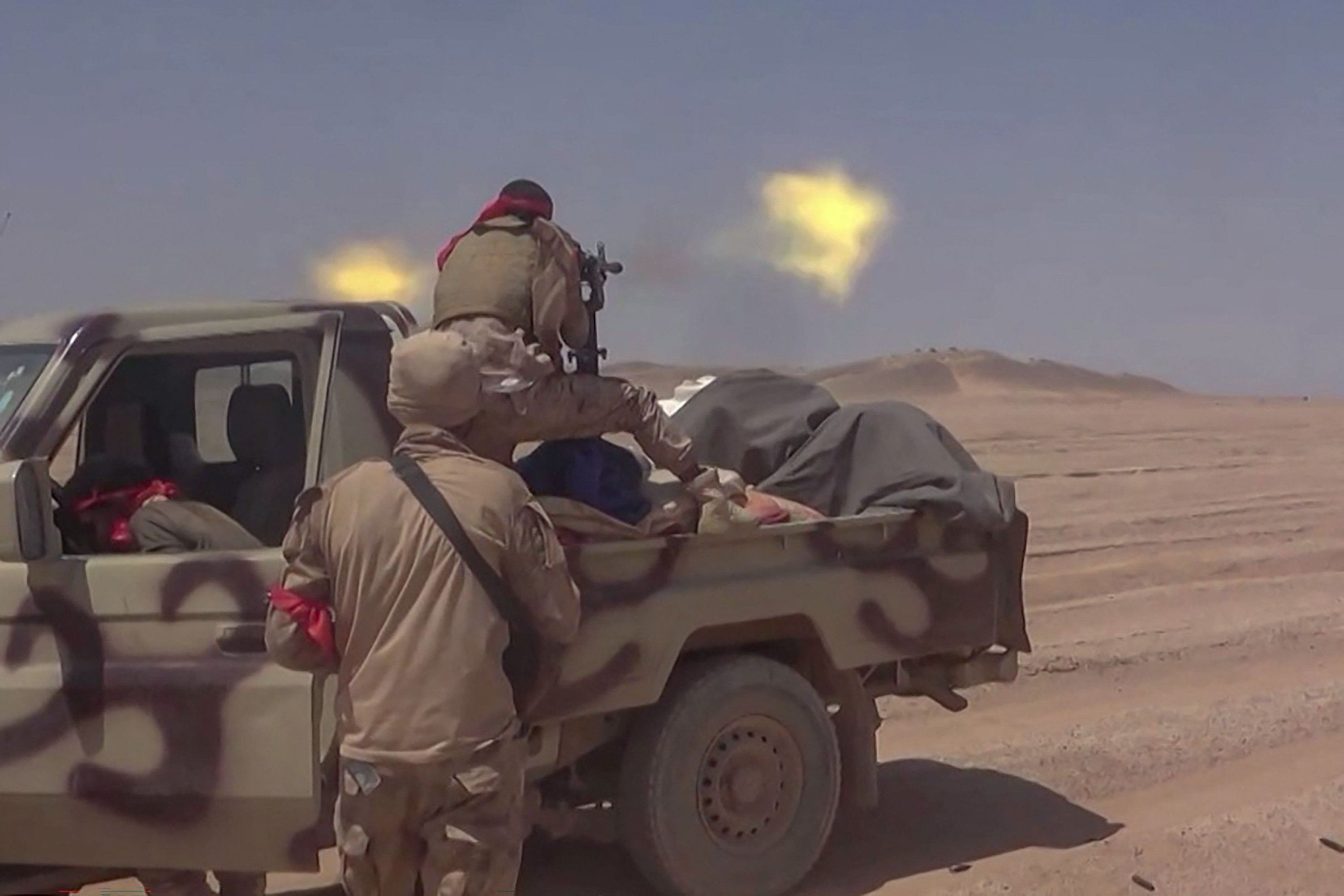
Saudi Arabia and Iran-backed Houthi rebels in Yemen traded fresh cross-border strikes Thursday as civilians fled fighting by boat across the Red Sea, adding to concerns over global oil supplies as the Middle East conflict widens.
Houthi-controlled television reported Saudi airstrikes in Yemen’s Hajjah province near the Saudi border and Red Sea coast, as well as around Taiz farther south and inland.
Saudi Arabia’s civil defense said a Yemeni resident was killed by debris from a drone intercepted over the western city of Taif. It was the first death Riyadh has reported from repeated Houthi attacks since fighting intensified last week. Saudi authorities have previously said more than 80 people were wounded.
Separately, Iran’s Revolutionary Guard Navy said a Togo-flagged oil tanker caught fire after being struck while attempting what it described as an “illegal passage” through the Strait of Hormuz, Iranian state media reported.
The tanker stopped after the fire broke out, the Guards Navy said, adding to concerns over the security of a waterway critical to global energy supplies.
The spread of the war to Yemen and Saudi Arabia has raised new concerns about oil supplies by jeopardizing the main alternative Red Sea route for Gulf exports while traffic through the Strait of Hormuz remains constrained. Shipping data showed only four commodity vessels transited the strait Thursday, well below the 10-day average of 16.
U.S. President Donald Trump has rebuffed Saudi appeals for military support against the Houthis, who agreed to a ceasefire with the U.S. last year after Washington bombed the group for two months.
Trump said Thursday that he was approaching a critical juncture over whether to restart large-scale attacks on Iran.
“I have a big decision coming up. Do I want to go in and annihilate them or do I not? It’s a big decision. Anything could happen with me,” Trump said in an interview with Axios.
Trump has previously threatened major new attacks that did not materialize.
Global crude prices eased Thursday but remained above $100 a barrel after reaching their highest levels since May. Brent crude fell $2.14 to $102.68 a barrel, while U.S. West Texas Intermediate crude fell $1.83 to $100.08.
The average U.S. retail diesel price hit a record high Thursday, just shy of $6.40 a gallon.
The U.S. and Iran have held no negotiations to end the war since an interim agreement reached in June collapsed within weeks. The war is expected to come up for discussion at the United Nations General Assembly next week, with an Iranian delegation able to attend, according to the U.S. State Department.
The fighting has driven Yemeni civilians to flee across the Bab el-Mandeb, Arabic for “Gate of Tears,” the narrow strait at the southern entrance to the Red Sea.
In Djibouti, on the African shore of the Red Sea, Wahida Omer, 50, reached land after crossing from Yemen on a small boat when her village of Dhubab came under attack as the Houthis swept into the area. Her husband was left behind, and she had no idea whether he was alive, dead or had been captured by the Houthis.
“The sea was frightening, difficult,” she said in an interview filmed by the International Organization for Migration. Those on the boat were “crying the whole way, and we arrived still crying” with nothing to eat.
The IOM says more than 100,000 Yemenis have been displaced by the latest fighting. The United Nations has put the number at about 125,000.
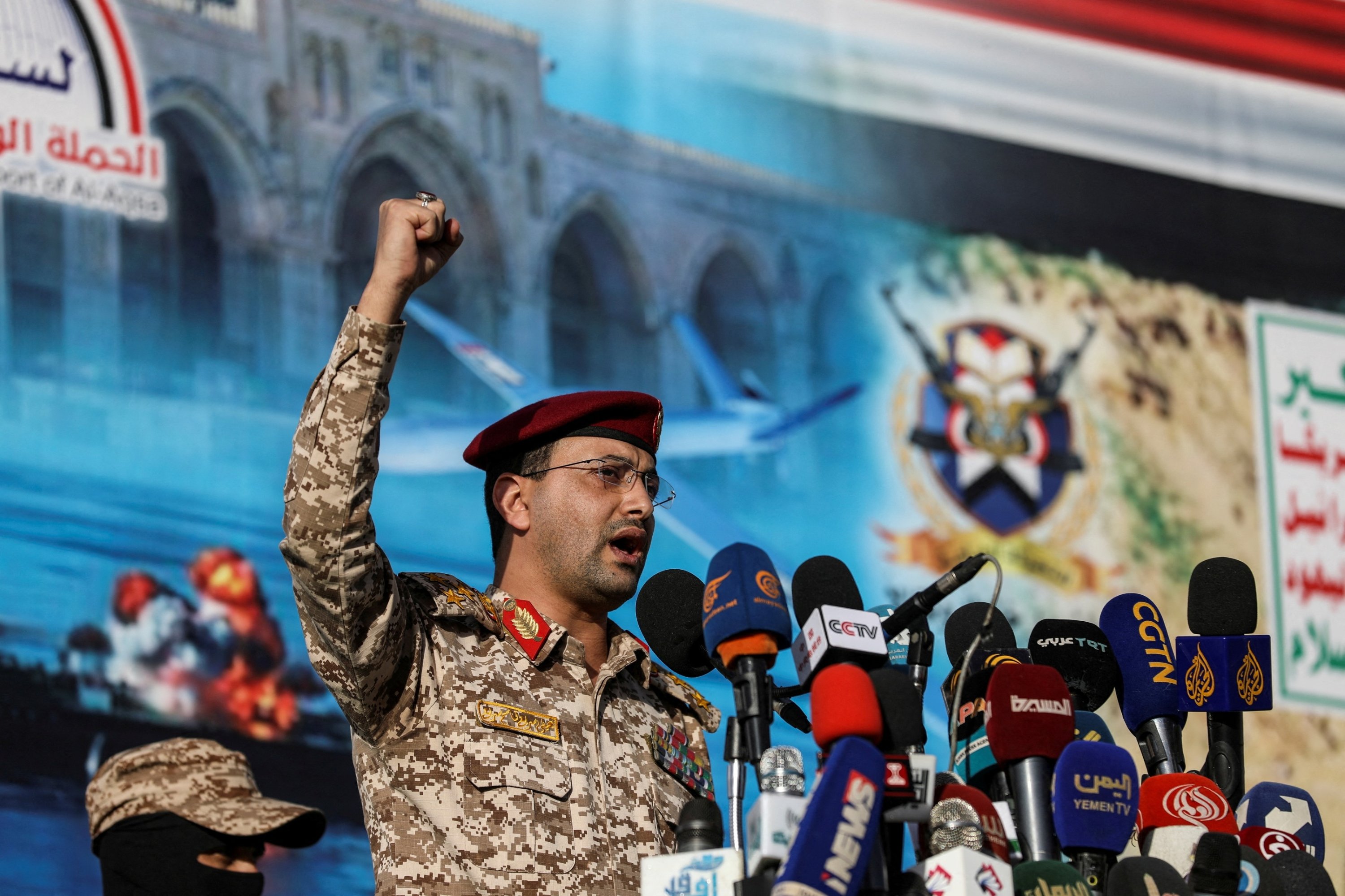
The Houthis, who have seized Yemen’s Red Sea coast in a lightning advance since last week, say the Saudi air force has carried out hundreds of airstrikes in recent days. On Wednesday, the Houthis said they had shot down a Saudi F-15 fighter jet.
“We want the Saudis to cease their blockade and occupation of our country, and to stop their aggression against us. This is our demand!” Houthi leader Abdul Malik al-Houthi said in a televised speech, seated with a traditional dagger in his belt. Slogans on the wall behind him read: “Death to America, death to Israel, a curse upon the Jews, victory for Islam.”
The U.S. Navy is trying to guide ships through the Strait of Hormuz, the outlet to the Gulf along Iran’s coast, where about one-fifth of the world’s oil and gas previously passed before the war. The U.S. is also imposing a blockade on Iranian ports.
Iran says the strait is closed and will remain shut until Washington lifts the blockade. It is seeking an agreement with neighboring Gulf states that would allow it to collect fees from ships passing through the strait.