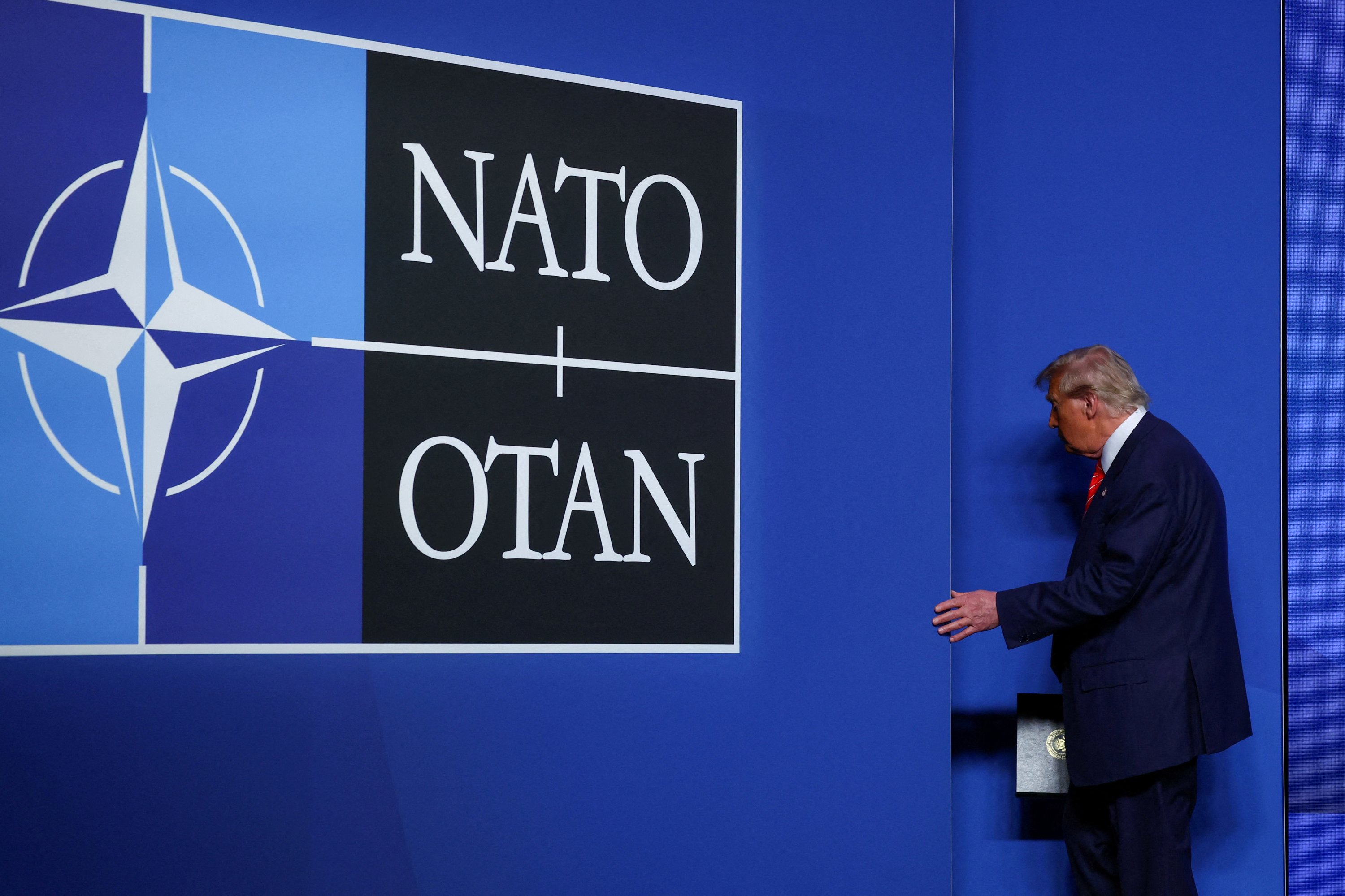
NATO is considering reducing the frequency of its leaders’ summits, with some members pushing to move away from annual meetings, six sources told Reuters, a move that could avoid a potentially tense encounter with U.S. President Donald Trump.
Trump's administration has engaged repeatedly in scathing criticism of many of the U.S.-led defense alliance's 31 other members, most recently berating some for not providing more assistance to U.S. military operations against Iran.
The frequency of NATO summits has varied over the alliance's 77-year history but its leaders have met every summer since 2021 and will gather this year in the Turkish capital Ankara on July 7 and 8. But some members are pushing to slow the tempo, a senior European official and five diplomats, all from NATO member countries, told Reuters.
One diplomat said the 2027 summit, to be held in Albania, would likely take place that autumn and NATO was considering not holding one at all in 2028 - the year of the U.S. presidential election and Trump's final full calendar year in office. Another said some countries were pushing to hold summits every two years, adding that no decision had been taken and Secretary General Mark Rutte would have the final say.
The sources spoke on condition of anonymity to discuss internal NATO deliberations.
In response to a query from Reuters, a NATO official said: "NATO will continue to hold regular meetings of Heads of State and Government, and between summits NATO Allies will continue to consult, plan and take decisions about our shared security."
Two of the sources mentioned Trump as a factor but several said broader considerations were at play. Some diplomats and analysts have long argued that annual summits create pressure for eye-catching results that distracts from longer-term planning.
"Better to have fewer summits than bad summits," said one diplomat. "We have our work cut out for us anyway, we know what we have to do." Another said the quality of discussions and decisions was the true measure of alliance strength.
Phyllis Berry, nonresident senior fellow at the Atlantic Council, wrote: "Reducing high-profile summitry would allow NATO to get on with its business and dial down the drama that has marked many recent transatlantic encounters."
In an article published on the think tank's website last week, she noted that NATO held only eight summits during the decades of the Cold War. She described Trump's first three NATO summits in his first term as "contentious events, dominated by his complaints about low allied defense spending".
Last year's summit in The Hague was also largely shaped by Trump's demand that NATO members boost defense spending sharply to 5% of GDP - a target they accepted by agreeing to spend 3.5% on core defense and 1.5% on broader security-related investment. The mere fact that it ended without major drama was considered a success.
This year's gathering also looks set to be tense.
After NATO allies refused to give him the support he was demanding in the Iran war, which he had begun without consulting or informing them, Trump openly questioned whether the U.S. should stand by NATO's mutual defense pact and said he was considering leaving the alliance. Months earlier, he had laid claim to Greenland, an autonomous territory belonging to fellow NATO member Denmark.
At the 2018 summit, Trump threatened to walk out in protest at other NATO allies' low defense spending.
"Had he made good on his threat to leave in protest, we would have been left to pick up the pieces of a shattered NATO," Jens Stoltenberg, NATO's secretary general at the time, wrote in a memoir published last year.