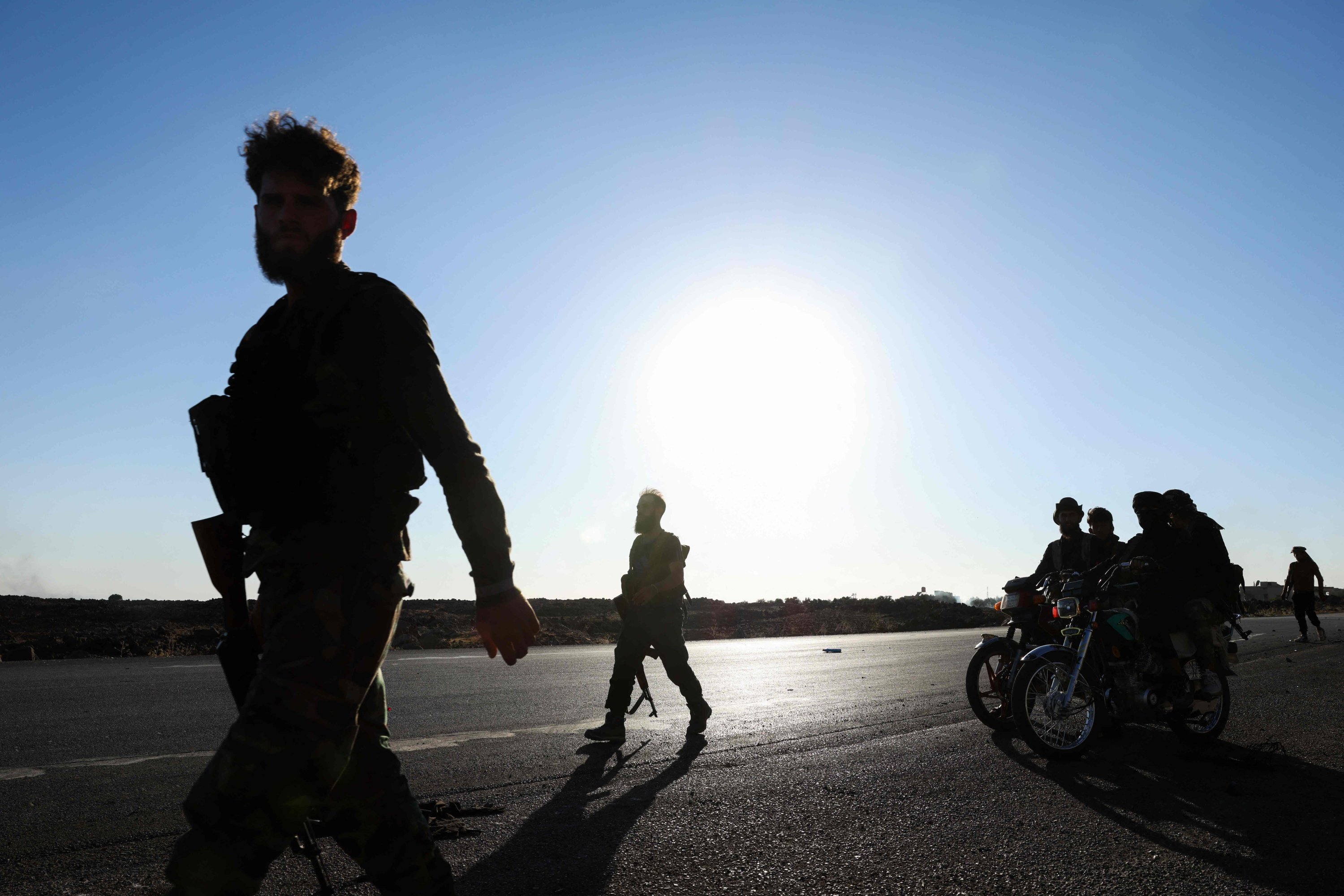
The Syrian presidency on Friday urged calm as violence escalated in the southern Suwayda region, announcing plans to deploy specialized units to help restore stability and order.
The presidency said in a statement that it followed with deep concern and profound sorrow the violent events that have occurred and continue to unfold in southern Syria.
"These events resulted from the expansion of illegal armed groups that have used weapons as a means to impose their will, directly endangering the lives of civilians, including children, women, and the elderly," it added.
In light of these developments, the statement stressed that the country "calls on all parties to exercise self-restraint and prioritize reason."
The competent authorities are working to send a specialized force to end the conflict, alongside political and security measures aimed at stabilizing the situation and ensuring a return to calm in the governorate as soon as possible, according to the statement.
Clashes are still ongoing in the western and northern parts of the province between Bedouin tribal forces and local armed Druze groups.
The fighting began on Sunday as limited skirmishes between both sides, prompting Syrian regime forces to intervene. Dozens of soldiers were later killed in retaliatory attacks by armed Druze factions.
After the escalation between regime forces and Druze groups, a cease-fire was brokered but quickly collapsed.
Israel, under the pretext of protecting Druze communities, intensified its attacks across Syria, launching airstrikes on four provinces, including strikes on the General Staff headquarters and presidential palace in Damascus on Wednesday.
The government forces had withdrawn from Suwayda province following a cease-fire agreement announced Wednesday that halted much of the violence that plagued the area earlier in the week, but which ultimately did not stop the fighting.
Officials were negotiating with Druze factions on an agreement to re-enter the area to impose stability and protect state institutions, according to two Syrian officials who spoke Friday on condition of anonymity because they were not authorized to speak publicly. They said an agreement was reached, but later said the deployment was delayed, without giving an explanation.
Tens of thousands of people remained displaced by the violence and the United Nations has been unable to bring in much-needed humanitarian and medical aid because of ongoing clashes.
Israel launched dozens of airstrikes on convoys of government fighters and even struck the Syrian Defense Ministry headquarters in central Damascus. The Druze form a substantial community in Israel, where they are seen as a loyal minority and often serve in the Israeli military.
A truce mediated by the U.S., Türkiye and Arab countries was announced Wednesday. Under the accord, Druze factions and clerics were to maintain the internal security in Sweida as government forces pulled out, Syria's interim President Ahmad al-Sharaa said Thursday.
By late Thursday, clashes were flaring again between the Druze and Bedouin groups in parts of Sweida province. State media reported Druze militias carried out revenge attacks against Bedouin communities, leading to a new wave of displacement.
The governor of neighboring Daraa province said in a statement that more than 1,000 families had been displaced to the area from Suwayda as a result of "attacks on Bedouin tribes by outlaw groups."
The volunteer group Syrian Civil Defense said Friday that the head of its center in Suwayda city had been kidnapped by gunmen two days earlier while on his way to evacuate a U.N. team.
The official, Hamza al-Amarin, was driving a van with the insignia of the organization, known as the White Helmets, when he was stopped by militants, the statement said. A person who answered his phone on Thursday said he was safe, it added, but they have been unable to reach him.
The United Nations' migration agency said Friday that nearly 80,000 people had been displaced altogether since clashes started on Sunday.
It also noted that essential services, including water and electricity, have collapsed in Sweida, telecommunications systems are widely disrupted, and health facilities in Sweida and Daraa are under severe strain.