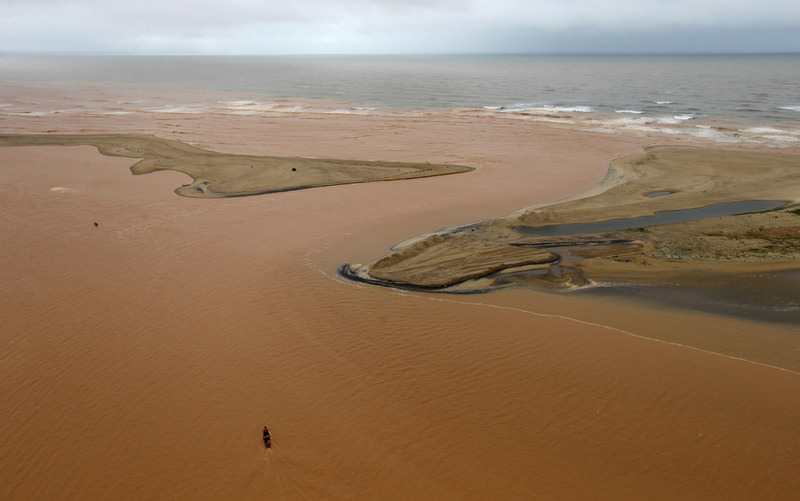
A torrent of mud unleashed by a dam burst at an iron ore mine in southeastern Brazil is contaminating the Atlantic Ocean.
Brazilian officials say thousands of hectares of land and water has been contaminated by the "country's worst environmental catastrophe ever", what's worse is that Brazil's Environment Minister Izabella Teixeira has predicted that it may take up to 30 years to get rid of the toxic sludge from the Doce basin.
On Nov. 5 about 60 million cubic metres of iron ore waste which could fill 25,000 Olympic-size swimming pools, engulfed Bento Rodrigues and Paracatu and contaminated the river, which is the primary source of clean water and food in the region.
The deadly stain of red mud, water and debris from the Nov. 5 burst at the Samarco mine in the Minas Gerais state all but erased a hamlet there, killing eight people, with another four bodies still unidentified and 21 missing.A report Monday in O Estado de S. Paulo daily said the mud had reached a sensitive nature reserve frequented by endangered turtles.
Brazil's government said previously on Nov 11 that it may fine mining giants BHP Billiton Ltd and Vale SA for the "environmental catastrophe" caused by ruptured dams at an iron ore mine jointly owned by the companies in a southeastern state.
The government is increasingly concerned over the rising death toll and contaminated mud flowing through two states as a result of the disaster. It is studying the mine's permits and will ensure the owners pay for cleanup costs, Environment Minister Izabella Teixeira said in Brasília, the capital.
"If federal fines are applicable, we will apply them," Teixeira told reporters. "There will be punishment, and under Brazilian law the environment has to be repaired."
The conversation was "tough", a presidential press aide told Reuters. To reinforce her message, Rousseff asked her chief of staff, Jaques Wagner, to meet with the companies' executives.
Neither the companies nor Brazilian officials have determined a cause for the ruptures, though Samarco acknowledged that workers, 13 of whom were washed away by the torrent, were engaged in an expansion of the first dam when it burst. The work was necessary because of increased output at the mine.
A state prosecutor on Wednesday said investigators are probing reports that Vale contributed to higher water volumes behind the dam by sending waste from one of its nearby mines to Samarco's tailings pond. When a reporter asked about the reports at the news conference, the executives did not answer.
The disaster has become a public relations, regulatory and financial nightmare for the companies. Politicians, environmentalists and residents are calling for tougher rules on the mining industry, which employs hundreds of thousands of people and is a major source of export revenue.
A person familiar with the insurance framework around the mine said on Tuesday that the disaster could trigger $600 million in insurance claims.
The mine employs about 1,800 workers, most of whom are now on paid leave as operations have been halted.