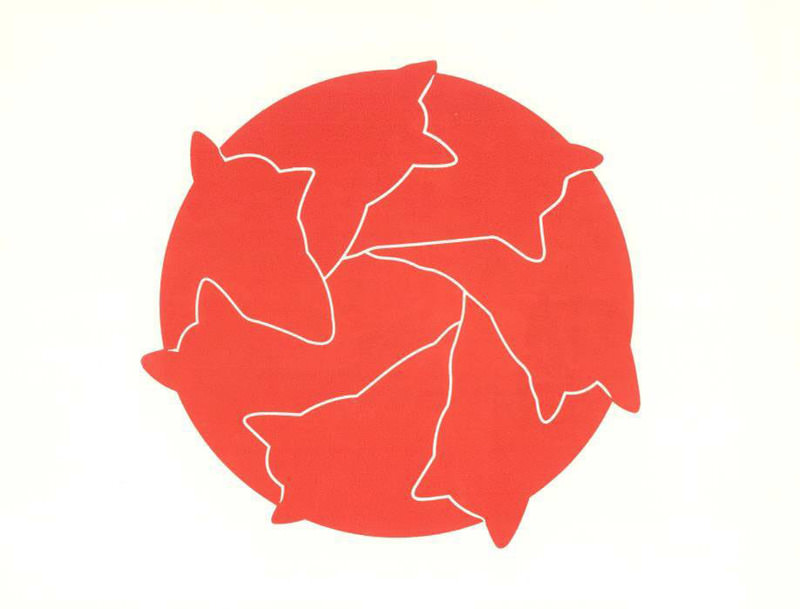
The "Kedigrafi" (Cat Alphabet) exhibition created by Mehmet Tekirdağ features a cat alphabet consisting of 32 letters and is open to visitors at the Japan Art Center until April 8. Speaking to Anadolu Agency (AA) at the opening of the "Kedigrafi" exhibition, artist Mehmet Tekirdağ said that he has been writing scripts for movies and working as a director's assistant for a long time, allowing him to delve into music and painting. Tekirdağ said, "I had been producing figurative work but started taking an interest in cats. By following the aesthetic traces of their positions and moves, I examined the same positions in the alphabets around the world and invented a new alphabet, initially opening an exhibition featuring its letters. Together with Erdal Küçükyalçın we named the exhibition 'Kedigrafi' and presented it to audiences today."
Noting that his works were displayed at the 22nd Gabrova Biennial in Bulgaria in 2015, Tekirdağ said the 32-letter cat alphabet was moved to the biennial museum for an indefinite display. Tekirdağ participated in the International Calligraphy and Typography Exhibition organized by Anadolu University in 2015. "The exhibition was organized around Yunus Emre, and I prepared a special work for the exhibit. It said, 'Let's love and be loved.' I wrote it in the cat alphabet I invented. We called this exhibition, 'Kedigrafi' and I also worked on the pictures. First, I hand-sketch my works, mainly focusing on the graphics, before printing them with the fine art and serigraphy technique."
Erdal Küçükyalçın, co-founder of the Japan Art Center and a Japanese historian working at the Boğaziçi University Asian Studies Center, said they were honored to host Mehmet Tekirdağ's exhibition. "He is a really successful artist. The 'Kedigrafi' exhibition, for which we combined his cat letters and figures, is really special and I believe that it will draw great attention from art lovers." Küçükyalçın described the Japan Art Center in more detail, saying, "Our center has daily classes on Japanese arts from Tuesday to Saturday. The classes include Sumi-e, İkebana and the Japanese calligraphy Shodo which attract increasing attention from people. Because the artists want their works to live as long as possible as well as their names, the Japanese have not departed from using old techniques. Japanese arts are preferred since they use natural papers and brushes."
Küçükyalçın said that the Ikebana classes at the center are given by the wife of the Consul-general of Japan in Istanbul Ehara Sensei, Sumi-e classes are given by Aynur Küçükyalçın and Shodo classes are conducted by Oshimo Sensei. The exhibition is open to visitors until April 8 at the Japan Art Center.
Keep up to date with what’s happening in Turkey,
it’s region and the world.
You can unsubscribe at any time. By signing up you are agreeing to our Terms of Use and Privacy Policy.
This site is protected by reCAPTCHA and the Google Privacy Policy and Terms of Service apply.