The National Museum of the Republic of Kazakhstan, with its extensive collection of over 220,000 historical artifacts, offers visitors a deep dive into the country’s rich history and cultural heritage.
Located in the heart of Kazakhstan's capital, Nur-Sultan, the museum's architecture resembles a bird, standing as one of the city’s iconic structures. It is situated in the same area as other prominent landmarks such as the Palace of Peace and Reconciliation, Kazak Eli Monument and the National University of Arts.
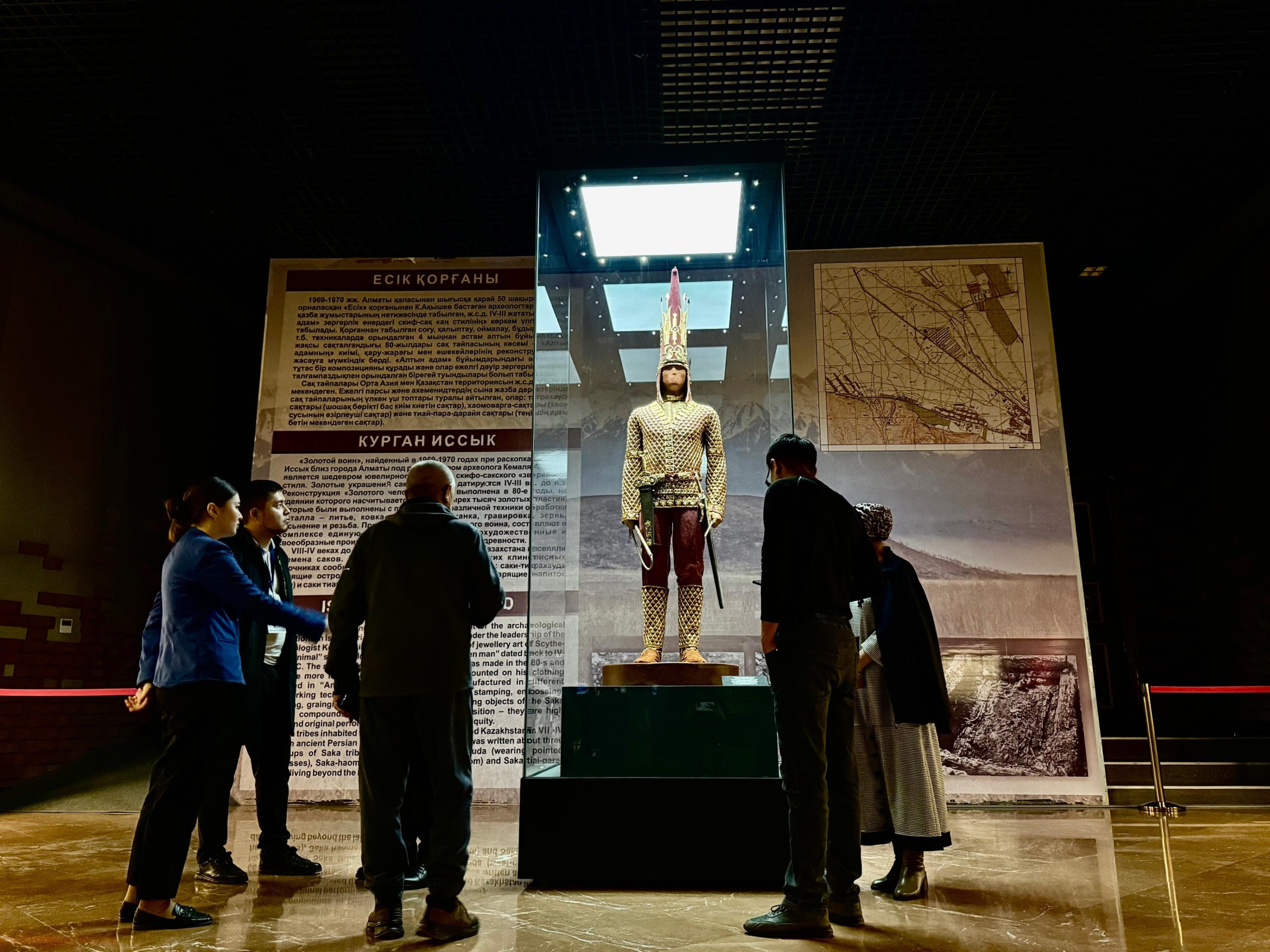
The museum is especially popular among foreign tourists visiting Nur-Sultan, making it one of their first destinations in the city. One of the most captivating exhibits is the "Golden Hall," showcasing thousands of artifacts made of pure gold, including the famous "Man in the Golden Armor," which mesmerizes visitors with its splendor.
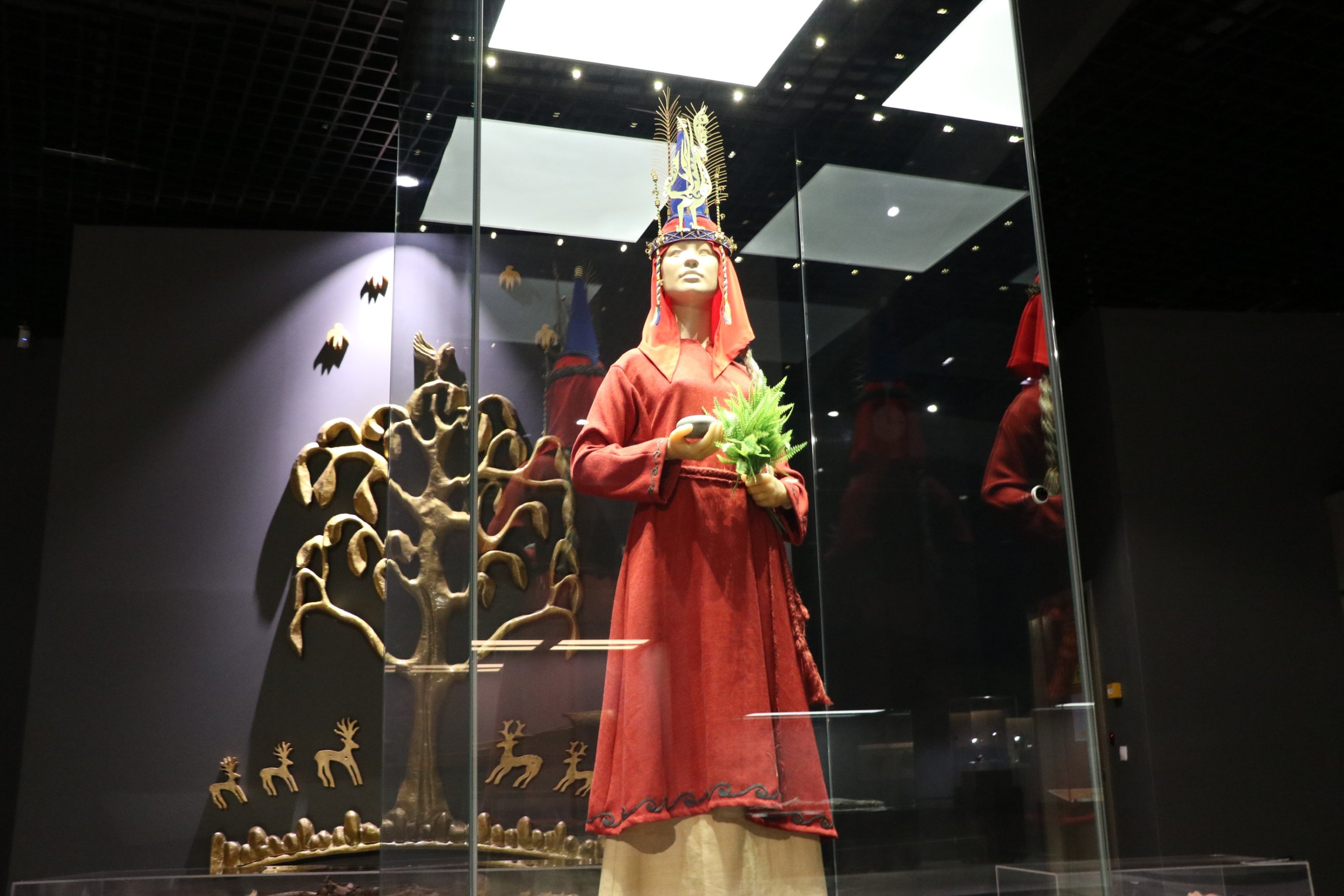
Aydana Serik, one of the museum’s guides, explained to Anadolu Agency (AA) that the "Man in the Golden Armor" is actually a Saka prince from around 2,500 years ago, discovered in the Yesik Mound in southern Kazakhstan. The prince was buried covered in gold pieces from head to toe.
Serik shared: “Our museum receives a large number of visitors daily who come to see the ‘Man in the Golden Armor.’ It has been confirmed that this is the tomb of a Saka prince who lived in these lands around 2,500 years ago. About 4,000 pieces of gold were found in his grave. You can see these pieces here in our Golden Hall.”
The museum also features an exhibition dedicated to ancient Turkic civilizations. This hall displays valuable artifacts that reflect the spiritual and cultural life of ancient Turkic states. Serik also noted that gold artifacts from Sarmatian tombs in Kazakhstan’s western region are also part of the collection, shedding light on the ancient cultures of the area.
Serik highlighted the significance of the Altai Mountains in the history of the Turkic people, explaining, “In our museum’s exhibition, we feature many artifacts discovered through archaeological excavations in the Altai Mountain foothills, the cradle of Turkic civilization.”
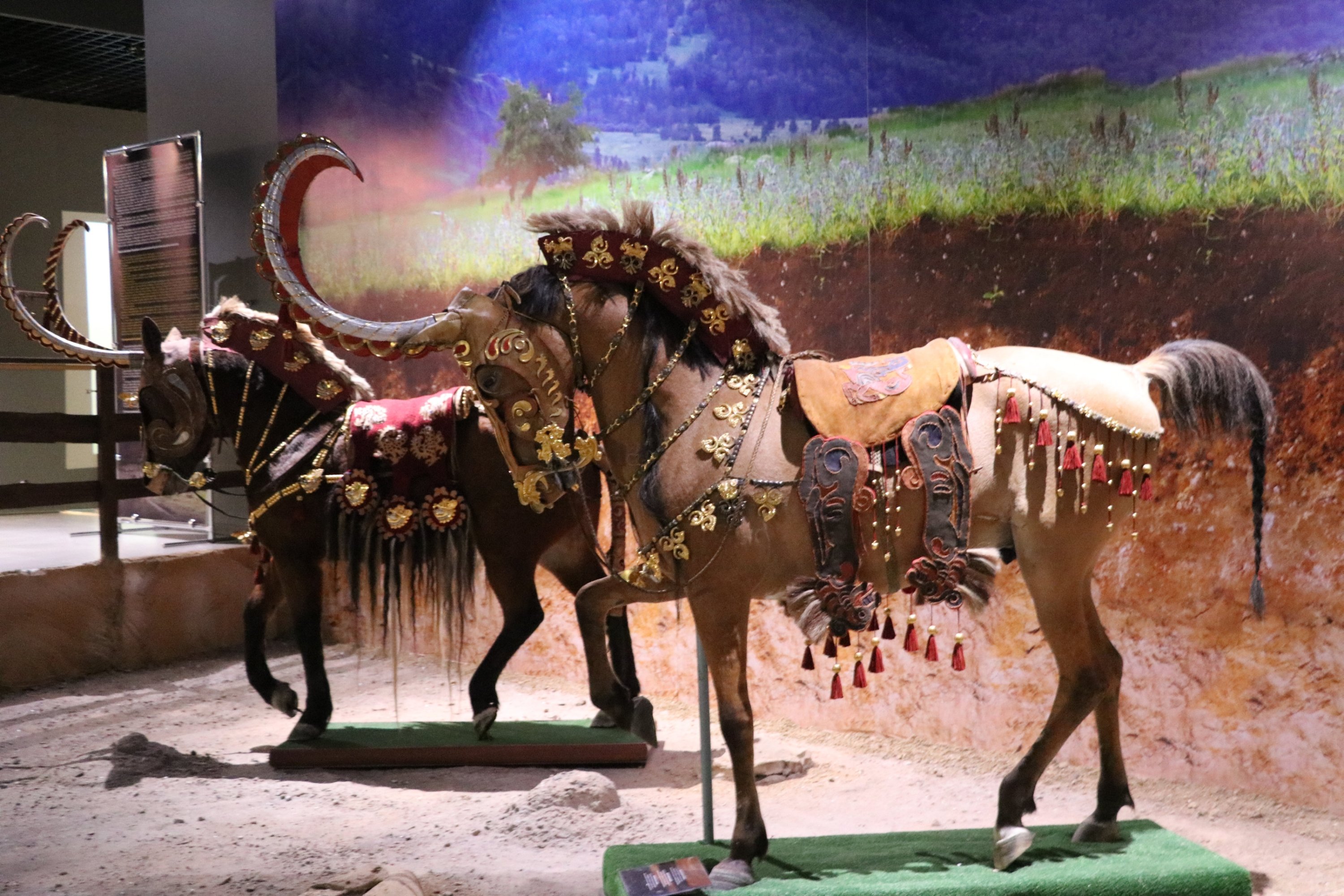
One of the most unique and rare exhibits in the museum is a set of horse bones and saddles found in the Berel Mound, located at the foot of the Altai Mountains. Discovered by Kazakh archaeologist Zeynolla Samaşev, these artifacts date back to the fourth and third centuries B.C. and are displayed in the museum. This discovery provides significant insight into the equestrian culture that flourished in this region. The bones and saddles, preserved due to the frozen state of the mound, are unparalleled in other museums worldwide.
Serik concluded: “The bones of horses ridden by Saka soldiers, along with the saddles, demonstrate that horseback riding culture flourished in these lands thousands of years ago.”