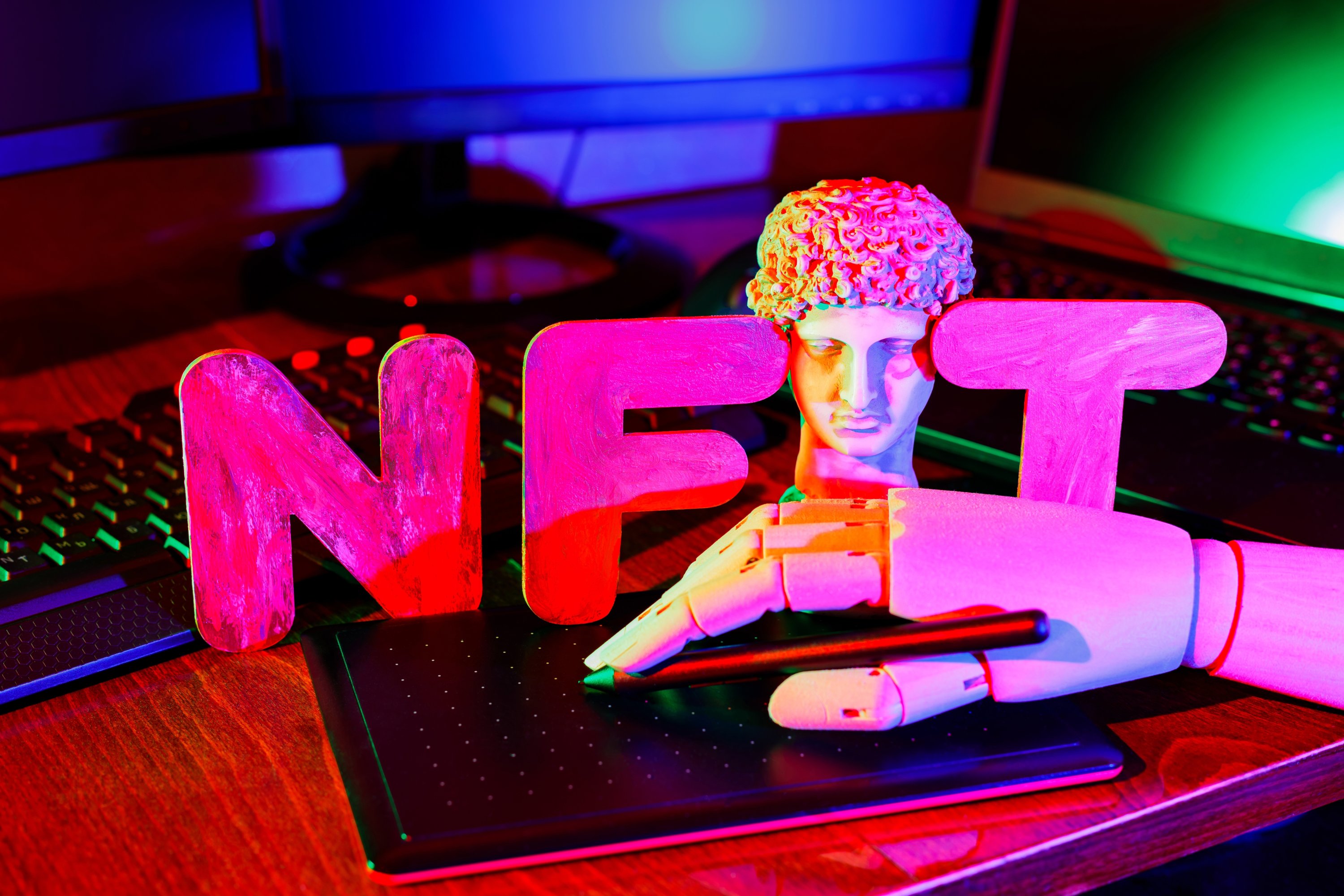
Last week, in Doha, I met an old friend of mine for coffee. We used to talk about exhibitions, artists, who was doing something genuinely interesting and who was just loud. This time, though, the conversation drifted somewhere else almost immediately. NFTs.
He is/was a serious NFT collector. Not someone who flipped cartoons for a weekend, but someone who believed, deeply, in the idea that digital art had finally found its rightful structure. Halfway through his coffee he smiled, not bitterly, more like someone remembering a relationship that ended quietly rather than explosively and said: “I think I bought the future too early. Or maybe I bought the wrong version of it.”
That sentence stayed with me. And it’s not a coincidence that it will be one of the quietly recurring conversations at the Web Summit in Doha this year. Between panels on AI, digital ownership, creator economies, and the future of online culture, the same unease keeps surfacing in different forms: what is NFT art going to become, artistically, along with financially? Not whether NFTs will pump again, not which chain will dominate, but whether this medium can move beyond speculation and find a serious artistic language of its own. In a city positioning itself as a bridge between culture and technology, that issue feels especially sharp. Because if NFTs are to survive at all, they won’t survive as a market trick, they will survive, if they do, as art.
My friend also told me about 2020 and 2021, the way people talk about a strange golden summer. The world was locked down. Streets were empty, museums were closed, galleries went dark. Everyone was isolated, but online we were hyperconnected. Time felt suspended. Screens became our windows, our rooms, our stages. And in that vacuum, NFTs didn’t just appear; they made sense.
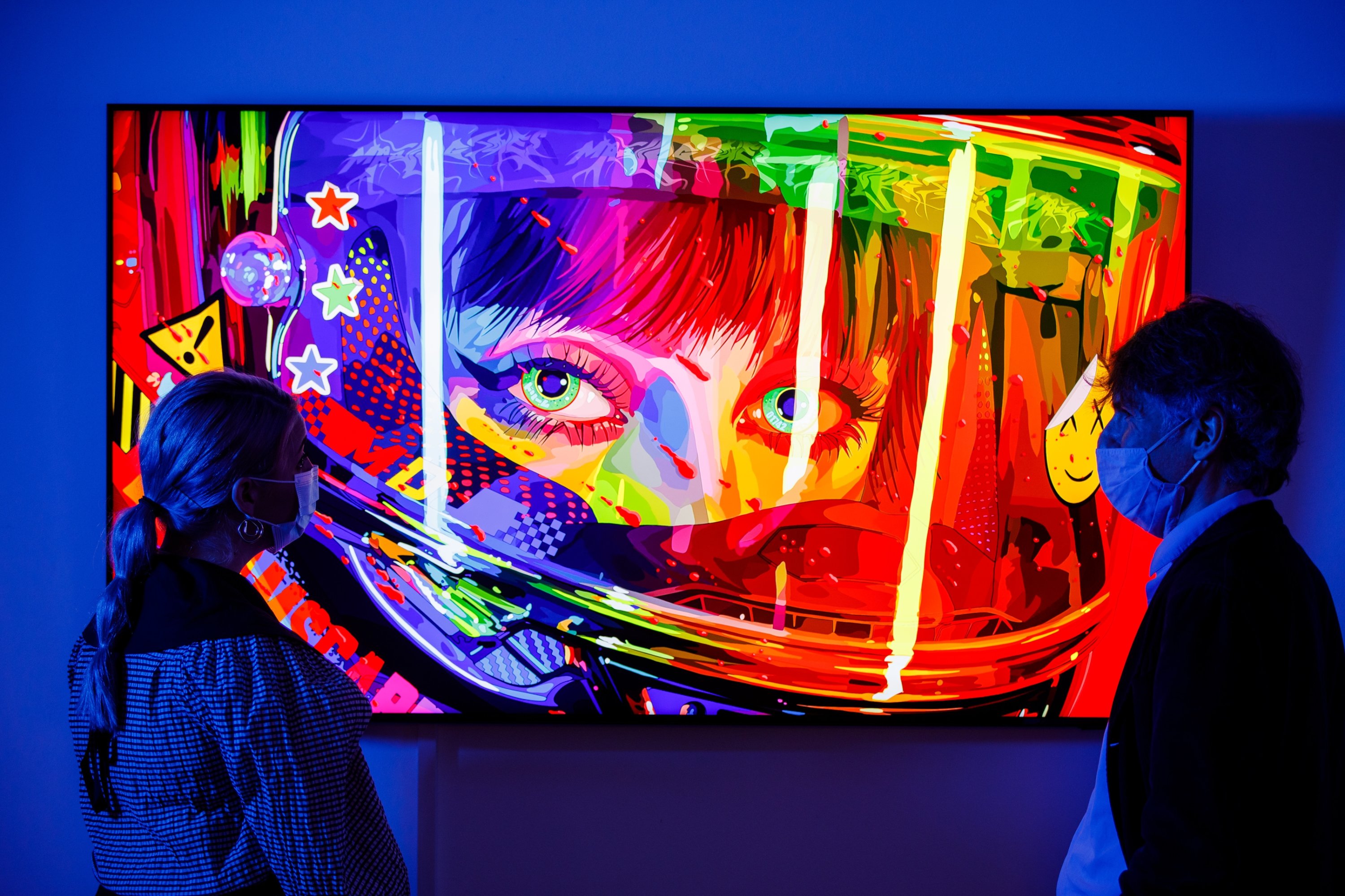
Artists were suddenly free from physical constraints. No shipping. No borders. No waiting lists. Collectors didn’t need to fly to Basel or Miami. They clicked. They minted. They joined Discord channels that never slept. For the first time, digital artists, many of whom had been ignored for years, were not just visible, they were central. Some sold works in minutes that traditional galleries had refused to even show.
“It felt like justice,” he said. “Like the internet was finally rewarding the artists who had lived there all along.”
And he’s right. During the COVID lockdowns, NFTs didn’t feel like speculation at first. They felt like emancipation. A global pause created the perfect conditions for a digital art renaissance. People had stimulus checks, savings they weren’t spending on travel, and an enormous hunger for meaning and connection. Technology wasn’t an escape anymore; it was the only place life happened. Owning a digital artwork felt intimate. Personal. Almost radical.
NFT artists were suddenly called pioneers. They were invited to panels, featured in magazines and collected by people who had never set foot in a gallery. Prices exploded, yes, but behind that explosion was something real: attention, curiosity, cultural momentum. For a brief moment, the digital and the artistic were aligned. Then, slowly, the tone changed.
My friend leaned back and said, “At some point, I stopped asking if the work was good. I only asked what the floor was.”
That’s when the trouble started. NFTs, at their core, are not artworks. They are records. Tokens. Certificates of ownership or association stored on a blockchain. The artwork exists alongside or sometimes loosely attached to that token. During the early days, this distinction didn’t matter much. The excitement blurred the lines. But as the market grew, that confusion became dangerous.
Suddenly, everything could be minted. Everyone was launching a project. Scarcity became performative. Ten thousand editions of “rare” things. Utility promises stacked on top of vague aesthetics. Roadmaps that sounded more like startup pitches than artistic intentions. The market flooded itself.
“It stopped feeling like art,” my friend said. “It started feeling like I was inside a casino designed by graphic designers.”
And casinos are fun until the lights come on. As global conditions shifted, so did the mood. Interest rates rose. Cheap money disappeared. Crypto markets began swinging violently. Bitcoin, once sold as digital gold, started behaving like a nervous teenager. Gold and silver themselves supposedly safe, ancient shelters began experiencing dramatic daily fluctuations. Nothing felt stable anymore.
“When gold can drop like that,” he said, “how do you expect people to hold on to JPEGs?”
That question isn’t cynical. It’s rational. NFTs live at the intersection of art, technology, and speculative finance. When confidence leaves the system, that intersection becomes a fault line. Unlike gold, NFTs don’t have thousands of years of cultural agreement behind them. Unlike Bitcoin, they don’t have deep liquidity or universal recognition. They depend on belief – belief in the artist, the platform, the community, the future relevance of a digital file.
And belief is fragile.
Volumes dropped. Headlines declared the end. Collections that once sold out in minutes sat untouched. Discord channels went quiet. Founders disappeared. Royalty debates fractured trust between artists and marketplaces. Collectors looked at their wallets and saw not just financial loss, but emotional exhaustion.
“It wasn’t only the money,” my friend said quietly. “It was the feeling that we were building something meaningful. And then realizing how much of it was just noise.” That line pushed me to look deeper.
The truth is, NFTs didn’t fail because digital art failed. They failed because expectations became unrealistic. Because technology was asked to replace curation. Because markets were mistaken for culture. Because speed replaced reflection.
Digital art itself is not a trend. It is a language of our time. It reflects how we see, communicate, remember. But not every digital file is art, and not every NFT deserves to be collected. During the boom, those distinctions were treated as elitist. In hindsight, they were necessary.
I told my friend something that surprised him: “This feels less like the death of NFTs and more like the end of their adolescence.”
He laughed. But I meant it.
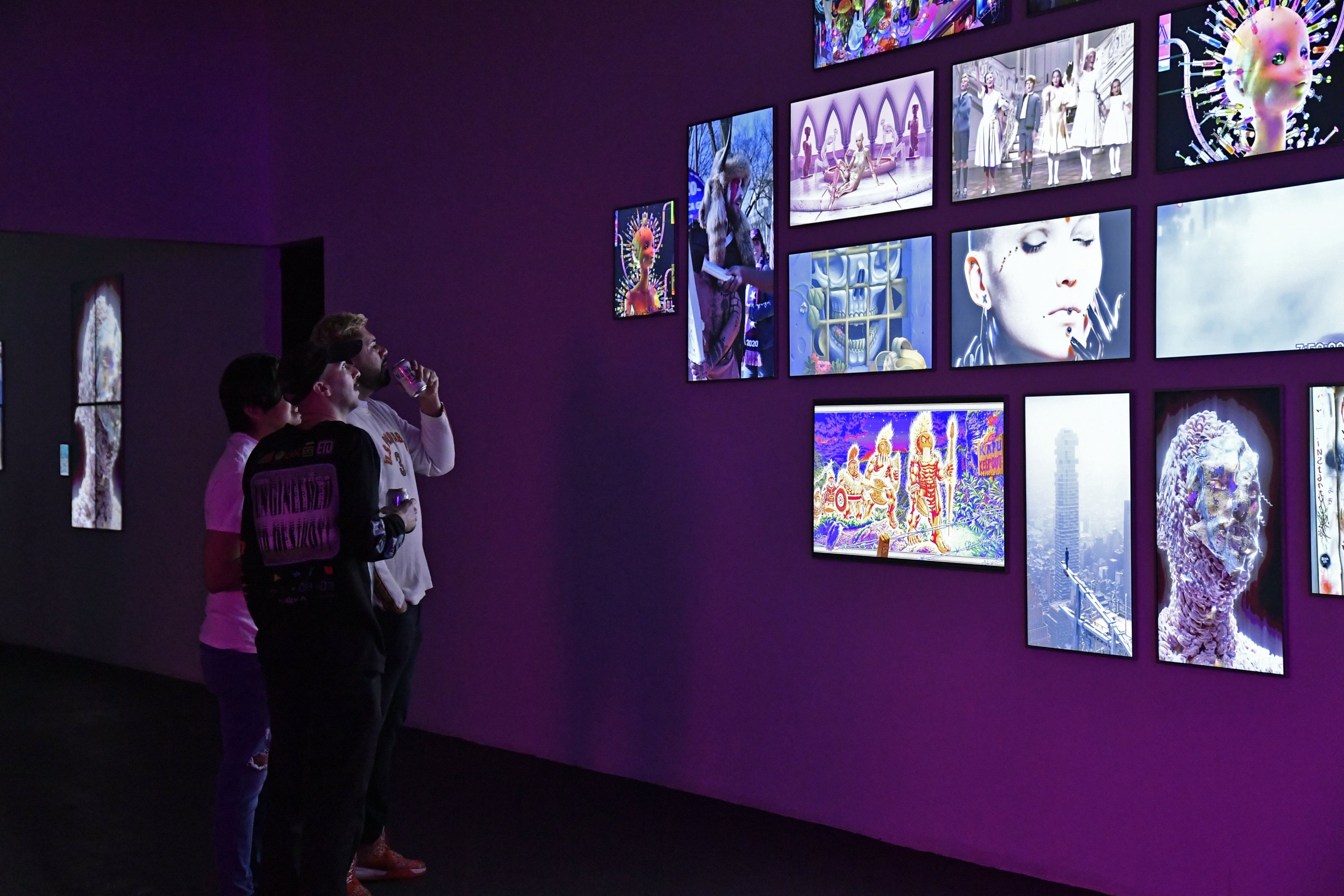
The COVID-era NFT boom was a perfect storm. Isolation. Liquidity. Novelty. Hope. Artists and collectors found each other in a moment of global uncertainty and created something powerful, but unsustainable at that scale and speed. When the world reopened, reality rushed back in.
Now the question isn’t whether NFTs will ever matter again. The question is how they might matter differently. Because here’s the part that doesn’t make headlines: NFTs didn’t disappear. They became quieter. More selective. Less flashy. Some artists kept working, refining their language, building long-term practices instead of chasing drops. Some collectors stopped trading and started living with the works on screens, in installations, in hybrid exhibitions. Museums began experimenting cautiously, not loudly. This is not a boom phase. This is a digestion phase.
I asked my friend what he’s stand now.
“I’m slower,” he said. “I read more. I buy less. I only collect artists I would follow even if NFTs vanished tomorrow.”
That might be the healthiest answer anyone can give right now.
For artists, this moment is a test of intention. Are you here because NFTs were a shortcut to visibility, or because digital space is genuinely your medium? Are you building an archive that will make sense in 10 years, or just reacting to trends? NFTs should be a format, not an identity.
For creators and project founders, the era of vague promises is over. The market no longer rewards hype. It rewards clarity, delivery, humility. If you cannot articulate what your work is without mentioning price or floor, you probably don’t have a sustainable project.
For collectors, the shift is psychological. NFTs cannot be treated like liquid assets. They behave like art, illiquid, emotional, deeply subjective. If you need stability, gold and silver will still disappoint you sometimes. If you need adrenaline, crypto will give it to you. NFTs sit somewhere else entirely. They require patience and taste.
Before we left, my friend said something unexpected.
“I don’t regret it,” he said. “Even the losses. Because for a moment, art felt alive again in a way I hadn’t felt before. Like something was opening.”
And maybe that’s the right way to remember the NFT boom not as a failed investment cycle, but as a cultural experiment conducted under extreme conditions. Some things broke. Some illusions collapsed. But something real did emerge: a recognition that digital art matters, and that artists working in digital space deserve serious frameworks, not speculative bubbles.
NFTs may regain value. But if they do, it won’t look like 2021. It will be quieter. Smaller. More concentrated. Less about shouting and more about staying. Less about speed and more about meaning. Just like art has always been.
As we stood up to leave, Doha’s evening light reflecting off glass and sand, my friend said one last thing: Here is what I told my friend:
NFTs didn’t “die.” The fantasy died. The fantasy that technology could replace taste, that a token could replace criticism, that community could replace curation, that liquidity could replace love, and that markets could replace meaning.
Digital art is still one of the most important artistic territories of our time, because our lives are increasingly lived through interfaces. The question isn’t whether digital art matters. It’s whether we are willing to build an ecosystem that treats it seriously: with standards, with archives, with ethics, and with patience.
And maybe this is the real parallel to the way gold, silver, and Bitcoin behave during macro storms: when uncertainty rises, people run toward what feels “real.” For some, “real” is a metal you can hold. For others, “real” is code that can’t be censored. For many in the art world, “real” is still the lived experience of a work, its presence, its story, its craft.
NFTs can become “real” again, too, but only when we stop pretending they are a shortcut.
Because art has never been a shortcut. Art is the long way, taken on purpose.