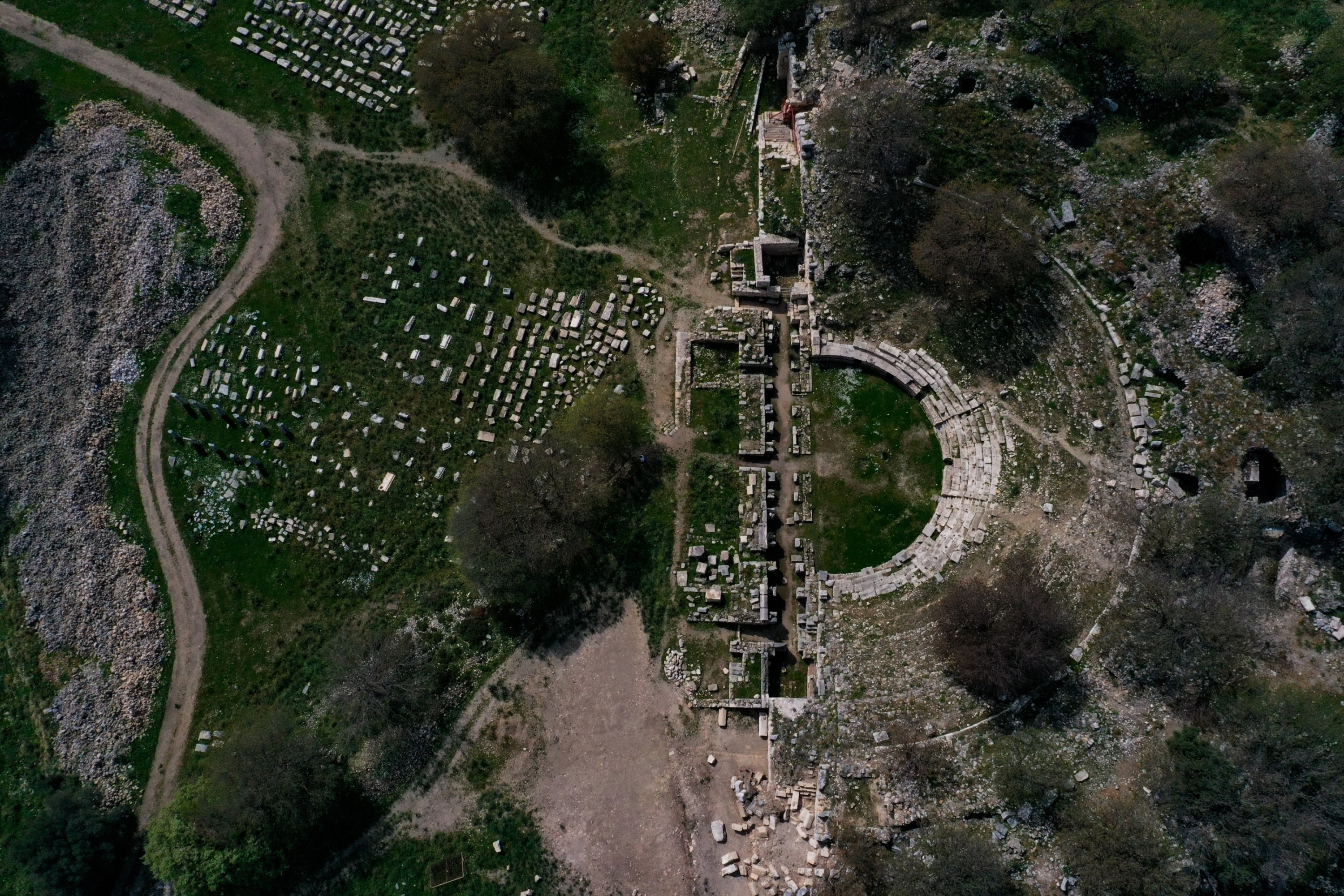
Restoration efforts around the Temple of Dionysus are revitalizing the ancient city of Teos in the Seferihisar district of Türkiye's Izmir, offering a glimpse into its storied past. The project is part of Türkiye’s Ministry of Culture and Tourism’s “Heritage for the Future” initiative, aimed at preserving historical sites and ensuring their longevity for future generations.
Teos, which dates back to the 10th century B.C., is home to ongoing excavation and restoration work throughout the year. The archaeological team, led by professor Musa Kadıoğlu from Ankara University’s Department of Archaeology, continues to restore and preserve key structures in the ancient city, particularly the impressive Temple of Dionysus.
Teos has always held significant historical and cultural importance, especially during the third century B.C., when it became known as a center for artists, including poets, playwrights and musicians, forming the "Artists of Dionysus." This made the city one of the most prominent artistic hubs of the ancient world. Teos is also home to the Temple of Dionysus, built in the second century B.C. This grand temple is considered the largest of its kind in Anatolia, emphasizing Teos' prominence in ancient religious practices.
Kadıoğlu shared that the restoration team has begun reassembling the columns that once surrounded the temple. "Our goal is to make the largest Dionysian temple in Türkiye more comprehensible and accessible to the public," he explained.
"There are some structural and design issues with the temple and we have made significant progress on the restoration, with much of the work now in the publication phase. Additionally, we aim to partially reconstruct the temple to enhance its tourist appeal."
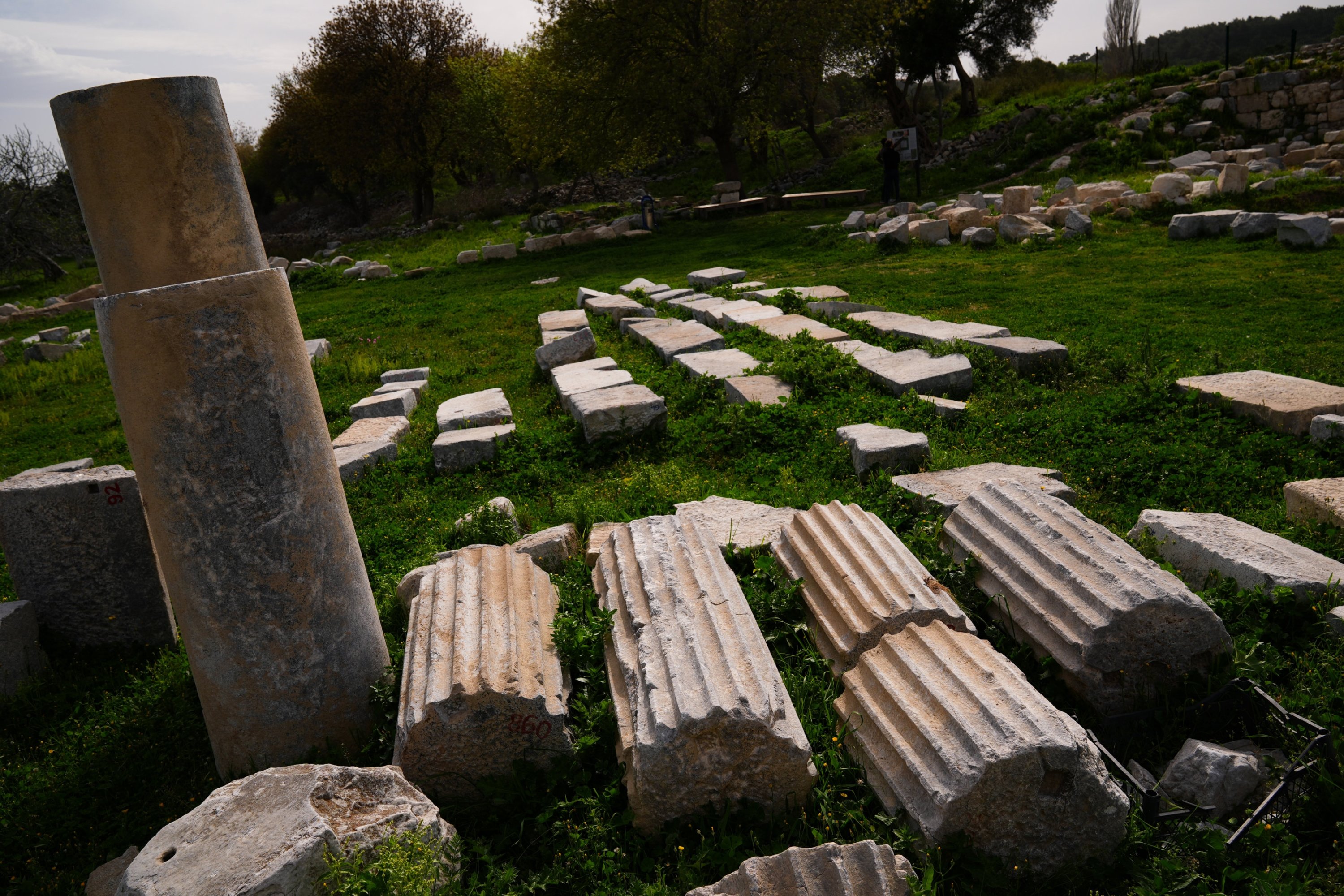
Currently, restoration efforts are focused on the 26 columns that once formed the colonnade surrounding the temple. Ten of these columns, along with their upper structures, are being carefully restored. The team plans to present this area in three dimensions to provide visitors with a better understanding of the temple's original grandeur.
With its rich history dating back to the 10th century B.C., Teos was one of the 12 Ionian cities and continues to draw interest from tourists and scholars alike. Archaeological findings, including ceramic artifacts, suggest that the settlement in Teos dates back over 3,000 years. According to Kadıoğlu, the city has long been a center for musicians, actors, poets and other artists, further enriching its historical significance.
The city’s role as a port, combined with its artistic legacy, is underscored by the fact that the famous lyric poet Anacreon was born in Teos. Additionally, the city was the home of the renowned architect Hermogenes, who designed the Temple of Dionysus and it is the site where the "Artists of Dionysus" was established.
One of Teos’ significant contributions to history is its inscriptions from the Hellenistic and Roman periods. An inscription found in the city reveals that Timogenes, an individual from the city, was honored by the "Artists of Dionysus" for financing plays. This highlights the deep connection between Teos and the arts during antiquity.
Teos is also famous for a unique type of black marble known as "Africano marble," which was extracted from the region and widely used in ancient Rome. The discovery of this marble dates back to the 1st century B.C. when the Roman general Lucullus found marble quarries in the Karagöl area and transported the marble to Rome, where it became known as "Lucullus marble." The material became so renowned that it spread to 450 cities throughout the ancient world.
The ongoing excavations and restoration work are expected to increase the number of visitors to Teos, with 70,000 visitors having already come to the site in 2024. Kadıoğlu and his team plan to complete the excavation of the Temple of Roma and Augustus this year, further adding to the city’s allure as a historical and cultural destination.