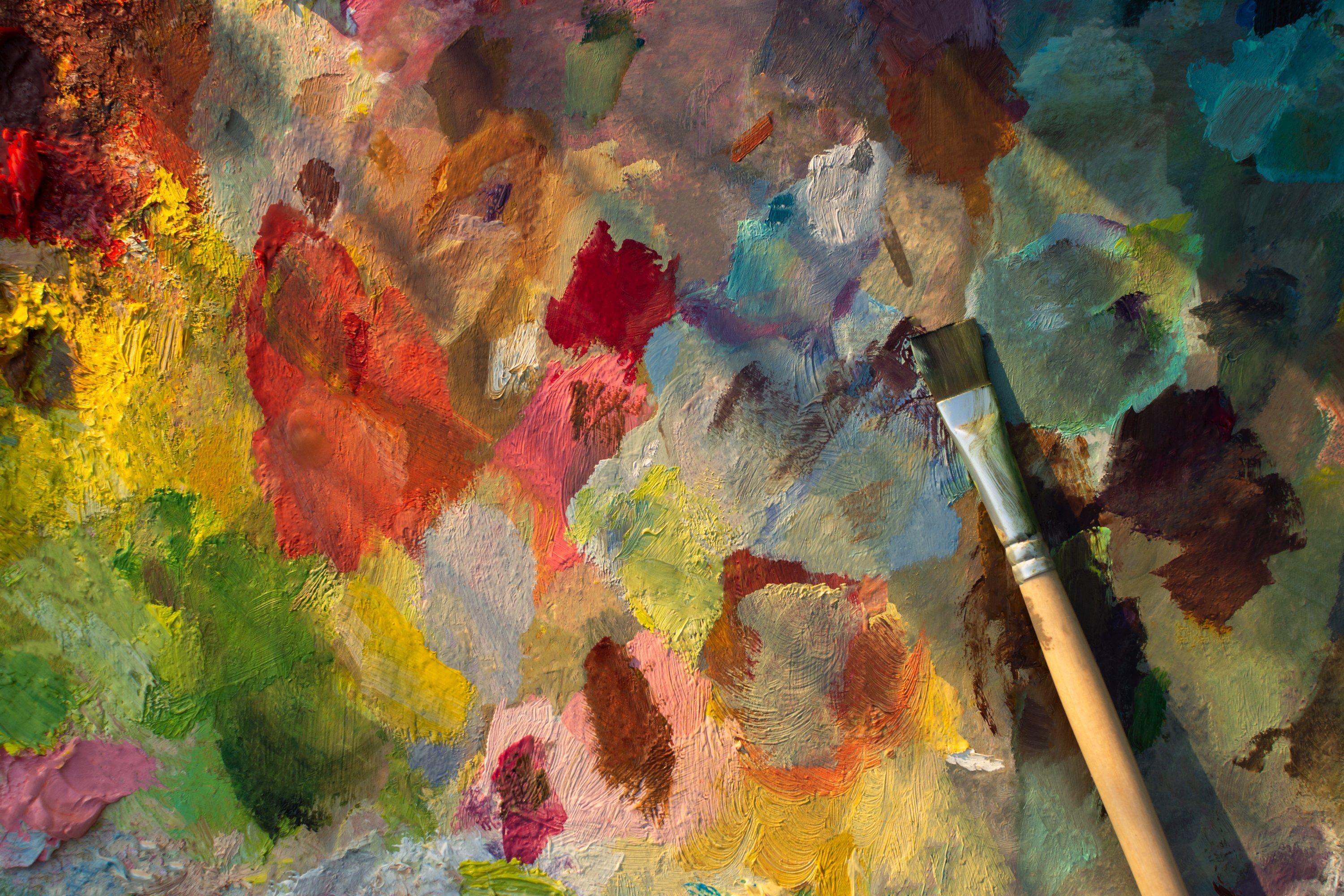
There is something profoundly human in the moment of error, for it exposes the fragile boundary between intention and accident, mastery and surrender, control and freedom. A brushstroke that escapes the line, a clay form that collapses before firing, a photograph that emerges blurred – all of these, in the sterile logic of perfection, are considered failures, yet when viewed through the eyes of art, they are not interruptions but revelations, moments when creation reveals its more profound truth.
We often imagine the artist as a figure of total control, bending materials to an exact will, but the history of art is filled with examples that prove the opposite, where missteps or unforeseen conditions led to entirely new aesthetics, new schools, even new philosophies. Leonardo da Vinci’s sfumato, the smoky haze that gives the "Mona Lisa" her enigmatic depth, emerged less from a predetermined formula than from the gentle blurring of uncertain boundaries, while Michelangelo was forced to adapt the composition of David to a block of marble already fractured, proving that flaw itself can generate iconography.
This paradox, that error becomes the source of style, recurs across cultures and centuries. In Japanese aesthetics, the concept of wabi-sabi celebrates imperfection, asymmetry, incompleteness, weathering and cracks not as deficiencies but as signs of authenticity and the practice of kintsugi repairs broken ceramics with veins of gold that do not hide the fracture but illuminate it, turning damage into radiance.
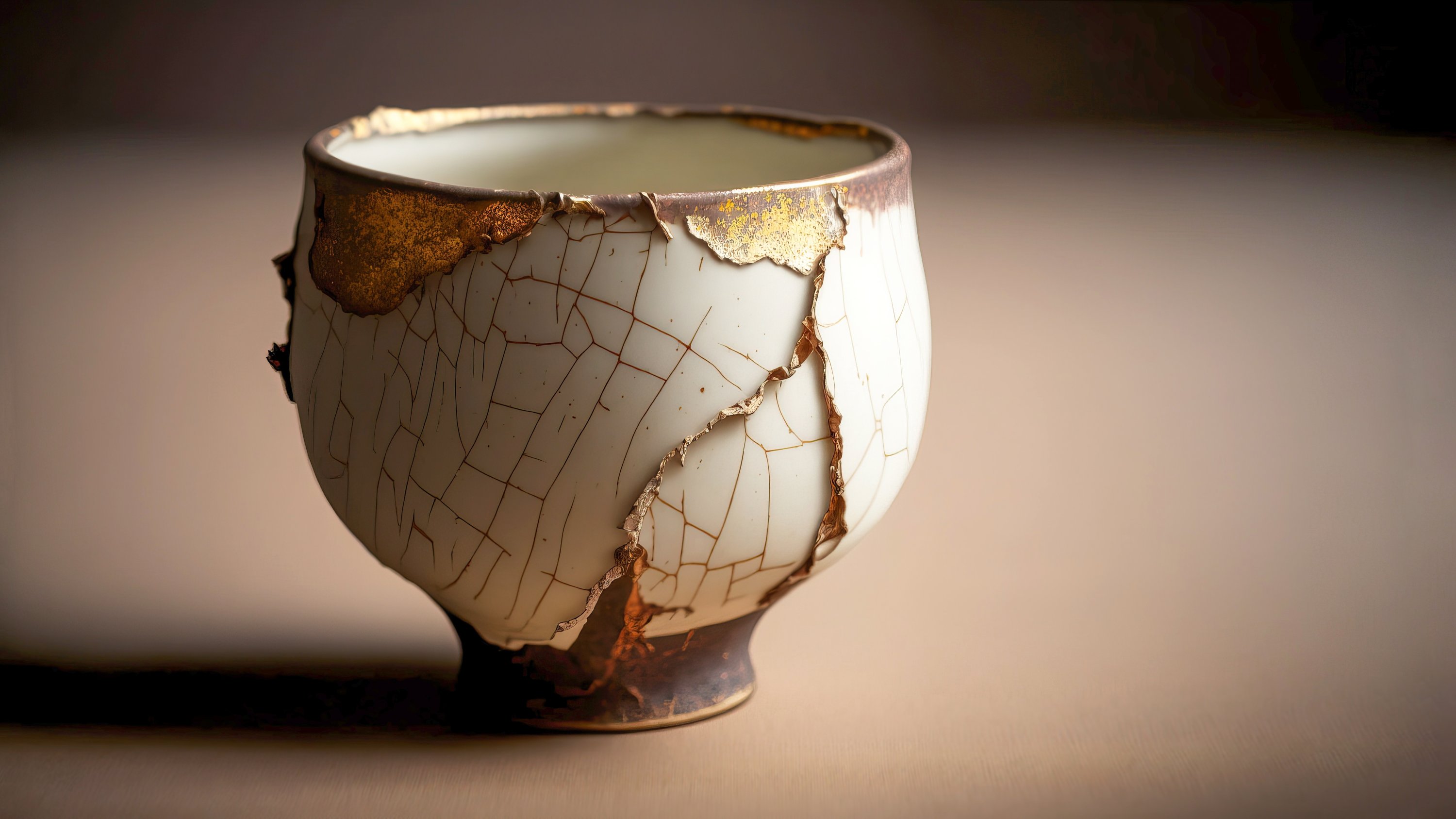
What the rational eye might dismiss as brokenness, the aesthetic consciousness recognizes as beauty. The same sensibility appears in modernity with radical force: Jackson Pollock’s drip paintings, initially derided as careless messes, became the very language of Abstract Expressionism; Agnes Martin’s delicate grids falter and waver with the tremor of the human hand, a quiet refusal of industrial precision; Gerhard Richter’s squeegee works, which appear calculated, are in fact dependent on the unpredictable scrape and drag of paint across canvas, revealing that chance is not external to the work but inscribed in its very process.
Philosophers have long recognized that human existence itself resembles an unfinished draft. Soren Kierkegaard described anxiety as the dizziness of freedom, the perpetual awareness that one may err at any moment, while Martin Heidegger spoke of Geworfenheit, the condition of being thrown into a world not of one’s choosing, where mistakes, missteps and unforeseen turns are inevitable. If life itself is structured by error, then art, as its mirror, cannot escape the same logic. Indeed, error may be the most faithful reflection of what it means to exist. Francis Bacon’s smudges and distortions, which often emerged by accident, became the very visual vocabulary of anguish. A blurred passage in a photograph, a splinter in a sculpture, a missed note in music, these are not erasures but invitations, openings through which vulnerability enters the work. They remind us that art is not a demonstration of invulnerability but a dialogue with fragility.
There is, too, a politics of error. We are definitely passing through an era in which people are increasingly obsessed with seamless production, flawless digital surfaces, and the algorithmic erasure of imperfection; the very presence of error becomes subversive. The scar in a sculpture resists the tyranny of smoothness, the broken rhythm in a poem disrupts the culture of predictability, the accidental noise in a recording reminds us that art is alive, not engineered. Punk music built an entire aesthetic on distortion and refusal of polish; glitch art in the digital age takes corrupted files, broken codes and malfunctioning screens and turns them into luminous, fractured forms that resist the homogenizing perfection of algorithms. What the machine calls an error, the artist calls possibility. This insistence on error is not only aesthetic but ethical, for it defends authenticity in a time when artifice threatens to dominate every sphere.
I have often witnessed this dynamic in my own studio practice. A canvas that resisted the image I projected onto it forced me toward a new palette; a sculpture study that collapsed became less an emblem of strength than a meditation on fragility; pigments that dried differently under the light transformed the composition in ways I had not planned. I didn't think to correct the blue paint that had dropped from my brush onto the canvas, which took the shape of a bird.
At first, the impulse is frustration, the instinct to correct or erase, but over time, I have come to understand that these resistances are not betrayals but collaborations, the work itself speaking back, insisting on a direction of its own. Art, in these moments, ceases to be an act of obedience and becomes a dialogue. Error is the medium through which the artwork declares its independence.
The same principle animates other arts. In music, the so-called wrong note often becomes the soul of the performance: the blue notes of jazz, flattened intervals once considered mistakes within Western harmony, became the very foundation of a genre; Glenn Gould’s habit of humming audibly over his recordings of Bach was considered a flaw but is now inseparable from his interpretation, the body’s insistence on presence within the supposed purity of sound. In literature, James Joyce’s fractured syntax and linguistic slips in "Finnegans Wake" transformed error into poetry, while Gertrude Stein’s repetitions, once mocked as sloppiness, became the pulse of modernist prose. Samuel Beckett’s halting language suggests that only when words stumble do they begin to approach truth. In all these cases, error becomes not a deviation from meaning but its very engine.
The future of art may depend even more on this embrace. While artificial intelligence can produce images of endless precision, flawless replication and infinite refinement, it may be error that remains art’s last sanctuary. A trembling line, a misplaced word, a faltering gesture -these are the qualities no algorithm can reproduce because they are not errors within a system but eruptions of human presence. The Japanese haiku master Basho once wrote that the sound of a frog splashing into an old pond creates the poem; it is the disturbance, not the stillness, that gives rise to beauty. Likewise, in the centuries to come, it may be the human mistake, the hesitation, the unintended mark that ensures art does not dissolve into sterile perfection.
To embrace error is thus to embrace life. It is to acknowledge that mistakes do not diminish meaning but expand it, that fracture does not erase wholeness but discloses another form of it, that vulnerability is not the opposite of strength but its secret depth. When we encounter a painting with cracked paint, a drawing where the hand faltered, a performance where the voice broke, we are witnessing more than technical imperfection; rather, we are witnessing the truth. Beauty has never been the absence of error but the courage to transform error into form, to love the accident long enough that it becomes inseparable from the work itself. Perhaps, in the end, every masterpiece is nothing more than an error that endured, cherished until it revealed itself as necessity.