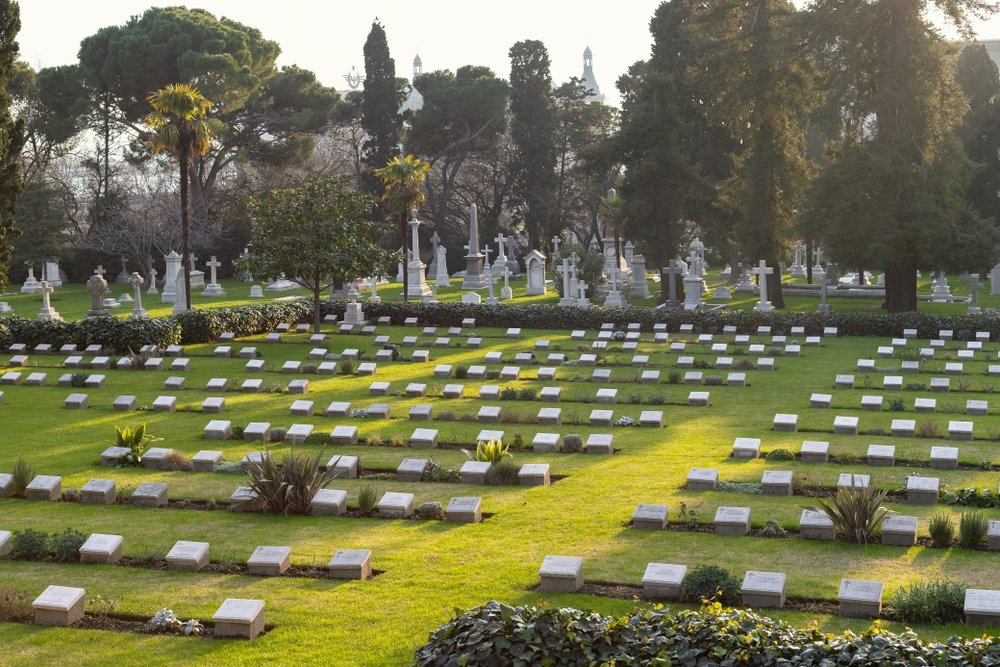
As Russia’s war in Ukraine casts its long shadow across Europe, the echoes of another conflict on the Black Sea resurface: the Crimean War of the mid-19th century. Then, as now, empires clashed over the strategic gateway between East and West, and Istanbul became one of the central stages of that struggle. It was during those years that Haydarpaşa Cemetery was established, a quiet resting place overlooking the Bosporus and today lying just behind the Sultan Abdülhamid Han Hospital. Though it remains largely unknown to Istanbul’s residents, this cemetery is one of the city’s most poignant reminders of the complex and shifting relationship between the Ottoman Empire and Britain – at times allies, at times adversaries, yet always deeply intertwined.
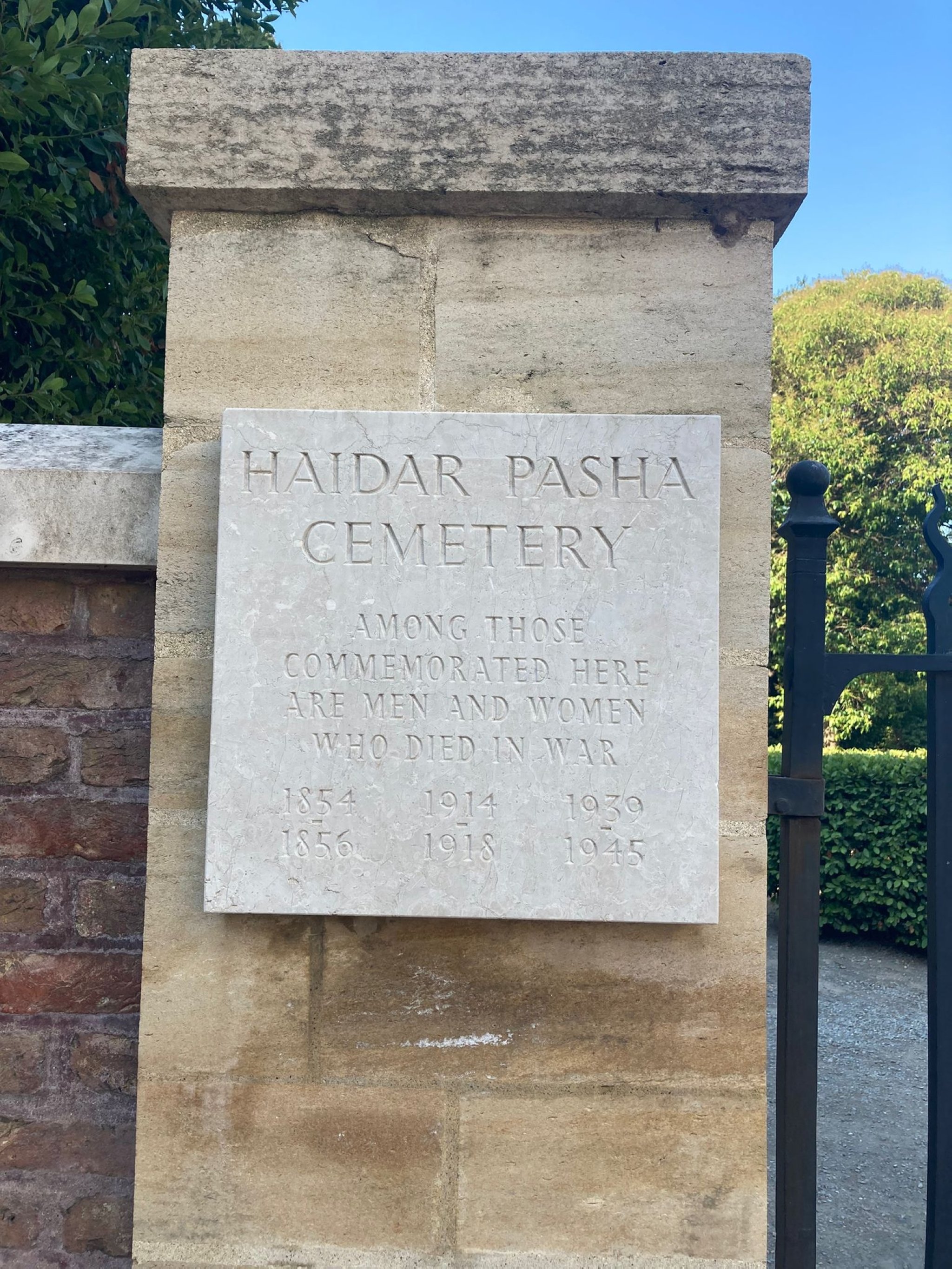
Upon entering the grounds, visitors are greeted by a monumental stone inscribed with the name of Queen Victoria, a bold testament to Britain’s imperial presence. But beyond the imposing marker lies a mosaic of lives and stories that stretch far beyond England. The cemetery holds not only the graves of British soldiers who succumbed to wounds and disease during the Crimean War, many of them treated at Florence Nightingale’s nearby Scutari Hospital, but also those of Indian Muslim troops who fought in World War I, sailors lost in naval accidents, and exiles from Central Europe who found refuge in Ottoman lands. Hungarians, Poles, Swedes, Germans and Americans all rest here, their names etched in marble and stone, their epitaphs fragments of a wider history that transcends national boundaries.
Some of the most remarkable graves belong to figures of exile and revolution. Count Guyon Richard, born in England but remembered as a hero of Hungary’s 1848 Revolution, rose to the rank of Ottoman general after seeking asylum in Istanbul. His gravestone describes him as a Turkish commander and Hungarian patriot, and a plaque placed a century later still hails him as a fighter for independence. Nearby lies General Marian Langiewicz, one of the leaders of the Polish January Uprising of 1863, who, after defeat and exile, also found a final home in Ottoman soil. His grave, decorated even in recent years with Polish ribbons, is a vivid reminder of how Istanbul served as a sanctuary for the stateless.
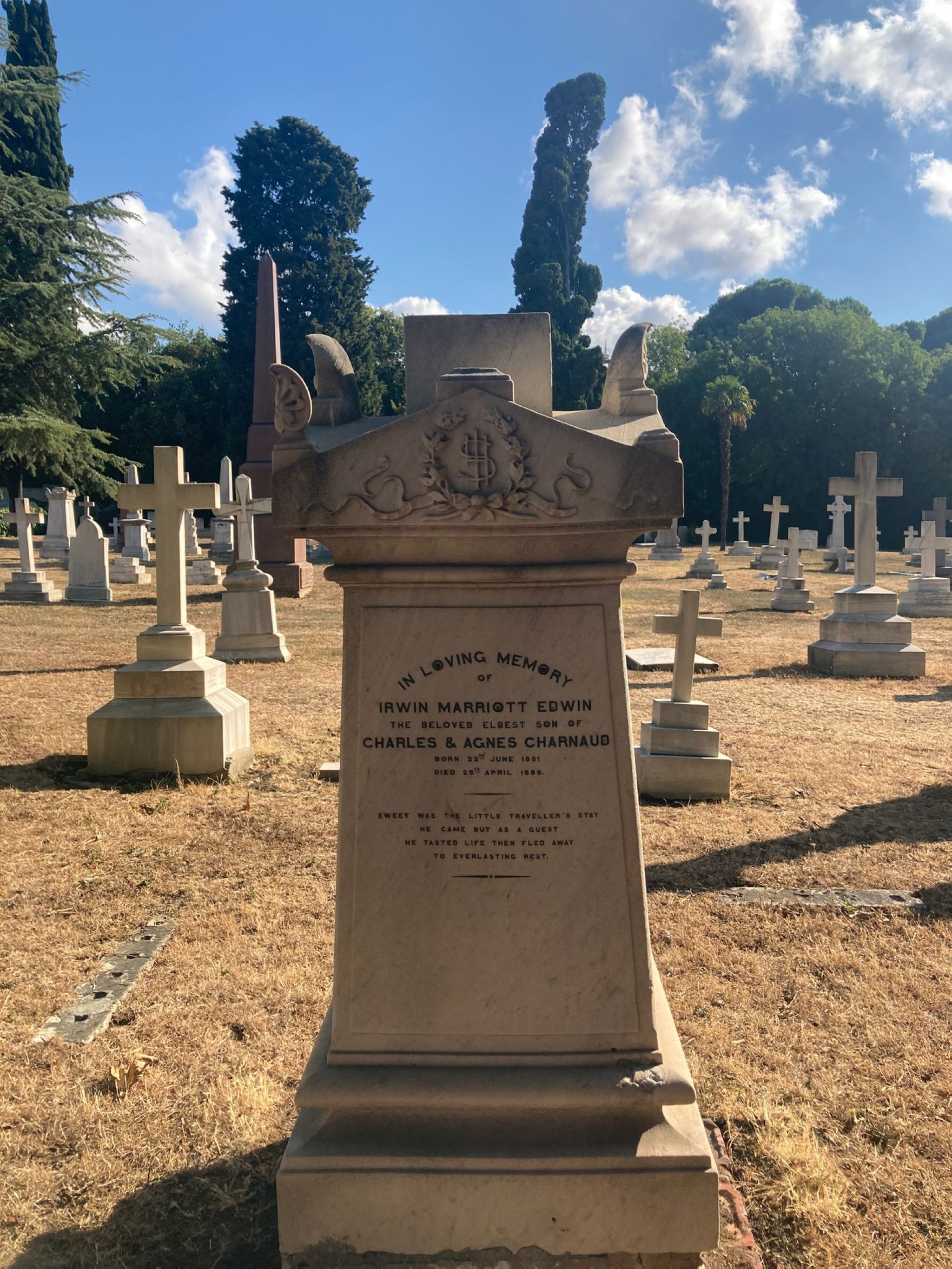
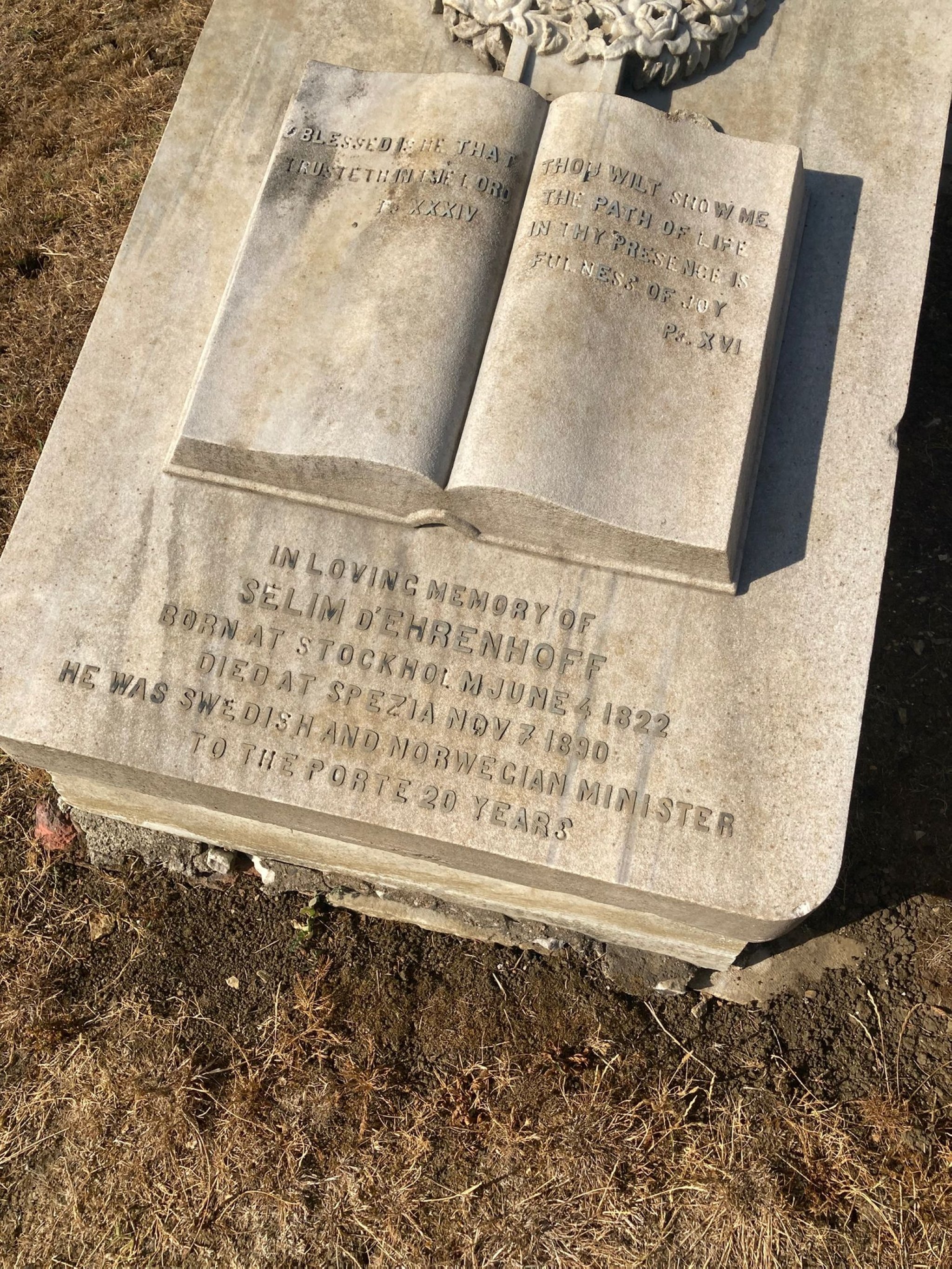
The cemetery also testifies to the long presence of European diplomats and officers in the city. Selim D’Ehrenhoff, a Swedish diplomat to the Ottoman Porte for two decades, is buried beneath a marble book inscribed with verses from the Psalms, a symbol of both his faith and his service. Charles Vincombe Pasha, a British-born officer who became a lieutenant general in the Ottoman army, rests under a stone marked with Masonic emblems. Such symbols are more than personal insignia; they reveal the social and fraternal networks that connected soldiers, merchants and diplomats in a city where identities often blended. Masonry in particular provided a space of belonging for expatriates in nineteenth-century Constantinople, a reminder that the bonds of community and fellowship often stretched well beyond the battlefield.
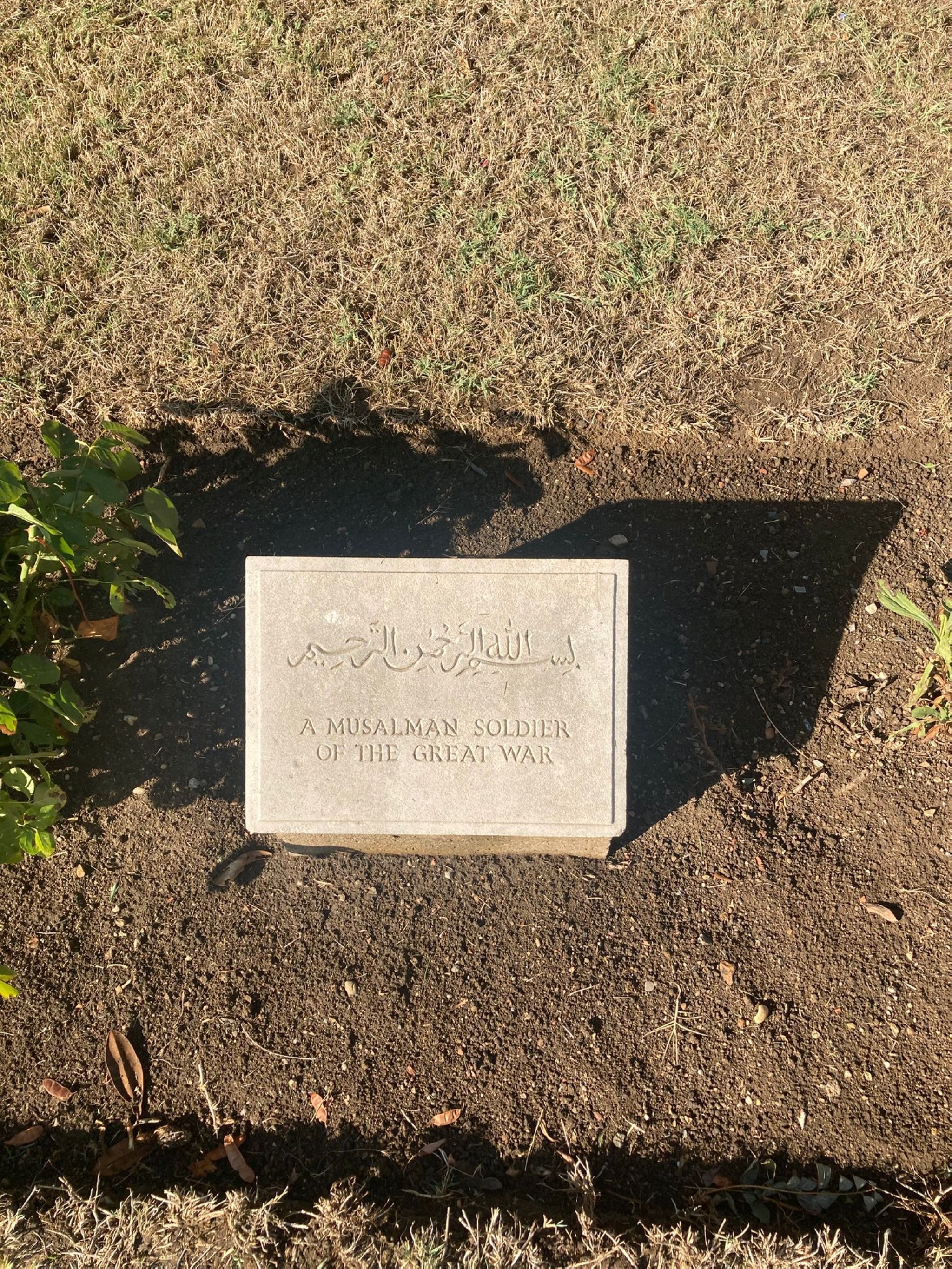
Yet Haydarpaşa is not only a cemetery of soldiers and statesmen. Among its stones are the tragedies of families and children whose lives intersected with the tumult of the empire. The grave of William Richard Newport Campbell, a captain in the 3rd Dragoon Guards who fought at the Battle of Balaclava but died in Scutari Hospital in 1854, bears the sorrowful dedication of his mother. Not far away, the stone of young Irwin Marriott Edwin, who lived only seven years, reads with heartbreaking simplicity that, “He came but as a guest, he tasted life then fled away.” Such epitaphs soften the martial tone of the cemetery, reminding the visitor that war’s toll was measured as much in private grief as in public history.
The layers of Haydarpaşa tell the story of alliance and enmity. During the Crimean War, Britain and the Ottomans fought side by side against Russia, a partnership memorialized in the hospitals, barracks and monuments nearby. Yet by World War I, the two powers were enemies, clashing at Gallipoli and across the Middle East. Some of the British soldiers captured at Gallipoli were brought as prisoners of war to Istanbul; many died in captivity or from their wounds and were laid to rest here. Their graves deepen the paradox of Haydarpaşa, where the allies of one war and the adversaries of another lie side by side, their stories woven into the same soil.
Even culture carries the traces of this entanglement. Local tradition holds that the famous Turkish folk song “Üsküdar’a Giderken” (“On the Way to Üsküdar”) was inspired by the march of a Scottish regiment stationed nearby. The song itself, still sung today, evokes the texture of daily life in Istanbul during the nineteenth century.
Whether or not the story of its Scottish inspiration is true, the song has become part of Istanbul’s cultural fabric, a reminder of how even military encounters could leave behind melodies of shared memory.
To walk through Haydarpaşa today is to walk through the fragile borderland between war and peace. The cemetery brings together those who once fought against each other and those who fled from distant homelands. It preserves the legacy of Florence Nightingale’s care as much as the ambitions of generals. And it reminds us, as we look across the Bosporus to a world still unsettled by conflict, that yesterday’s adversaries now rest side by side, their stories mingling in the silence of a place where history is written not in battles but in epitaphs.