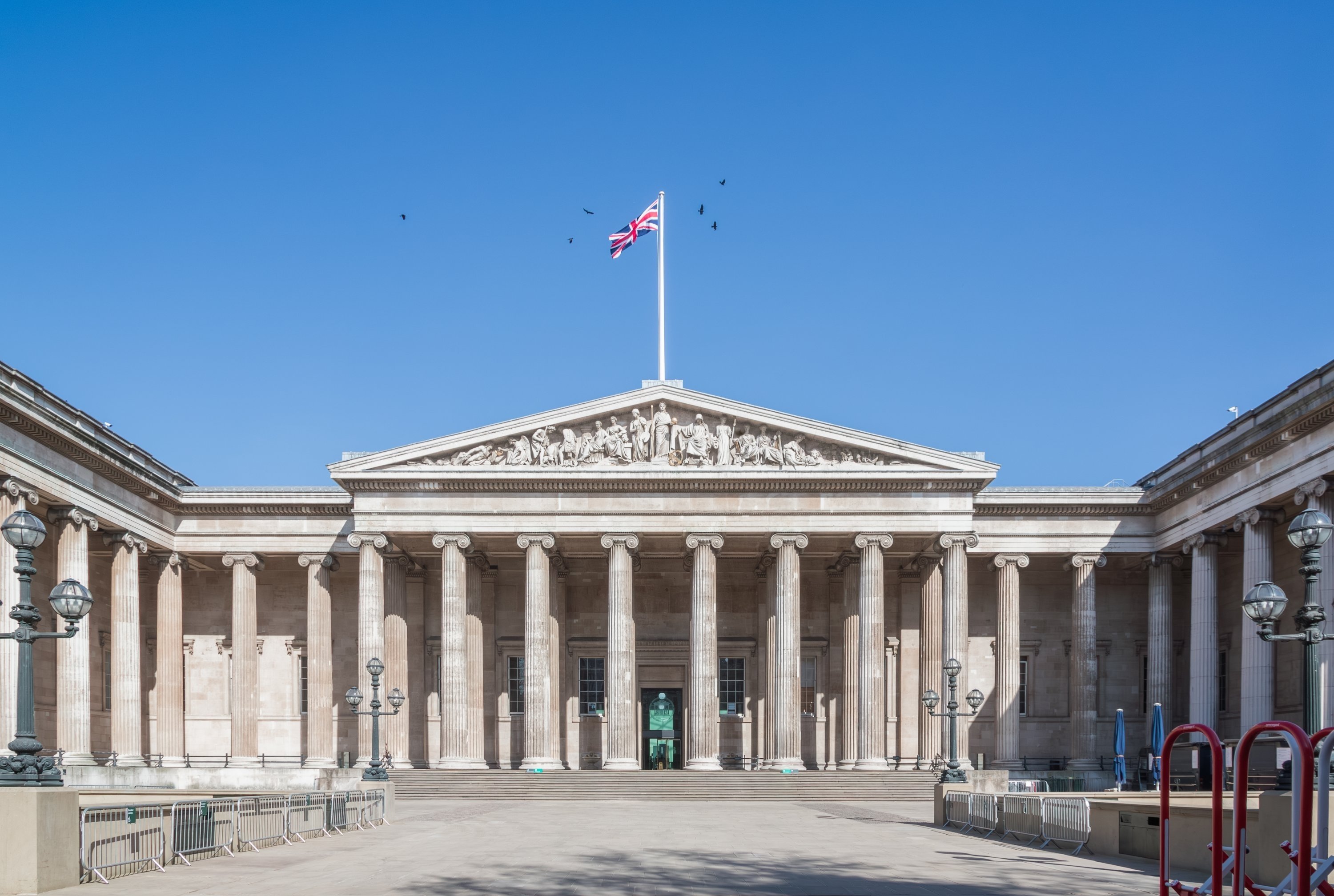
The British Museum has rejected a claim that it removed the word "Palestine" from its displays in response to pressure from a pro-Israeli lawyers group, adding it continues to use Palestine across a series of galleries.
The row over changes to some galleries continues, as the U.K. Lawyers for Israel (UKLFI) said Saturday that the British Museum has confirmed it is reviewing and updating some gallery panels and labels after "Audience testing has shown that the historic use of the term Palestine ... is in some circumstances no longer meaningful."
The pro-Israeli group said there were "historically inaccurate" references to Palestine in displays covering the ancient Levant and Egypt, which was also reported by the Sunday Telegraph during the weekend.
Earlier in February, the UKLFI issued a statement titled, "British Museum under pressure to change historically inaccurate use of 'Palestine.'"
But in response to Anadolu Agency (AA), the British Museum said the reports about removing "Palestine” from displays are "simply not true."
"We continue to use Palestine across a series of galleries, both contemporary and historic," a spokesperson noted in a statement.
Saying that some labels and maps in the Middle East galleries have been amended to show ancient cultural regions and the museum uses terms like "Canaan," the statement said it is "more relevant for the southern Levant in the later second millennium B.C."
"We use the U.N. terminology on maps that show modern boundaries, for example, Gaza, West Bank, Israel, Jordan and refer to 'Palestinian' as a cultural or ethnographic identifier where appropriate," it added.
The spokesperson stressed that the decisions around the amendments "were made independently and not in response to the letter sent by the UKLFI."