For years, millions of Turkish students have known Mustafa Güler as the math teacher who pounds his fist against the whiteboard, raises his voice and somehow convinces teenagers that mathematics is worth loving.
His online lessons have earned him a devoted following, along with affectionate descriptions from students who joke that he "teaches like he's scolding you" or "drives the lesson into the board." Behind the unconventional style, they say, is a teacher who has helped countless young people gain admission to universities they once thought were out of reach.
Last month, however, the 48-year-old educator from the southeastern province of Şanlıurfa made headlines for something beyond the classroom. He won a landmark legal battle against Netflix after the streaming giant used footage from one of his classroom videos without permission in promotional material for the dystopian anthology series Black Mirror.
The unauthorized use might never have come to light had it not been for one of Güler's own students.
"A student sent me the clip," Güler recalled. "That's how I realized what had happened."
That message set off a nearly three-year legal fight against one of the world's largest streaming platforms. Looking back, Güler said the case was never simply about compensation or defeating a multinational corporation.
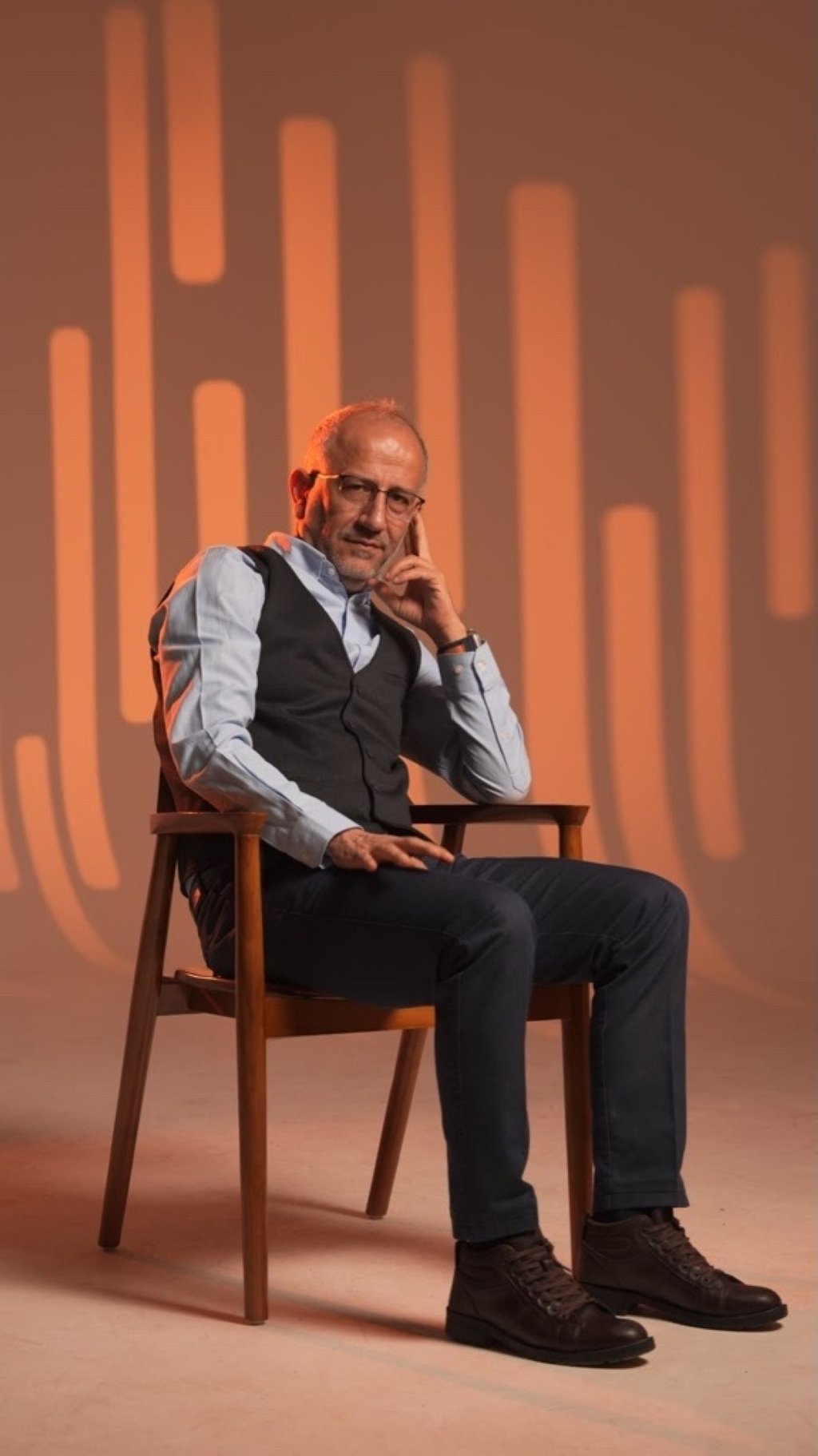
"For me, this was never just about winning a lawsuit," he said. "The important thing was proving that labor, creativity and individual rights deserve protection, regardless of whether you're facing a small company or one of the biggest corporations in the world."
He believes many people assume taking legal action against a global company is pointless.
"When people see a company that large, they often think nothing will change," he said. "But when the law is applied properly, it exists for everyone. I believe this decision matters not only for me, but for everyone who creates, produces and seeks to protect their work."
Although confident in the merits of his case, Güler admitted he knew the legal process would be long and demanding.
"I never focused on whether I would win," he said. "The question for me was whether I would defend my rights until the end."
The lawsuit lasted nearly three years, involving expert reports, court hearings and detailed legal examinations before the court ultimately ruled in his favor. While the decision could still be challenged on appeal, Güler said he believes the trial court's ruling rests on strong legal grounds.
Many people questioned whether taking on Netflix was even worth attempting, he said.
"People generally believe individuals can't prevail against companies of that size," Güler said. "But I never looked at it in terms of the company's power. What mattered to me was whether I was right."
If intellectual effort and original work have been violated, he argued, legal protections should apply equally regardless of the size of the opposing party.
"What mattered wasn't what other people thought," he said. "It was what I believed. I had complete confidence in the Turkish judicial system."
For Güler, the compensation itself is only the beginning.
Rather than treating the money as a personal windfall, he plans to invest it back into education by opening a learning center in Ankara that combines a private tutoring institute with a library and café. He also hopes to establish a second branch in his hometown of Şanlıurfa.
"I hope I receive the compensation soon so I can use those resources for education again," he said.
The loyalty of Güler's students has become almost as remarkable as his teaching style.
His educational YouTube channel attracts roughly 3 million views each month, and he says former students regularly stop him in the street, on buses and on university campuses to tell him they earned admission to their dream schools because of his lessons.
"They tell me, 'Teacher, I got into this university thanks to you,' or 'I earned my appointment thanks to you,'" he said. "Those moments make me incredibly proud."
Unlike many online educators, Güler has maintained unusually close ties with his audience. Many students have his phone number, he said, and he tries to respond personally to messages he receives on social media every day.
"Students don't see me as just a teacher," he said. "They see me more like an older brother or a member of the family. When they come across something related to me, they immediately send it to me. Honestly, I like being seen as part of the family."
That relationship is evident whenever he appears in public. During a recent meeting in Istanbul's Kadıköy district, students repeatedly approached him to thank him for helping them gain admission to some of Türkiye's most prestigious universities, including Yıldız Technical University, Istanbul Technical University and Boğaziçi University.
Güler attributes that connection not to his distinctive teaching style alone, but to the trust he has built over the years.
"I've never been someone who simply teaches mathematics," he said. "I've tried to understand students' stress, their fears and their dreams. When students begin to enjoy mathematics, their confidence changes as well. I think that's the foundation of the relationship we've built."
He believes the lawsuit also carries a broader lesson at a time when millions of people publish their work online.
"No one's labor is worthless," Güler said. "Content creators deserve much greater respect for their rights. Some people may think, 'Who wants to go through all the trouble?' But I believe rights have to be defended."
Despite the lengthy legal dispute, Güler insists he never opposed the idea of working with Netflix itself.
Had the company contacted him beforehand and sought permission to use the footage, he said, the story might have ended very differently.
"I've always been open to professional collaborations," Güler said. "If they had contacted me transparently and gone through the proper permission process from the beginning, of course we could have evaluated it differently."
"In the end," he added, "what matters is respecting someone's work, ideas and creativity. No matter how large an institution is, that principle should never change. Perhaps today we wouldn't be talking about a lawsuit. We would be talking about a successful collaboration."