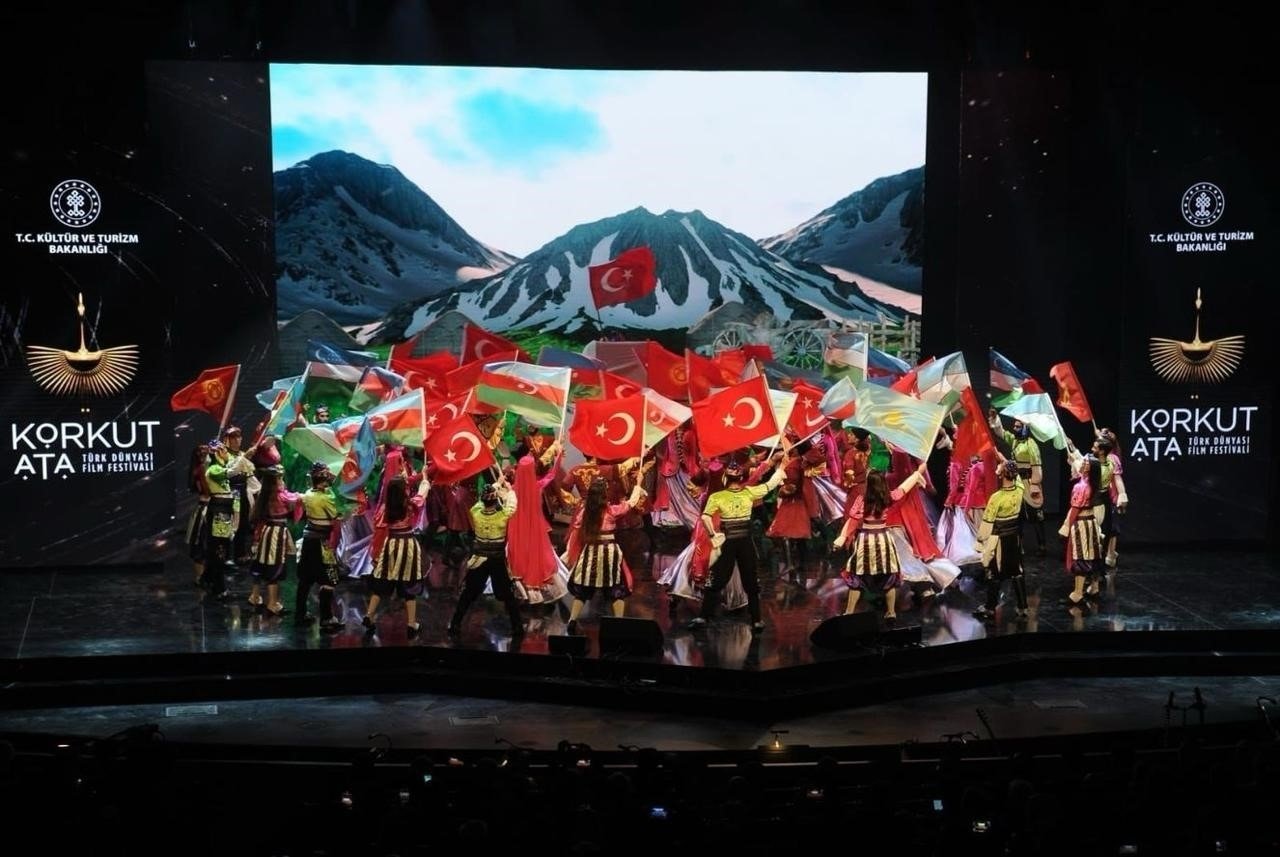
The Turkic World Cinema Summit brought together filmmakers and industry representatives from across the Turkic world in Istanbul as part of the 6th Korkut Ata Turkic World Film Festival, organized by the International Cinema Association under the auspices of the Ministry of Culture and Tourism.
The summit focused on expanding co-productions, strengthening cooperation among the region’s film industries and exploring the impact of artificial intelligence on cinema.
The discussions also explored how cinema could bring the Turkic world's shared cultural heritage to international audiences, foster more co-productions and attract filmmakers from around the world to the region.
Birol Güven, director general of cinema, told Anadolu Agency (AA) on the sidelines of the summit that the Turkic world had enormous cinematic potential, though this had yet to be fully realized through joint productions.
Describing cinema across the Turkic world as “a volcano on the verge of eruption,” Güven pointed to the region's shared cultural heritage, history and social concerns as a rich source of inspiration for filmmakers. He said having something to say was essential to cinema and argued that the Turkic world had no shortage of stories worth telling. “We will turn our concerns into cinema,” he added.
Güven highlighted co-productions as key to developing cinema across the Turkic world, noting that Türkiye and Kyrgyzstan had already taken concrete steps toward closer cooperation.
He said the goal was to establish joint production platforms involving six countries by 2027, paving the way for more films to be made across the region and closer ties between their film industries.
Beyond encouraging Turkish filmmakers to work in other Turkic countries and vice versa, Güven said they also wanted to attract major international productions to the region. “We want major American producers, for instance, to come and shoot films in Kyrgyzstan, Uzbekistan and Türkiye,” he said, adding that efforts were underway to make this happen.
Güven said artificial intelligence brought both opportunities and challenges for the film industry, stressing the importance of understanding the technology and keeping a close eye on its development.
He noted that the festival's opening film had been made using AI, clarifying that this did not signal either unconditional support for or outright opposition to the technology.
AI is also among the festival's main discussion topics, he said, arguing that even those opposed to the technology needed to understand it. “We are cautious about AI, but we will not turn our backs on it,” Güven said, adding that the festival would provide a platform to discuss its implications for cinema.
Supported by the International Organization of Turkic Culture (TÜRKSOY), the Turkish Radio and Television Corporation (TRT) and the Türkiye Tourism Promotion and Development Agency (TGA), the festival brings together more than 150 international guests, 300 industry professionals from Türkiye and members of the academic community.
A total of 56 films will be screened at the festival, with 30 competing for awards across three categories: Feature Fiction, Documentary and Short Film, each featuring 10 productions. The films will be evaluated by juries comprising directors, actors and cinema professionals from different countries across the Turkic world.
Beyond the competitions, the festival program will also feature documentaries, animated films and screenings exploring contemporary social issues, historical events, personal stories and collective memory, offering audiences a glimpse into the diverse cinematic perspectives of the Turkic world.
All screenings at Atlas 1948 Cinema, AKM Yeşilçam Cinema, Emek Cinema, the Cinema Hall of Istanbul University's Faculty of Communication and Istanbul Ticaret University's Sadabat Hall will be free of charge.
Film enthusiasts can access the screening schedule and program through the festival's social media accounts.