Yasin Yıldız, president of Türkiye’s National Palaces Administration, has announced that the restoration of Edirne Palace is set to reveal one of the world’s most significant cultural heritage monuments.
Speaking to the press, Yıldız shared that half of the restoration work has already been completed, marking impressive progress on this ambitious project.
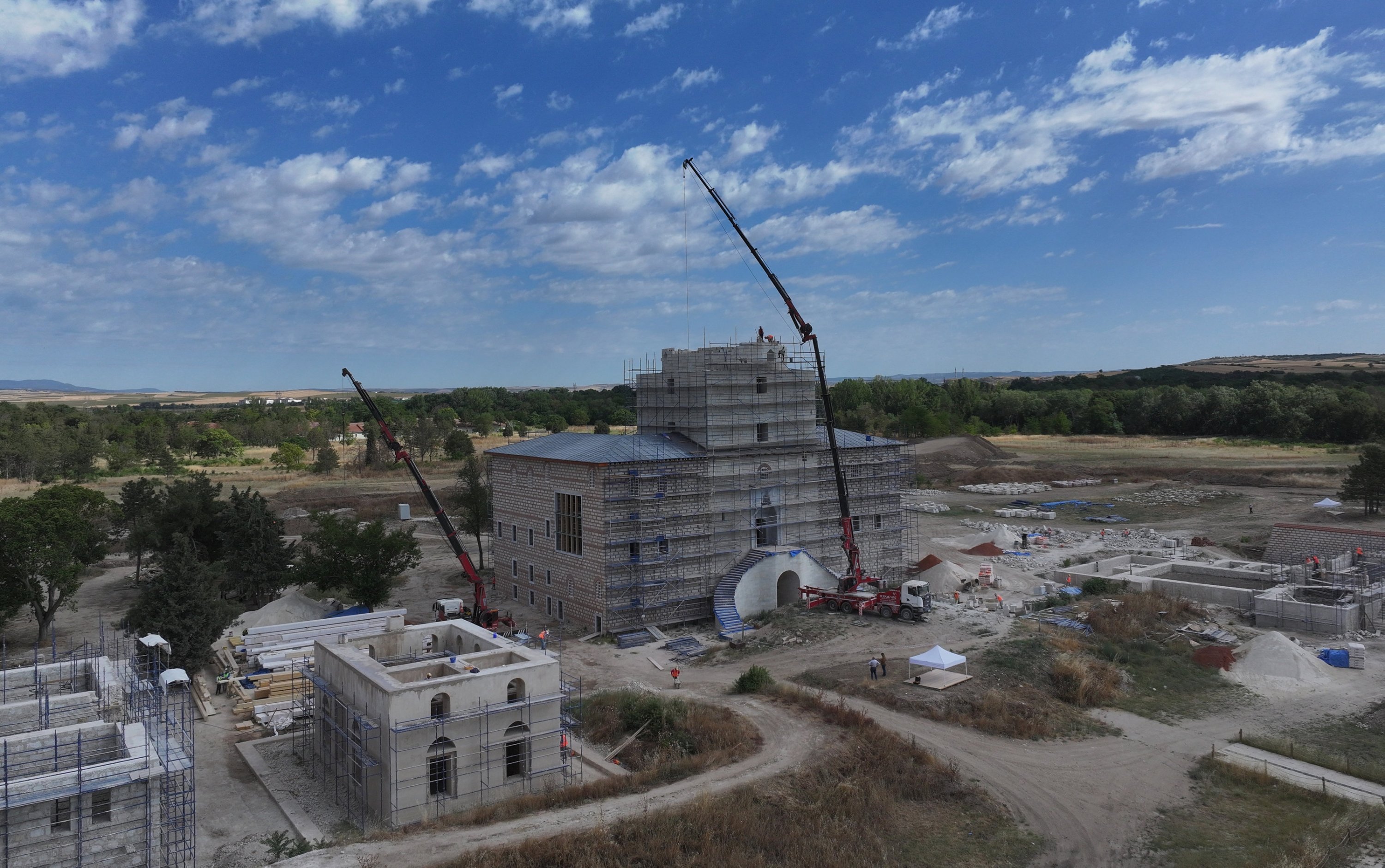
One of the most visible achievements so far is the restoration of the Cihannüma Pavilion, which has begun to take shape again. Yıldız highlighted the crucial step of consolidating the lands on the western bank of the Tunca River, an area covering about 1,200 decares (roughly 300 acres), where much of the restoration work is focused. This large-scale effort is part of a holistic restoration approach initiated by President Recep Tayyip Erdoğan’s directive to treat the Edirne Palace site as a unified whole.
Over the past 2 1/2 years, extensive archaeological excavations and research have uncovered and begun restoring significant parts of the palace’s fortress walls. Using archaeological findings alongside archival photographs, documents and historical literature, this part of the palace has been brought back to life. Intense restoration continues on key sections such as the audience chamber (Arz Odası) and the Kum Pavilion, a structure renowned for its exquisite representation of the palace’s historical architectural style.
Archaeological efforts are ongoing in both the first and second courtyards surrounding the Cihannüma Pavilion, with numerous archaeologists, art historians and restoration experts working under the supervision of a scientific advisory board. Yıldız emphasized that approximately 300 workers are actively engaged daily in excavation and restoration, reflecting the significant investment and resources dedicated to this project.
Notably, Edirne Palace is not merely a site of 15th and 16th-century ruins. Its architectural layout and design closely resemble Topkapı Palace, earning it the distinction of being a "sibling palace." Despite geographic differences, the design similarities are remarkable. Restoration work has already revived nearly half of the palace’s structures from the 15th and 16th centuries. Additionally, valuable remains from the 17th, 18th and 19th centuries – many still structurally sound – are undergoing meticulous restoration, further enriching the historical layers of the site.
The restoration project extends beyond buildings to include the palace’s expansive gardens, which once rivaled the famous Gülhane and Dolmabahçe gardens. Specialists have conducted detailed studies of these gardens, examining period-appropriate plants and the underground irrigation systems that supported them. The entire 1,200-decare site encompasses the remains of a classical-era palace complex surrounded by these lush gardens.
The master plan for the site outlines a vision that includes the restoration of the classical palace structures alongside the development of modern museum facilities in the Mahmudiye area. Furthermore, a natural habitat zone will be established on the site’s periphery, complementing the revival of the historic gardens and creating a diverse and immersive cultural environment.
Yıldız expressed great optimism that upon completion, this project will not only revitalize Edirne but also establish a monument of immense cultural and historical value recognized worldwide.
The full restoration of Edirne Palace promises a remarkable addition to Türkiye’s and the world’s cultural heritage.