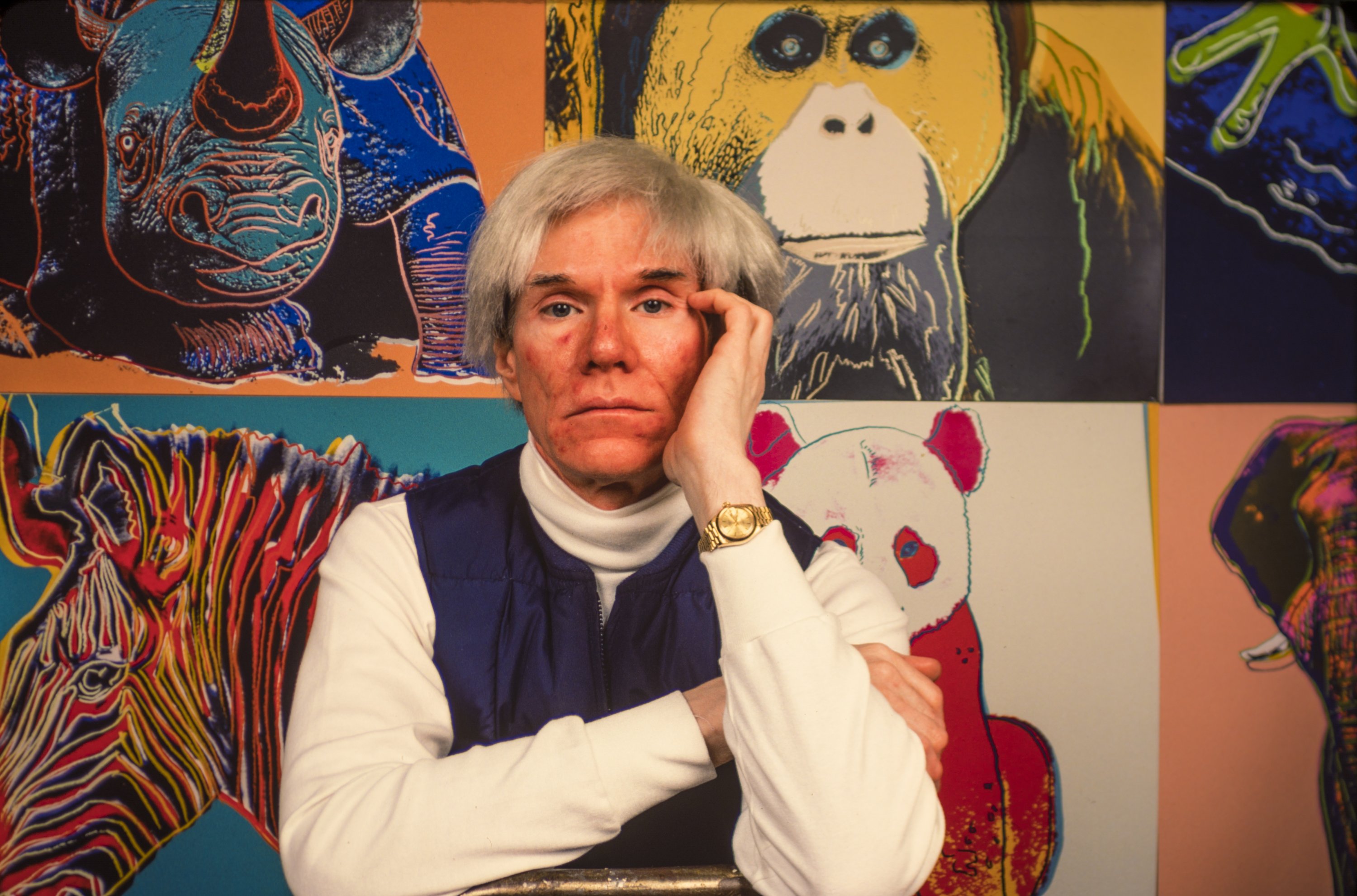
Andy Warhol remains, decades after his death, as one of the most paradoxical figures in the history of modern art. He was the artist who flattened reality into silkscreened surfaces, who made soup cans and movie stars equally iconic, who smiled through interviews as if speaking a language made entirely of ellipses. And yet, beneath that cool detachment, there was something profoundly human: a relentless attempt to understand the fleeting nature of time, the instability of fame, and the impossibility of permanence. Warhol didn’t just depict the surface of things; he excavated what lay beneath them, our hunger for memory, our terror of oblivion, and our desire to hold on to a moment before it slips away. The Warhol we think we know, the blonde wig, the monosyllabic quips, the Factory with its silver walls and cast of stars and strays is only one layer. The deeper Warhol, the one who quietly sealed away more than 600 “time capsules” over his lifetime, is the artist who fascinates me most. Those cardboard boxes, now meticulously archived at the Andy Warhol Museum in Pittsburgh, hold not just scraps of paper but fragments of a consciousness grappling with the passing of time. Receipts, letters, photographs, love notes, fan mail, press clippings everyday objects transformed into a monumental diary. In these boxes, Warhol wasn’t just saving ephemera; he was saving himself, attempting to build an architecture of memory that could resist the erosion of time.
What Warhol understood, perhaps better than any artist of his century, is that time is not just something we live through. It is something we perform, something we consume, something we can attempt to shape. To open one of his time capsules today is to step into a moment that refuses to die, to hear the echo of a party that ended 50 years ago, to feel the pulse of a city that was always moving faster than its artists could keep up with. Warhol treated time not as a linear march but as a loop, endlessly repeating and reframing the present. In this, there is an unexpected kinship with Heidegger’s concept of “being-in-time.” For Heidegger, existence is not a static condition but a dynamic unfolding, always already entangled with temporality. To be human is to be finite, to be aware, whether we admit it or not, of the horizon of our own mortality. Warhol’s work, especially his obsessive repetition of images, feels like an aesthetic response to this philosophical condition. By printing Marilyn Monroe’s face again and again, by watching footage of a car crash loop endlessly, he wasn’t numbing us to the image; he was trying to wrestle it into permanence. If time erodes meaning, then repetition, for Warhol, was a way to push back, a way to say: this moment, this face, this image deserves to last.
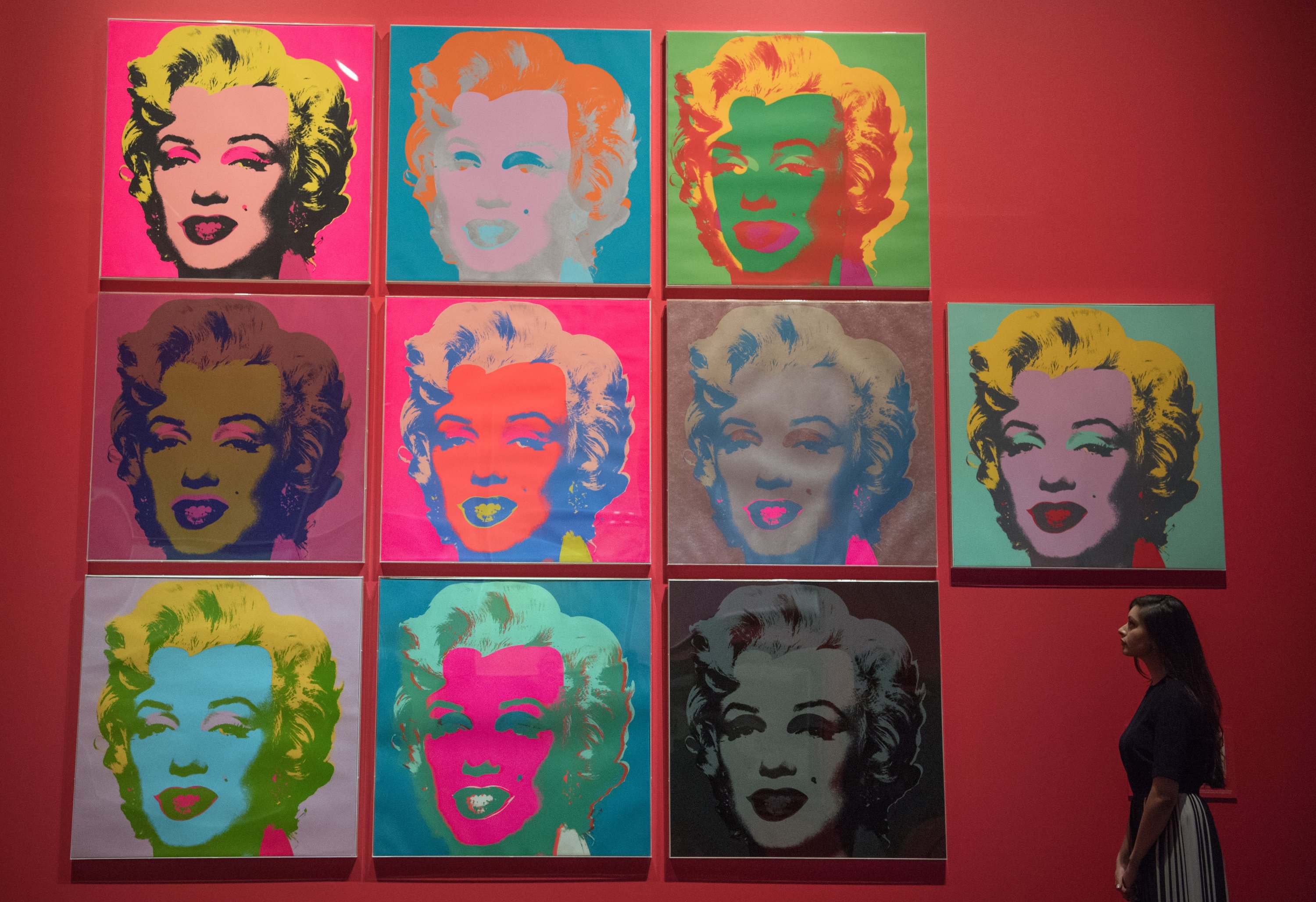
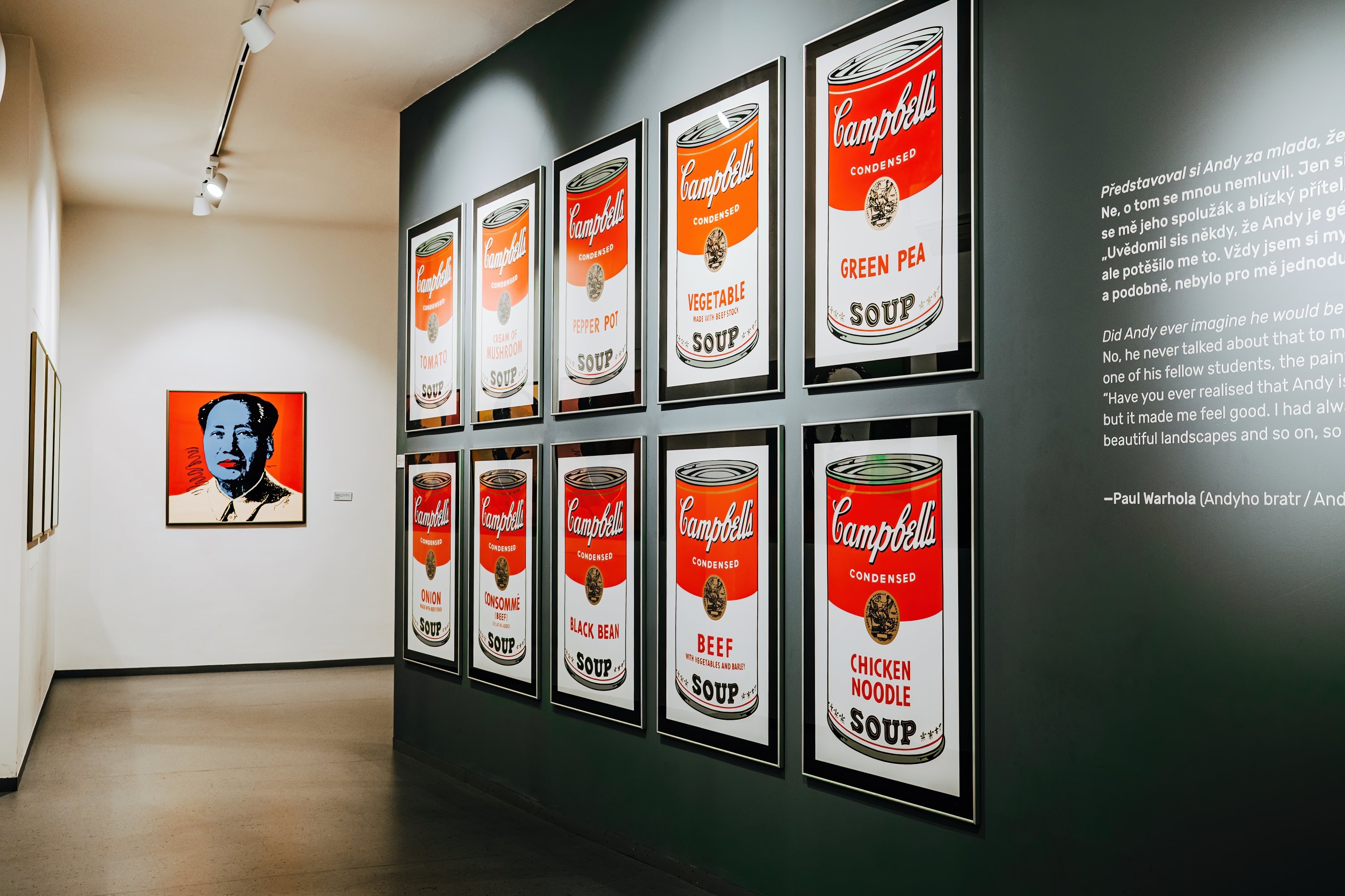
And this is what makes his art oddly moving, despite or perhaps because of its apparent detachment. When you stand before a silkscreen of Liz Taylor or Jackie Kennedy, you are not just looking at a celebrity; you are looking at an artist’s attempt to freeze the instant before loss. The image, multiplied, insists on its own survival, as if Warhol is whispering to us: remember this, remember her, remember now. Critics have often accused Warhol of celebrating superficiality, of turning art into commerce and commerce into art. But to read him this way is to miss the deeper current that runs beneath the glossy surface. Warhol was not celebrating consumerism so much as he was chronicling it, archiving our rituals of desire, documenting the strange intimacy we form with objects and images. The Campbell’s soup can is not just a can; it is a relic of a culture that finds comfort in sameness, that seeks stability in repetition, that finds identity in the mass-produced.
In his portraits, too, Warhol was doing more than just feeding the cult of celebrity. He was dissecting it, showing us how fame turns people into icons, into commodities, into screens onto which we project our collective fantasies. And yet, there is tenderness there, too. Look closely at his portraits of friends and lovers, and you will see an artist who understood that even the most mass-produced image carries within it the trace of a singular life. Warhol’s genius was his ability to inhabit both worlds at once: the world of surfaces and the world beneath them. He could make art that was instantly legible to a mass audience and yet layered with complexity for those willing to look deeper. He was, in that sense, both prophet and mirror reflecting the world as it was while hinting at what it might become.
To speak of Warhol is to speak of the Factory, that shimmering, chaotic space where art, commerce, and performance collapsed into one another. It was a place where ideas were made visible, where films were shot, where music was recorded, where people became myths simply by being present. The Factory was not just a studio; it was a theater of time, a stage on which the fleeting could masquerade as eternal. Every Polaroid snapped, every screen test filmed, every conversation taped was an attempt to catch the now before it vanished. Warhol understood that to live in New York in the 1960s was to live in a state of perpetual motion, where the city itself seemed to devour and regenerate its own myths daily. By archiving these moments, by turning them into images and objects, Warhol wasn’t just documenting a scene, he was building a time machine, a way of making the ephemeral endure.
And perhaps this is what keeps the Factory myth alive even now: the sense that, within those walls, time folded in on itself. The past, the present, the future, they were all happening at once, all caught in the hum of the silkscreen machine, in the rhythm of a Velvet Underground rehearsal, in the flash of a camera bulb. To revisit that space through Warhol’s archives is to be reminded that art can be both an anchor and a sail, something that grounds us in a moment even as it propels us forward. And what of the boxes, those hundreds of time capsules stacked in quiet rows, each one a sealed moment, waiting to be discovered? They remain, to me, the purest expression of Warhol’s obsession with memory. They are not curated; they are not edited to present a coherent narrative. They are chaotic, intimate, sprawling, just like a life. Open one, and you might find a receipt for a cab ride, a letter from a collector, a crumpled photograph, a half-used ticket to a party that everyone swore would never end. Together, these objects form a portrait of an artist who understood, perhaps better than most, that history is not written in grand gestures but in small, ordinary moments.
There is something almost devotional in this act of saving. In a culture obsessed with the new, Warhol was quietly building a cathedral of the everyday. Each box is a prayer, a refusal to let the ordinary disappear. And in that sense, the time capsules are less about Warhol the celebrity and more about Warhol the human being, fragile, finite, clinging to the tangible in the face of the inexorable. This intimacy is what makes encountering the time capsules so moving today; you are not just engaging with art, you are entering into the quiet interior life of a man who understood that to remember is, in some small but profound way, to love.
Warhol’s questions are our questions. What do we choose to remember, and what do we let slip into oblivion? What does it mean to live in a world where every moment is documented and yet nothing seems to last? Warhol anticipated the logic of our digital lives – the way images circulate, the way attention fractures, the way fame can be both instant and meaningless. Long before Instagram and TikTok, he saw the way technology would democratize celebrity and destabilize it at the same time, turning everyone into both observer and spectacle. But he also offers, in his archives and in his art, a kind of answer: to hold on, even clumsily, to what matters. To create our own time capsules, however small, however imperfect. To understand that memory is not a luxury but a necessity, a way of asserting our being against the tide of forgetting.
And for all his irony, Warhol was, at his core, a romantic. He loved deeply, even if he rarely said so. He feared loss, even as he pretended to float above it. And in his art, you can feel that tenderness, a quiet ache that runs beneath the glitter and the gloss. To see a Warhol silkscreen is to feel, in some small way, the ache of wanting to stop time, to keep someone or something exactly as it was, if only for a moment longer. This, I think, is why Warhol endures. Not because he was clever, though he was. Not because he was famous, though he certainly was. But because, in his work, we find a reflection of our own longing: to hold the present, to make it last, to believe, however briefly, that we can live outside the tyranny of time.
In the end, Warhol’s greatest achievement may not have been the way he changed art, or commerce, or celebrity, but the way he taught us to see. To see the beauty in repetition. To see the sacred in the ordinary. To see that every moment, no matter how fleeting, contains within it the possibility of forever. When I think of Warhol now, I think of those boxes, stacked and labeled, waiting for someone to open them. I think of the quiet act of sealing away a moment, not because it is grand or important, but because it is real. And I think of the way, in doing so, Warhol built not just an archive but a kind of eternity, a reminder that to remember is, in some small but profound way, to defeat time.
Perhaps that is Warhol’s true legacy: not the soup cans, not the portraits, not the 15 minutes of fame, but the gift of seeing time itself as a medium. A medium we can shape, archive, repeat, and, if we are lucky, hold, if only for a little while.