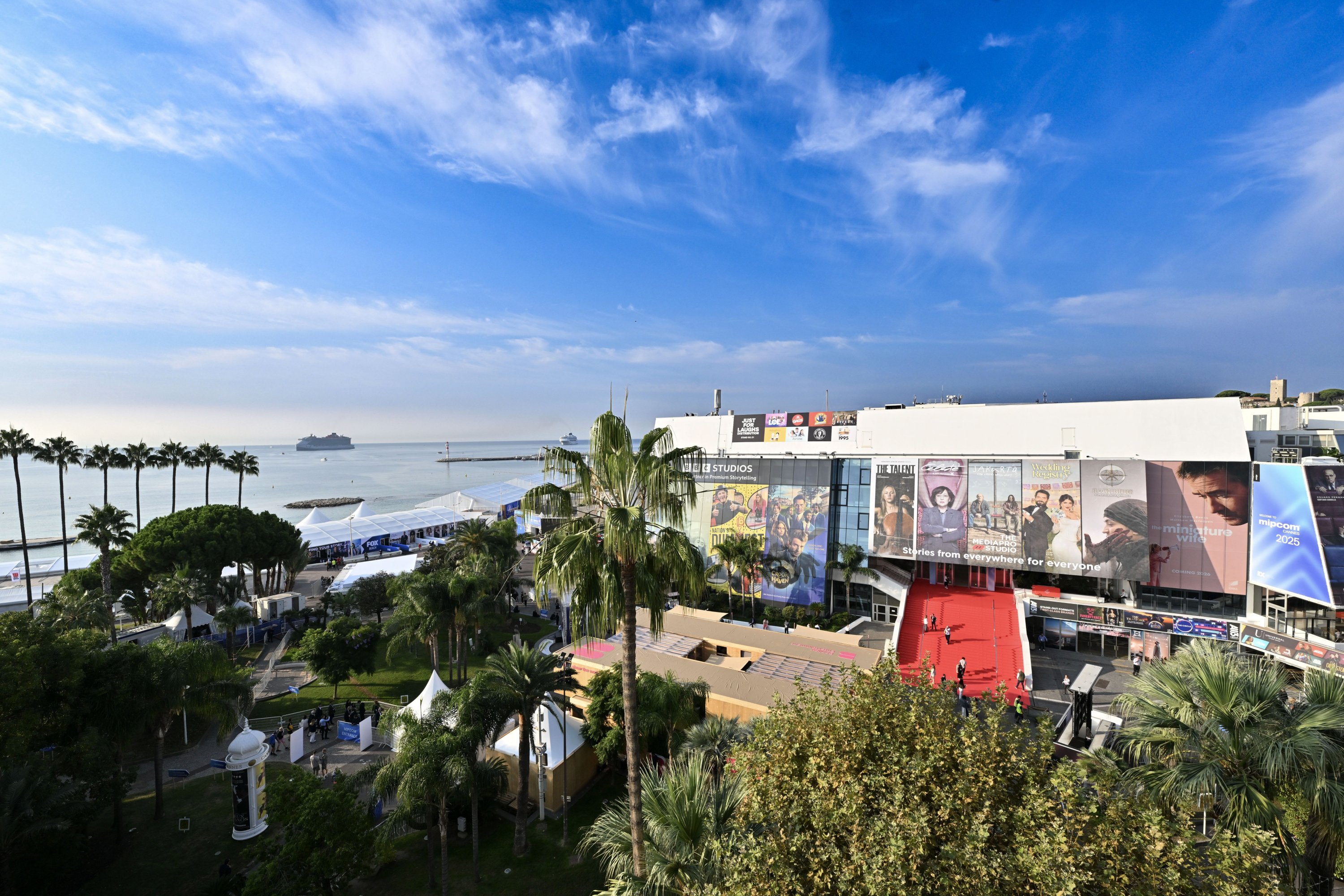
When international representatives of the television, streaming and digital industries gathered at the Palais des Festivals in Cannes in mid-October, there was no trace of routine. As soon as you entered the halls, you could sense that this MIPCOM was different: more focused, more creative, more connected. More than 10,000 trade visitors from over a hundred countries came together to negotiate, discover and redefine the future of storytelling. From linear television to the creator economy, there was hardly a discussion that left any doubt that the media landscape is undergoing historic change.
MIPCOM director Lucy Smith spoke of the “biggest change in a generation.” A quarter of the exhibitors were in Cannes for the first time – a symbol of how much new players, startups and digital platforms are shaking up the old world of broadcasting. Where there used to be clearly separated fronts between producers, broadcasters and distributors, there is now a fluid exchange. Studios meet influencer brands, tech companies meet story developers and traditional production houses are opening up to collaborations with brands and creator networks.
The content focus of this year's fair showed how broadly the term “content” is now understood. Panels and forums addressed topics such as artificial intelligence in series production, sustainable filmmaking, financing through brand partnerships and the question of how local stories gain global relevance. The so-called “creator economy” was the buzzword of the week: A model that focuses on individual brands, authenticity and direct community engagement. MIPCOM 2025 was no longer a classic TV trade show, but a laboratory for new forms of storytelling.
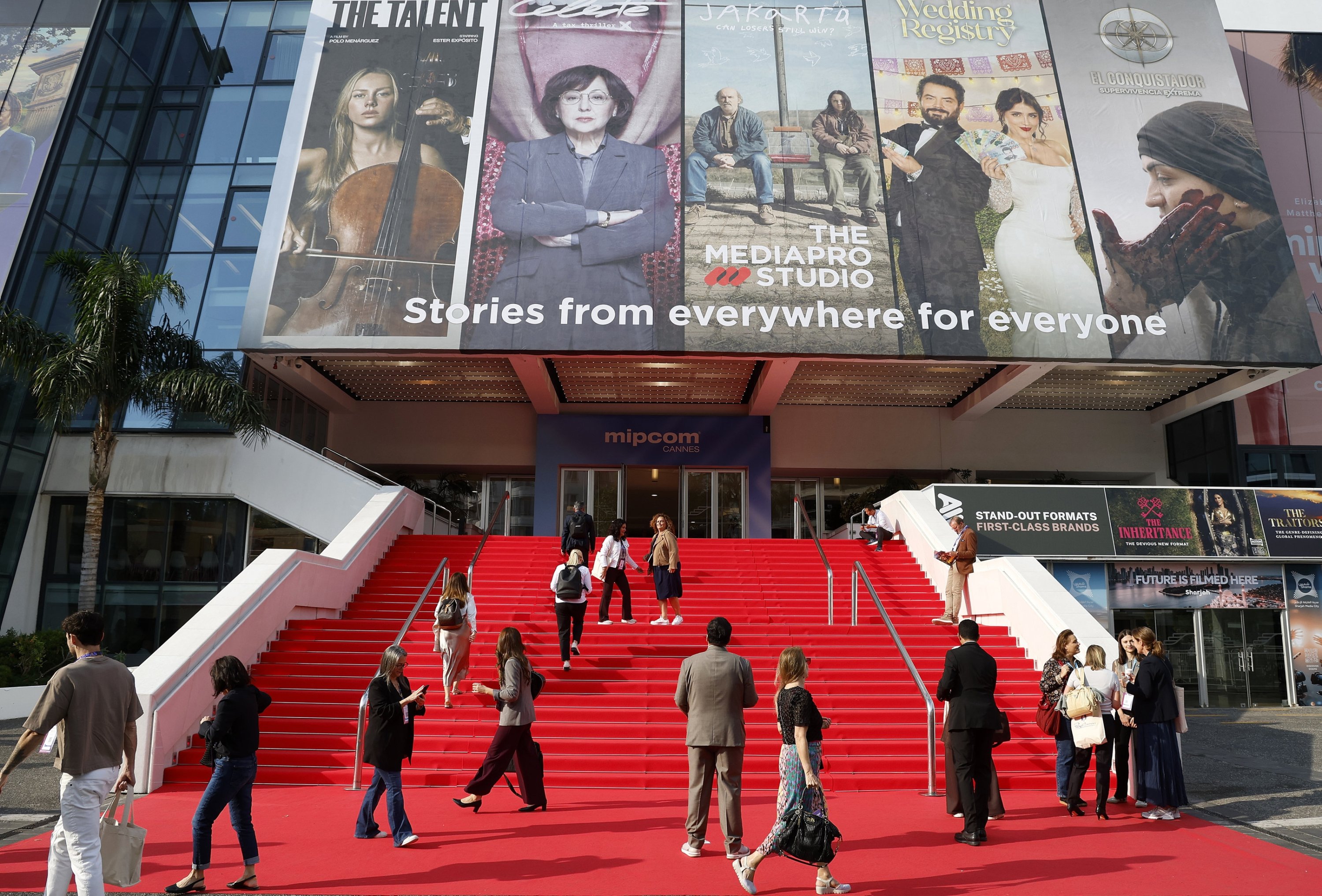
The atmosphere in Cannes was also different from previous years. There was a palpable sense of optimism among the stands – less the nervousness of old times and more a desire to develop new formats together. Many companies reported full schedules and high demand for co-productions. The fact that so many decision-makers were in attendance despite global market uncertainties was seen as a clear signal: the industry may be changing, but it remains vibrant.
The combination of technology and creativity was the focus of many discussions. Artificial intelligence is no longer seen as a threat, but as a tool that creates efficiency and leaves room for ideas. Production workflows are becoming smarter, translations and subtitling are being automated and target group analyses are becoming data-driven. But at the same time, there is a growing need for humanity, for stories that appeal to emotions and preserve cultural identity. It is precisely in this balance between high-tech and heart that the key to international success can be found.
Particularly striking this year was the growing presence of content from regions that have long been underestimated – above all, Türkiye. With almost 30 participating production companies and distributors, the Turkish delegation was one of the most active at the fair. In recent years, Türkiye has developed into a global exporter of series. Its productions are broadcast in more than 150 countries, from Latin America to Scandinavia, reaching an audience of millions.
In Cannes, it became clear that this success is no coincidence, but rather the result of a clear strategy: High-quality productions, emotional themes, strong actors and actresses and a narrative style that combines universal conflicts with regional flair. Turkish dramas focus on intense family stories, social tensions and the classic duality between love and honor – themes that are understood worldwide.
The presentations by Turkish providers were among the most visited events at the fair. The focus was particularly on large series producers who want to score points with new productions both on the domestic market and internationally. The spectrum ranges from historical epics to romantic dramas and modern family sagas. While many Western markets are struggling with declining ratings, Turkish broadcasters are increasing their foreign sales year after year.
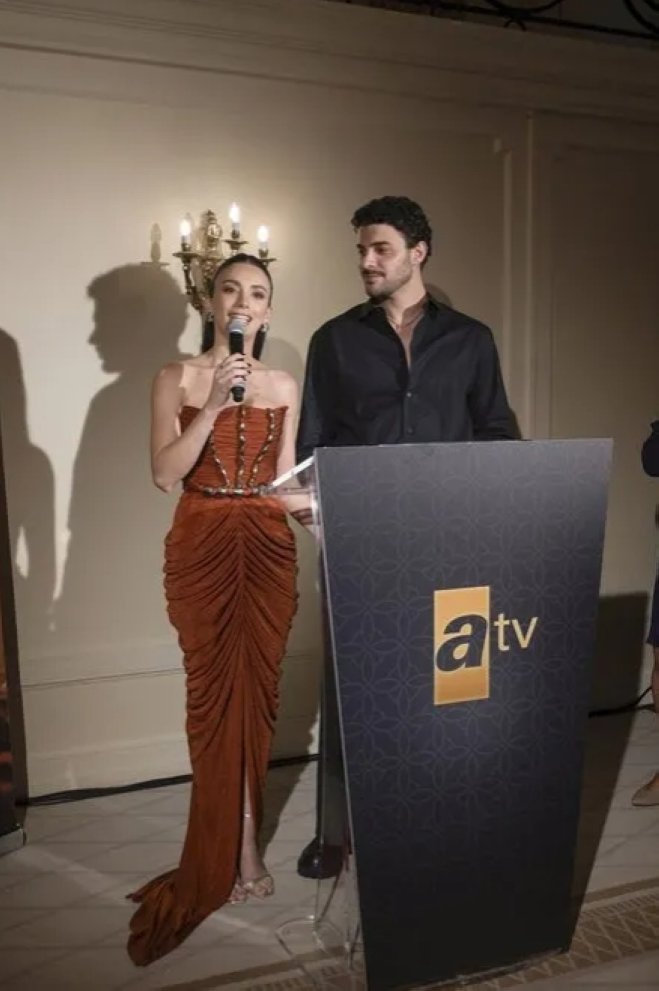
One example of this success is ATV Distribution, which once again emerged as one of the most dynamic players in Cannes. Led by Müge Akar, the team presented a strong line-up ranging from romantic dramas to major historical productions. The new series "Waves of Love" attracted a lot of interest with its emotional storyline and lead actors Halit Özgür Sarı and Özge Yağız, while the historical epic The Ottoman continues to be the flagship export with its seventh season. Akar emphasized in Cannes that ATV sees itself not only as a seller but also as a creative partner to international platforms, to tell stories that resonate in both Latin America and Europe.
The success of Turkish series can also be seen in a structural change: it is no longer just about licenses and broadcasts, but about co-productions, adaptations and creative partnerships. International broadcasters are involved in content development, global streaming platforms are securing exclusive premiere rights and new distribution partners are opening up markets where Turkish formats would have been unthinkable in the past.
It is also striking that Türkiye is increasingly penetrating Western markets, which have long been dominated by U.S. and British productions. Italy, Spain, France and Germany are seeing rising ratings for Turkish series, which are losing their cultural distance thanks to professional dubbing and targeted marketing strategies. Emotions, family themes and strong female characters seem to have a universal appeal.
Several Turkish broadcasters also used Cannes as a stage to present their upcoming projects internationally for the first time. In addition to major streaming titles, the focus was on linear prime-time formats that combine classic television dramaturgy with modern visual language. Turkish producers know how to use the length of their episodes – often over 100 minutes – to their advantage to deepen character development and suspense.
The increasing professionalization of Turkish distribution companies is also noteworthy. Many of them have internationalized their presence in Cannes, with English-language promos, international PR teams and targeted networking events. Particularly noteworthy is Global Agency, led by its charismatic founder İzzet Pinto, who has been considered the driving force behind the global success of Turkish formats for years. Pinto, who recognized the potential of Turkish series for the international market early on, positioned his agency as a bridge between Istanbul and Hollywood – with a keen sense for trends, timing and emotional stories. At MIPCOM 2025, Global Agency caused a sensation with the glamorous beach premiere of "Dynasty of Love," once again setting new standards in presentation and brand management. His approach shows that modern distribution means much more than just trade: it is the art of staging stories globally while preserving their cultural identity.
Behind the glossy surface, however, there is also a profound structural change. The Turkish government actively supports the export of series because it is considered soft power – a cultural export that shapes the country's image. Every successfully sold series also strengthens the perception of Türkiye as a creative center between Europe and Asia.
The presence of Turkish delegations at MIPCOM 2025 underscores that this trend is continuing. Whether romance, intrigue or historical power games – Turkish content has found a firm place on the international stage. In Cannes, the talk was no longer about whether Turkish series would work internationally, but which ones would be the next to enter new markets.
Compared to many European productions, which suffer from rising costs and bureaucratic hurdles, Turkish projects often appear more flexible, faster and more emotionally accessible. They combine production quality with instinct – and that is precisely what makes them globally successful.
MIPCOM 2025 showed that the media world is changing not only technologically but also culturally. While new players from the creator economy are revolutionizing distribution channels, traditional forms of storytelling are gaining new relevance. Audiences demand authenticity – and often find it in formats that focus on human relationships.
For many observers, Cannes 2025 was less a marketplace than a symbol. A symbol of an industry that is reinventing itself without losing its soul. A symbol of creativity as a bridge between cultures. And a symbol that stories – whether from Hollywood, Madrid or Istanbul – remain the universal language of our time.
The outlook is clear: the boundaries between television, streaming, and social media are becoming increasingly blurred. MIPCOM is at the dawn of a new era in which creative diversity, technological innovation and cultural authenticity coexist on an equal footing. The path to get there is complex, but the direction is clear. Anyone who was in Cannes in 2025 could feel it: the future of global storytelling has begun – and it speaks many languages.