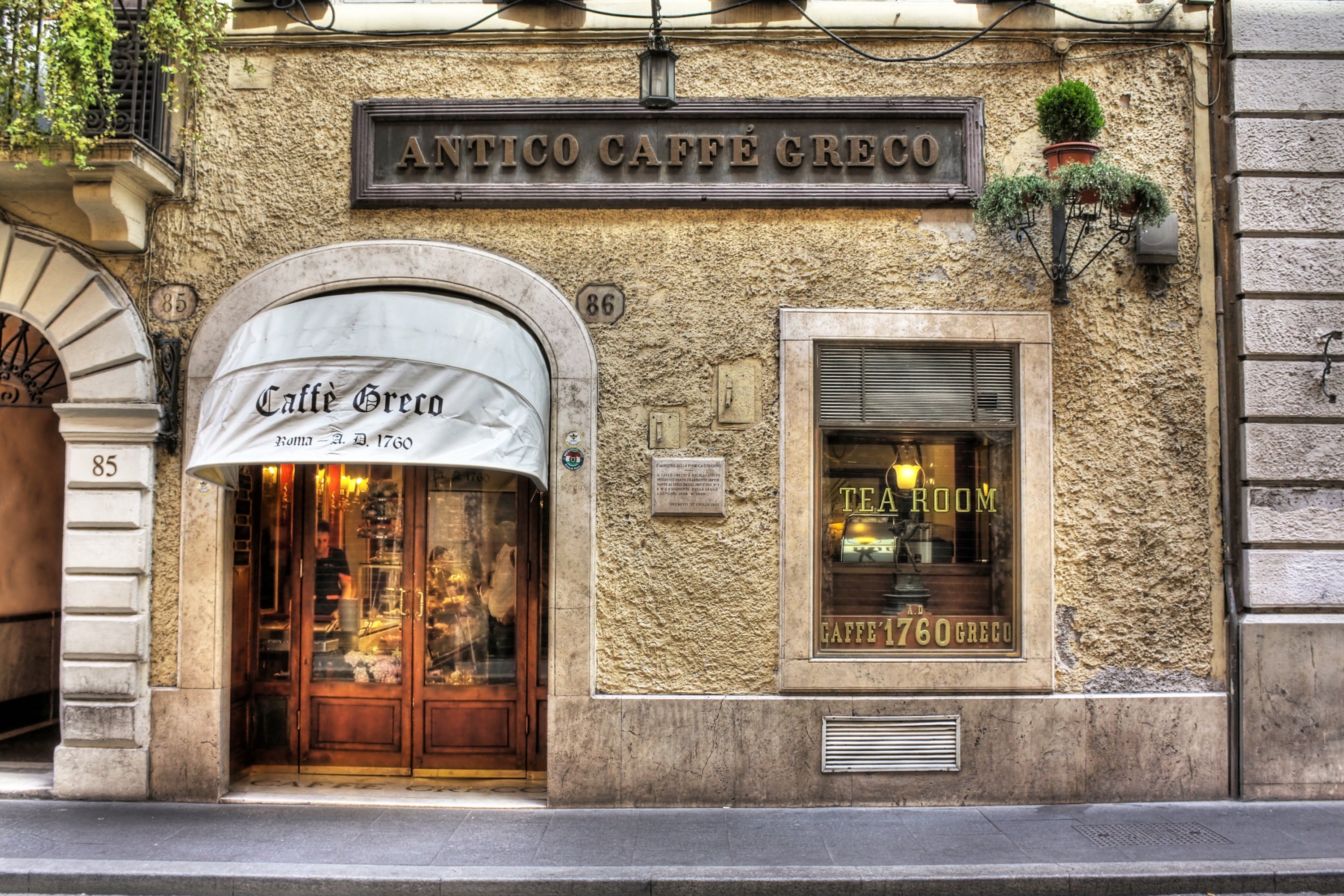
Located in the heart of Rome, just steps from the iconic Piazza di Spagna, the Antico Caffe Greco is Rome’s oldest cafe and the second oldest in Italy. Founded in 1760, it has long welcomed artists, writers and intellectuals, becoming a symbol of the city’s rich cultural heritage. Today, its shutters remain closed, sparking a debate, as many see the cafe as a vital piece of Italian cultural identity.
Due to ongoing disputes between the cafe’s manager, Carlo Pellegrini and its property owner, Ospedale Israelitico, which is a hospital affiliated with the Jewish Community of Rome, its doors closed on Oct. 8, 2025.
However, the conflict dates back to 2017, when the lease expired, leading to failed negotiations and a subsequent eviction process by Ospedale Israelitico, putting the cafe at risk of closure. In 2019, Ospedale Israelitico attempted to raise the monthly rent to 120,000 euros ($132,000), further intensifying the dispute.
In February 2025, the eviction had been temporarily halted thanks to the intervention of the state attorney on behalf of the Ministry of Culture. The ministry had ruled that the cafe’s paintings, furnishings and relics were immovable and had to remain in place.
While Italian courts had previously ruled in favor of the property owner, the ministry’s decision at the time had temporarily ensured that the cafe could continue operating. Ospedale Israelitico had also reassured the public that Caffe Greco would not close permanently, but despite these assurances, the cafe eventually did close.
Founded in 1760 by Nicola della Maddalena, it is believed to have Greek or Turkish roots from Anatolia. Only Venice’s Caffe Florian, opened on Dec. 29, 1720, predates this cafe. Antico Caffe Greco, recognized as a cultural heritage site by Italy’s Ministry of Culture in 1953, contains over 300 works of art.
Steeped in history, the elegant tables and chairs of the Antico Caffe Greco have welcomed countless artists over the centuries. Literary giants and philosophers such as Goethe, James Joyce, Schopenhauer, Nietzsche and artists such as Mina, Sophia Loren and Federico Fellini have walked its halls.
Traces of this cafe can be found across numerous works of art. The cover photo of Italian singer Mia Martini’s 1973 single "Minuetto/Tu sei così" was shot inside the cafe’s Sala Rossa, the famed Red Room.
Many literary works are also believed to have been written at its tables. Among them is Nikolai Gogol’s "Dead Souls," published in 1842.
Another notable artwork inspired by the cafe is Renato Guttuso’s 1976 painting "Cafe Greco," which depicts the interior and is now exhibited in Madrid.
One standout room, Omnibus, is densely adorned with artwork. According to the cafe’s website: “The Omnibus is the most important room of Caffe Greco, not only for the works displayed but because it was the preferred room for the various literary and artistic gatherings over the decades.”
Notably, the famous 1948 photograph by Irving Penn, with writer Aldo Palazzeschi, poet Sandro Penna, painter Carlo Levi and actress Lea Padovani was taken here.
Although it remains uncertain whether the cafe will reopen, Carlo Pellegrini stated: “This matter does not end like this. The recently sealed cafe is a public asset under protection. The Ministry of Cultural Heritage did not consider defending us. The issue is serious. We are ready to take action in every possible venue. They will be held accountable for complicity in the crime of omission."
The commissioner of the Ospedale Israelitico, Antonio Maria Leozappa, also added, “We will now work intensively toward reopening the cafe.”
The Antico Caffe Greco has long been a symbol of Rome’s cultural and artistic heritage, attracting both locals and tourists for centuries. Ensuring its reopening would mean safeguarding Italy's cultural heritage for future generations.