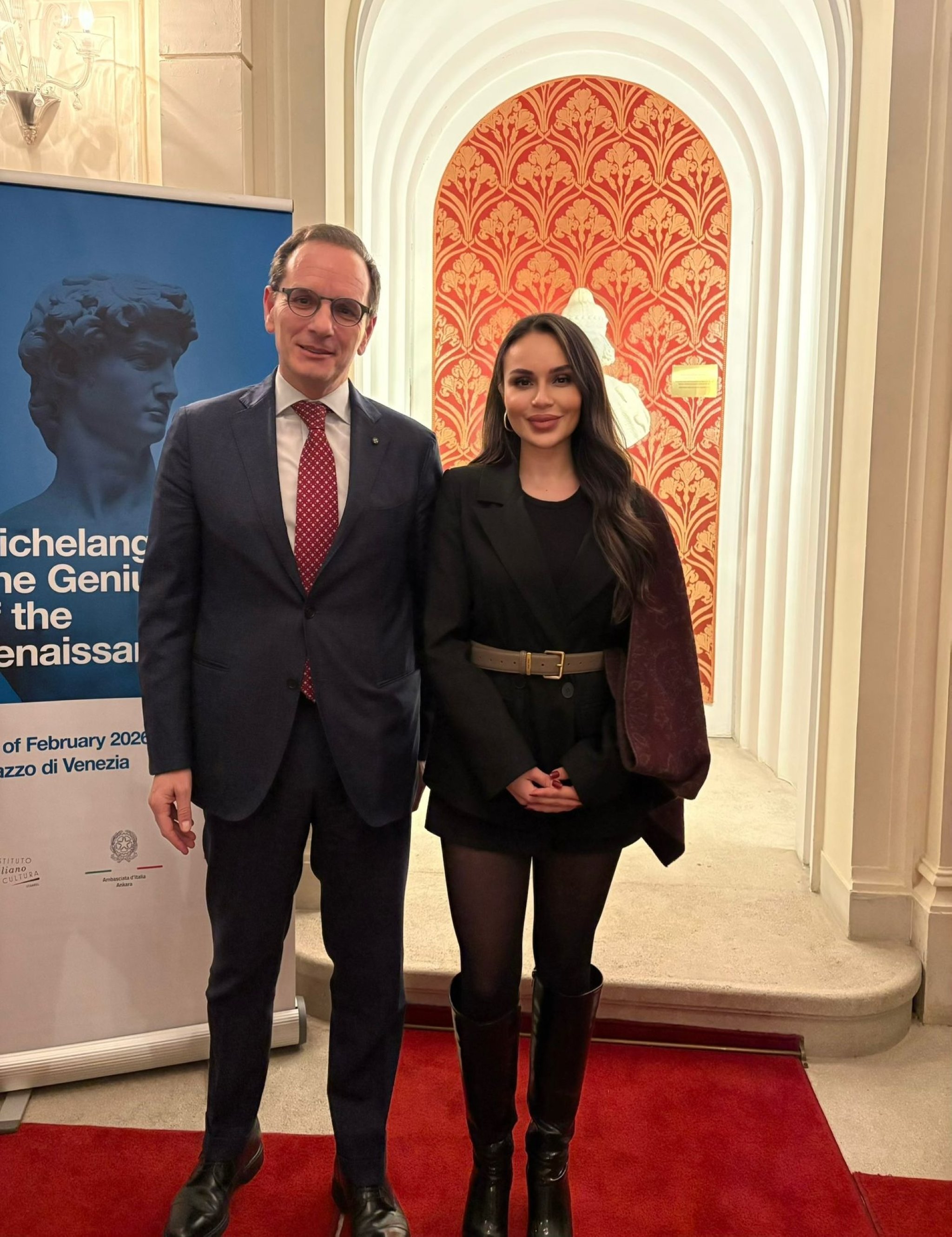
We first met Giuseppe Manzo, Italy’s ambassador to Türkiye, at a special reception dedicated to Michelangelo at Palazzo di Venezia in Istanbul. Manzo, who sees diplomacy not only as a political sphere but also as a cultural and human one, set the tone of this conversation from the very beginning.
Diplomacy is often associated, from the outside, with protocol, distance and carefully measured sentences. And yet some people represent their countries not only through their official titles, but through the emotional atmosphere they carry with them. Giuseppe Manzo, Italy’s newly appointed ambassador to Ankara, leaves precisely that kind of first impression: a diplomat who reads relations between states not only through institutions, meetings and calendars, but through family, cities, culture and human connection.
It is perhaps for this reason that his earliest memory of Türkiye is rooted less in formality than in something deeply human. At his first official reception at the Presidential Complex, he recalls as an unforgettable gesture not only being invited himself, but also having his wife Alma and his two sons, who had just arrived from London, included in the invitation. The fact that what first remained in an ambassador’s memory was not a protocol detail but a family moment reveals a great deal about his understanding of diplomacy from the outset.
One of the first things that stands out about Manzo is the breadth of his view of cultural diplomacy. When asked whether art, music, cinema, gastronomy or design is the most effective instrument, he does not choose just one. On the contrary, he sees them all as parts of the same whole. It is as if he holds not a single key to explain Italy, but a rich toolbox from which he can choose a different instrument each day. One evening at Palazzo di Venezia, it may be possible to bring design and gastronomy together; on another day, music or art may take center stage. In this view, Italy is not a country that can be contained within a single discipline, but a cultural geography that unfolds layer by layer, each one awakening its own sense of memory and pleasure.
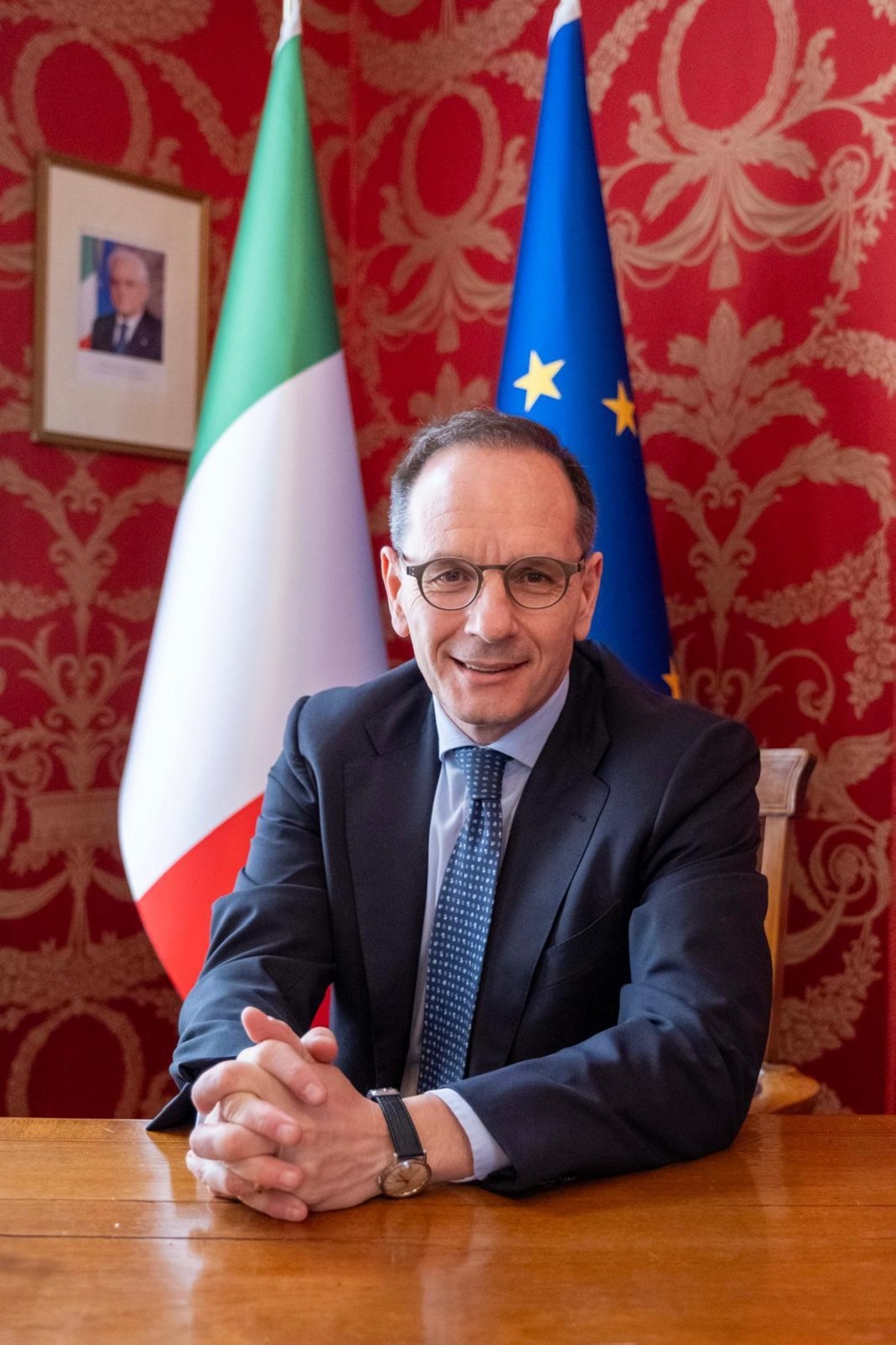
In the Italy he describes, the word "genius" belongs not only to the Renaissance or to the past. Of course, figures such as Leonardo da Vinci stand as historical symbols of that spirit. Yet Manzo’s emphasis is not confined to the splendor of history. He describes Italian genius as a multi-layered creative force that extends from art to fashion, from food to music. Even more strikingly, he does not imprison this idea within a romantic cultural narrative. By specifically reminding us that the leading item in Italy’s exports is the machinery sector, he shows that he understands his country not only through aesthetic elegance, but through the strength of production. In other words, beauty and function, art and industry, imagination and technical skill are not separate realms here; they appear as different faces of the same national character.
During his time in Türkiye, he says, his greatest ambition is to reveal the many faces of this "Italian genius" to Turkish audiences. Within this framework, his message to young creators in Türkiye is not abstract at all, but remarkably concrete. For those working in film, design, music or the performing arts, he believes that the bridge to Italy already exists. To him, this relationship is not theoretical, but living, functioning and in motion. His mention of the "Invest Your Talent in Italy" scholarship program in particular shows that he does not see cultural diplomacy merely as the organization of events, but as something grounded in education, circulation and the creation of real opportunities. Sometimes the strongest bond between countries is born not from grand rhetoric, but from a student finding room for themselves in another city.
Manzo’s view of communication is also far removed from the classic language of crisis. Disinformation, speed, polarization and trust are often seen as the greatest communication challenges in diplomacy today. He, however, sees possibility before threat. While noting that public diplomacy did not, until quite recently, have the visibility it does today, he believes communication has now become one of diplomacy’s most powerful tools. In his view, the real danger lies not in speaking, but in not speaking at all, because every vacuum invites disinformation to step in. Of course, diplomats must be careful not to be swept away between speed and accuracy; they must strive to be absolutely precise. Yet his insistence that even silence can sometimes carry meaning is important. In his understanding, communication is not simply about forming sentences; it is about knowing when to speak, when to wait and through which channels to create impact.
When asked what felt most familiar to him after arriving in Türkiye, his answer is strikingly simple: the way people speak to him. Their willingness to help, their genuine interest, their sincere attentiveness to what he says. He does not reduce this warmth to the attention he receives merely because he is an ambassador. He says he encounters the same openness while walking in Tunalı in jeans or asking for directions at a red light while riding his Vespa in Istanbul. Sometimes the truest understanding of a country comes not from grand narratives, but from a small exchange at a traffic light. And perhaps that is exactly what made Türkiye feel familiar to him: the sense that even in public life, one is never entirely left alone. From this, I can almost imagine seeing him at any moment riding through the streets of Istanbul on his red Vespa. He is every bit the Italian.
This year marks the 170th anniversary of diplomatic relations between Türkiye and Italy. Such a milestone is often mentioned in official texts as little more than a historical note. Yet Manzo chooses to turn it into a cultural narrative. While he invokes Leonardo da Vinci as one of the clearest embodiments of the genius that makes Italy extraordinary, he also refuses to confine this anniversary to nostalgia for the past. On the contrary, he speaks of a wide-ranging program of events stretching across past, present and future. In this way, the anniversary becomes more than a number to be commemorated; it turns into a platform through which the creative and cultural connection between the two countries is made visible once again.
Perhaps the most beautiful aspect of all this is that, after the official and cultural framing, everything returns to life itself. When he says he is from Naples, has lived in Rome, and feels as if he is dreaming whenever he is in Venice, he is not speaking about Italy in the language of a travel brochure, but through the emotional memory of cities. On the Turkish side, he says that he and his wife Alma have grown fond of their new home, Ankara and that when they are in Istanbul, they feel the privilege of welcoming guests at Palazzo di Venezia. Yet perhaps the warmest detail of the entire conversation is the Adana kebab they had in a carpet shop in Cappadocia. Because sometimes what truly defines a country is not the most carefully planned reception, but an unexpected taste encountered along the way, a small surprise, a coincidence that leaves a quiet smile behind. And perhaps diplomacy, too, finds its truest meaning precisely there, in those small moments that never sever human beings from life itself.
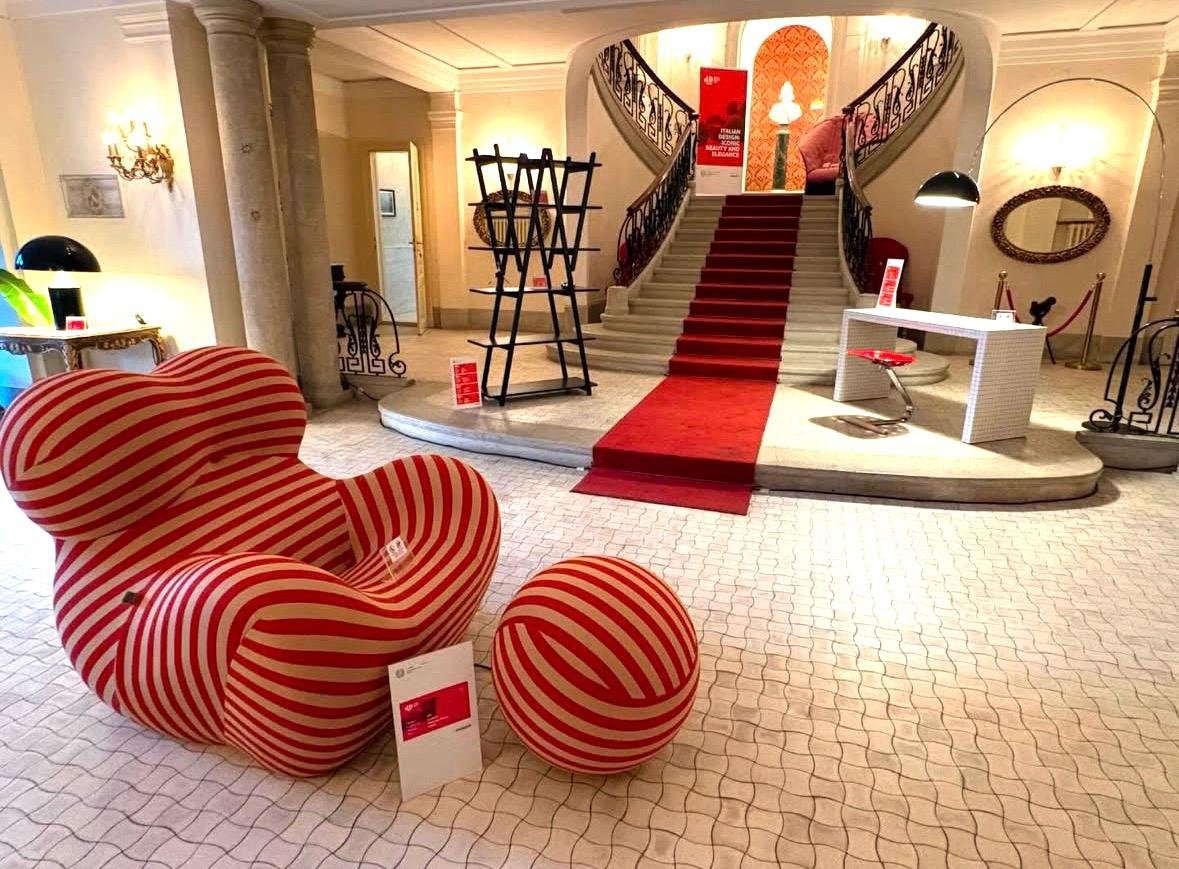
Beginning with "Michelangelo: The Genius of the Renaissance" and gaining further refinement with "Italian Design: Iconic Beauty and Elegance," this cultural line reveals Giuseppe Manzo’s way of representing Italy in Türkiye from the very first moment: a form of diplomacy that brings together art, aesthetics and human connection in a single elegant sentence. And for this very reason, the Italy he represents leaves behind not only something to be described, but a sense of elegance to be felt.