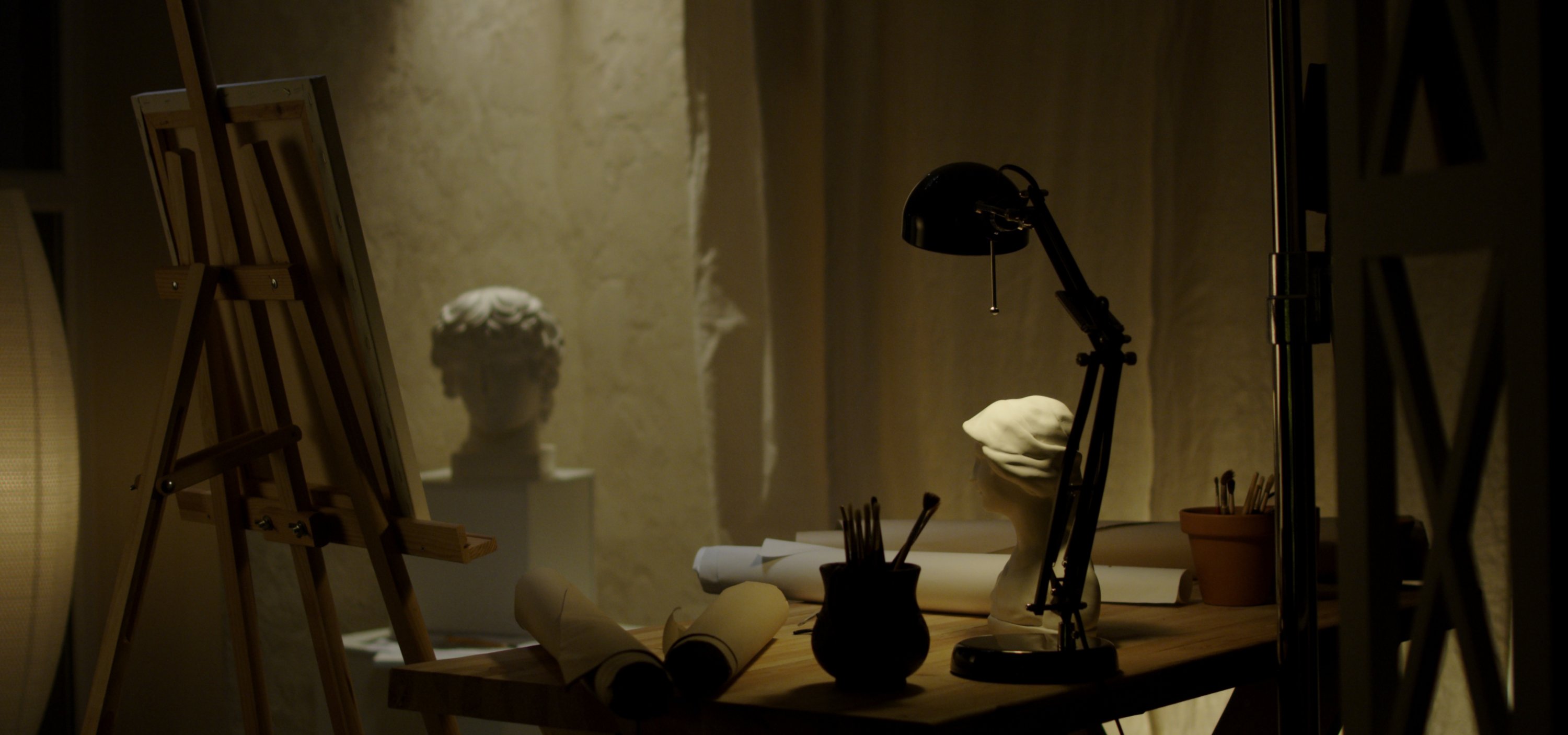
The year 2026 did not arrive with drama, at least in terms of art. There was no manifesto pinned to its door, no radical break loudly announced. It entered almost like any other year, quietly, practically, amid ongoing exhibitions, unfinished studios, open browser tabs and unanswered emails. Yet beneath this apparent ordinariness, something subtle but decisive is taking place. Artists sensed it first, often without naming it: a change in weight. Certain gestures feel heavier, certain silences more meaningful. The question is no longer how to keep up, but how to stay truthful.
For more than a decade, contemporary art has moved at an accelerated pace. Speed became habit, visibility a reflex. To produce was to exist; to pause was to risk being forgotten. Digital platforms rewarded immediacy, while institutions adapted to constant circulation. Over time, this rhythm normalized a kind of exhaustion, one that neither spectacle nor innovation could fully conceal. By the time we reach 2026, the fatigue is no longer individual. It has become structural.
What distinguishes this moment is not a rejection of technology or a retreat into nostalgia. It is a reordering of priorities. Art begins, once again, to ask what it is responsible for. Not simply what it can do, but what it should hold, protect, question or refuse. From the perspective of art history, these moments are familiar. They are not revolutionary in appearance, but they quietly redirect entire trajectories.
Artificial intelligence enters this landscape as both condition and catalyst. By 2026, AI will no longer be astonishing. Generative images, texts and simulations have become part of everyday visual culture. Tools such as ChatGPT are integrated into studios, institutions and classrooms alike. They assist with writing, structuring, translating, imagining and predicting. Their fluency is undeniable. Yet precisely because of this fluency, they force a deeper confrontation with intention. When almost anything can be generated, meaning can no longer rely on production alone.
Throughout history, every technological shift has unsettled the definition of authorship. Photography challenged painting; mechanical reproduction challenged originality; digital media challenged presence. Artificial intelligence accelerates this lineage, but it does not escape it. What changes in 2026 is not the relevance of the artist, but the location of artistic labor. Execution gives way to judgment. Speed gives way to selection. Authorship becomes less about making and more about deciding.
ChatGPT occupies a particularly revealing role in this transformation. It is not merely a writing tool, nor simply a source of information. It functions as a thinking interface, capable of expanding arguments, mirroring biases, revealing cliches and testing conceptual limits. For many artists, it becomes a space of rehearsal rather than performance. Ideas are tried out, dismantled and reassembled. Language is stretched and questioned. In this process, the artist’s voice does not dissolve. It becomes more exposed.
At the same time, the risk is evident. Ease can dilute intention. When words come too quickly, they risk losing gravity. When images appear effortlessly, they risk becoming interchangeable. By 2026, restraint is no longer a stylistic choice. It is an ethical one. To pause, to edit, to withhold, these acts regain creative value. Silence begins to function as a material again.
A clear separation emerges within contemporary practice. On one side, a vast field of AI-assisted production optimized for circulation, polished, fluent, visually seductive and often quickly forgotten. On the other hand, a slower, more deliberate approach takes shape. Here, artificial intelligence is not used to simplify complexity, but to sustain it. Artists engage with AI to explore subjects that resist closure: memory, displacement, ecological anxiety, inherited trauma, collective authorship and the politics of language itself. In these works, technology is never invisible. The machine is not disguised as a human, nor is the human reduced to an operator. Meaning arises in the space between them. The viewer is not asked to marvel at technological capability, but to reflect on the systems it reveals, who trained them, whose knowledge they privilege, which histories they misread or exclude.
Art history reminds us that no medium is neutral. Oil paint once served power and portraiture. Perspective encoded a worldview. Photography reshaped evidence and memory. Artificial intelligence carries its own ideologies of efficiency, prediction, hierarchy and control. Artists who engage with AI in 2026 do so with an acute awareness of this fact. The work is no longer about innovation for its own sake, but about accountability. Paradoxically, as artificial intelligence becomes ubiquitous, the physical returns with renewed urgency. The body reclaims its place. Texture, resistance, weight and imperfection gain authority in a world of infinite simulation. Viewers seek traces of time spent, of effort, of risk. Linen that absorbs pigment unevenly, surfaces that record hesitation, gestures that cannot be undone, these qualities begin to matter again, not sentimentally, but structurally.
Hybrid practices flourish. Painting meets projection, sculpture encounters data, and performance unfolds alongside algorithmic systems. Yet the most compelling works of 2026 insist on legibility. They allow us to see where the human ends and the machine begins, not to draw rigid boundaries, but to make the relationship visible.
Within this landscape, a distinct role emerges for the artist. In 2026, the artist is no longer primarily a producer of content, nor an endless performer of visibility. The artist becomes a mediator between speed and slowness, between machine logic and human judgment, between abundance and meaning. Their responsibility is not to compete with artificial intelligence, but to contextualize it; not to overwhelm the viewer, but to hold space for attention. The artist acts as a witness rather than an influencer, as a translator rather than a broadcaster. In an era defined by excess information, the artist’s role is to create conditions for understanding.
This shift also alters the relationship between art and power. Shock loses its urgency. Provocation yields to resonance. Exhibitions increasingly feel like spaces of listening rather than confrontation. Museums edge closer to civic forums, where complexity is not reduced to slogans and ambiguity is not forced into resolution. Art operates through soft power through empathy, duration and presence.
Equally significant is what begins to fade. The expectation that artists must constantly explain themselves, narrate every step and remain permanently visible starts to erode. A renewed respect emerges for withdrawal, for opacity, for not translating everything into content. Art history supports this instinct. Enduring works are rarely produced under conditions of continuous exposure. They require time, privacy and the courage to remain quiet. Looking back, turning points are rarely obvious when they occur. They do not announce themselves loudly. They reorganize values quietly. They replace louder answers with better questions. 2026 will not be defined by how advanced art appears, nor by how seamlessly it integrates technology, but by how responsibly it handles both visibility and silence.
In a world where machines can generate endlessly, the most radical artistic act may be the decision to mean something specific. To care. To take responsibility for form, content and consequence. From both the studio and the long view of history, 2026 is not a year of spectacle but a year of discernment.
As an artist of our age who has spent years moving between studios and cities, between paintings that demand patience and ideas that require courage, my intuition for 2026 is both sober and hopeful. I sense a year in which artists will be asked to trust their inner compass more than external validation, to choose depth over speed, responsibility over applause. While many speak of a future where human labor will lose its value, where automation and artificial intelligence are feared as engines of widespread unemployment, it is worth remembering that this anxiety will not belong to the arts alone. It will touch every field of human life. And yet, precisely here, art stands apart. No robot can replace an artist, because art cannot be produced by robots. The moment creation is reduced to pure automation, art itself ceases to exist. To keep art alive, we must keep the artist alive and that, I believe, is not only a cultural task but a human one.
My wish for 2026 is simple and resolute: more space for art, more patience for artists, and more courage to protect what cannot be automated. In a world increasingly shaped by machines that can generate endlessly, the most vital responsibility of humanity may be to safeguard the one thing machines cannot become.
I wish for more art in 2026.