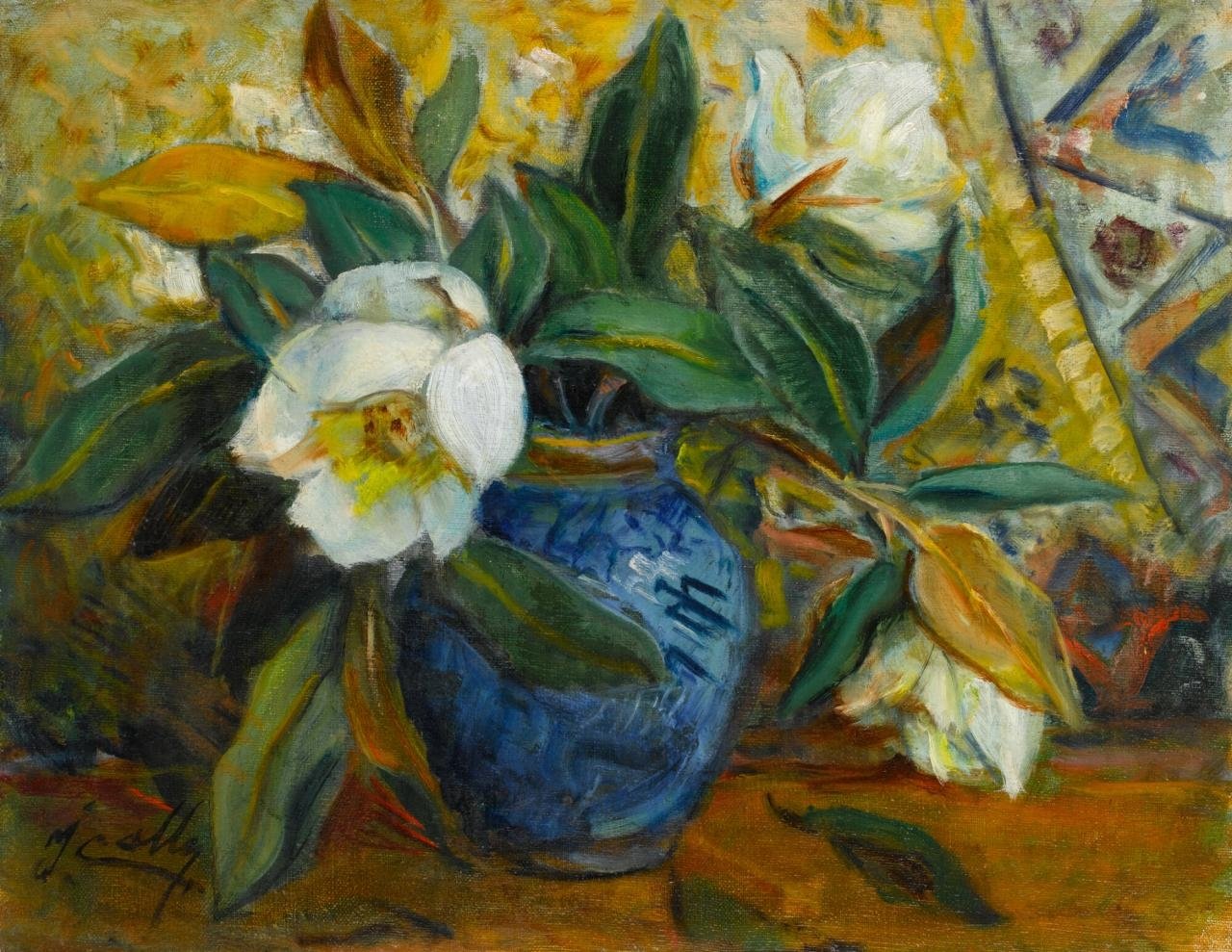
There are artists whose legacies are defined solely by their work, and there are those whose very lives seem to trace the contours of their nation’s transformation. Ibrahim Çallı is unmistakably among the latter. Born in the small town of Çal, in the province of Denizli, his surname is a direct reference to his origins. Yet the name “Çallı” would eventually come to denote not just a place of birth, but an entire era in Turkish painting: “the Çallı Generation,” a group of artists trained in the Western academic tradition during the late Ottoman and early Republican periods.
Çallı (1882-1960) lived through an extraordinary chapter in Turkish history. He received his early education under the Ottoman Empire, pursued formal art training in Paris at the Academie Julian and returned to witness the birth of the Turkish republic – an epoch of radical transformation in politics, society and art. As both a practicing artist and a teacher at the Istanbul State Academy of Fine Arts, he left a dual legacy: a body of work that chronicled the landscapes and sensibilities of a changing nation and a generation of students who would carry his vision forward.
Though his mature artistic years unfolded in Istanbul, his connection to Denizli – specifically Çal – remained a thread woven into the larger tapestry of his identity. And as someone born in Denizli myself, with a mother from Çal, I have long felt a quiet kinship with him. Perhaps it was the shared trajectory, from a provincial town to the cultural heart of the country, that inspired this feeling of affinity. Like Çallı, I left Denizli at a young age and found in Istanbul not just opportunity, but the fertile ground in which personal vision could bloom.
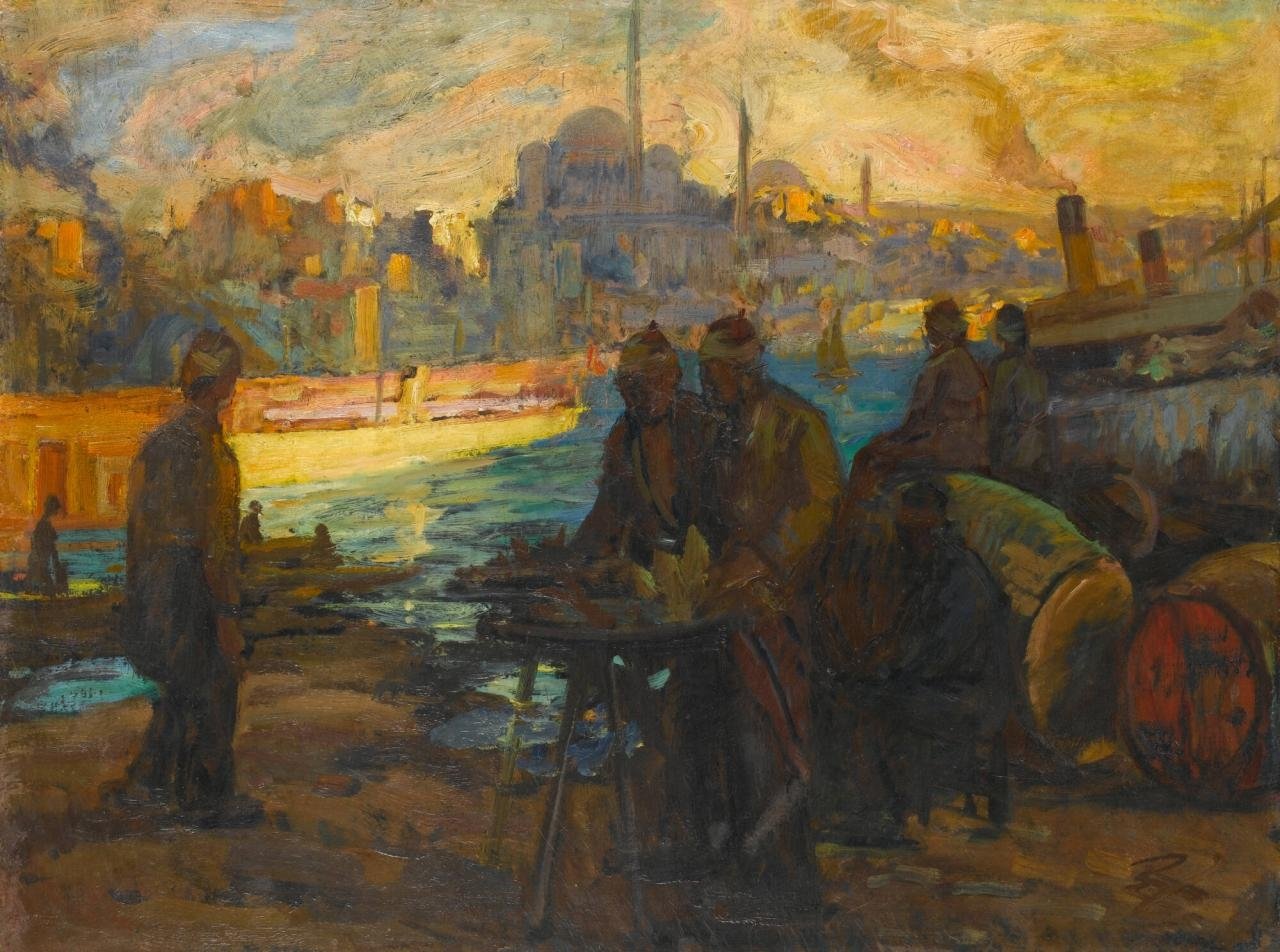
Yet even if Çallı did not spend his final years in Denizli – he passed away in 1960 and is buried in Zincirlikuyu Cemetery in Istanbul – his symbolic return to his roots has recently been made possible. Thanks to a commendable initiative by Işbank, a selection of Çallı’s works will be exhibited in the Çal branch of the bank on July 12-13. This is part of a broader project aimed at bringing significant works of art from major collections into Anatolian towns and cities. It is, in essence, a cultural odyssey – one that echoes Homer’s Odysseus: the hero who fights many battles, changes many forms and finally finds his way home.
Çallı’s work is not merely the product of one painter’s technique, but a mirror held up to an era. His landscapes, portraits and still-lifes – often painted in the style of the French Impressionists but imbued with an unmistakably local sensibility – offer visual insight into a society straddling tradition and modernity. Whether depicting Istanbul’s Bosporus under sunlight or intimate scenes of rural life, his brush documented a nation in transition. In this, his art provides valuable cultural memory – not only for scholars or collectors, but for those who inhabit the very lands from which his inspiration was once drawn.
That is why this temporary exhibition in Denizli is so meaningful. It is more than a retrospective; it is a homecoming. In a way, it brings the artist back to the soil from which his name – and perhaps his early imagination – sprouted. It allows his townspeople, many of whom may have known the name but not the brushstroke, to engage with his legacy directly. It reminds us that artistic genius, though shaped by global currents and metropolitan centers, often takes its first breath in quiet places, on village streets and hillsides.
In supporting this return, Işbank deserves sincere acknowledgment. Over the years, it has gone beyond the remit of a financial institution, becoming a steward of Türkiye’s cultural and intellectual heritage. Its publishing house, museum initiatives and public exhibitions have served to safeguard and circulate national memory. Whether through a painting on a gallery wall in Istanbul or a small-town exhibition in Çal, it continues to make art accessible, anchoring the abstract value of culture in tangible, lived experience.
In the long arc of artistic history, few gestures are as profound as returning home – not physically, perhaps, but symbolically and spiritually. With this exhibition, we find an opportunity to say, simply and sincerely: Welcome home, Ibrahim Çallı.