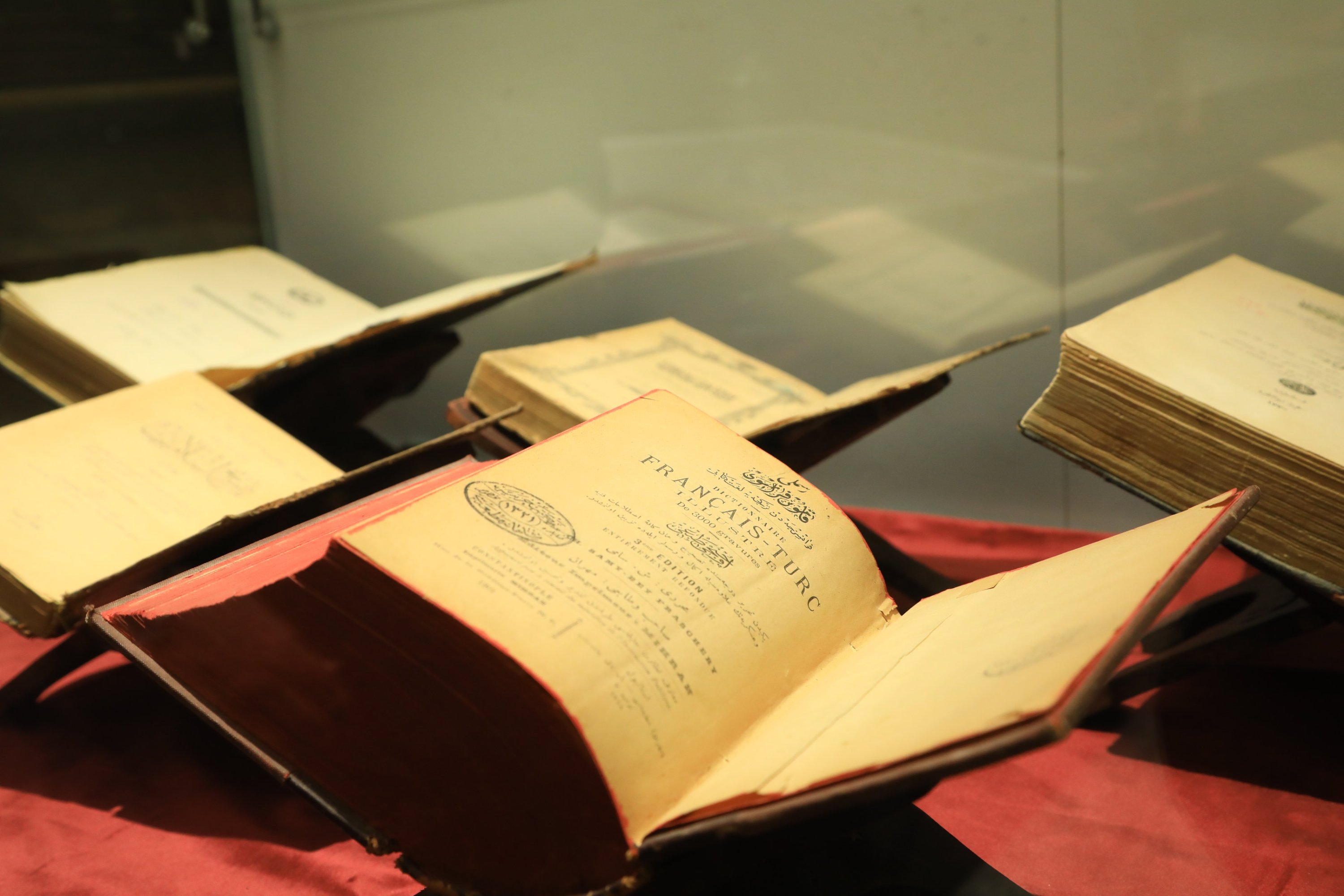
Dedicated to documenting the Ottoman period in Iraq, a new museum powered by artificial intelligence technologies recently opened in Baghdad. The initiative, which combines heritage preservation with digital innovation, places special emphasis on the Rouchdiye School, regarded as one of the key milestones in the emergence of modern education in the 19th century.
The museum is housed in the Baghdad Cultural Center building, constructed during the Ottoman era on the banks of the Tigris River. It displays documents, photographs and archives dating back to that period, presented through contemporary digital techniques aimed at reviving historical materials and offering them to visitors in an interactive format.
Taleb Issa, director of the Baghdad Cultural Center, told Anadolu Agency (AA) that the museum includes dozens of documents brought from Istanbul related to Iraq’s history under Ottoman rule, in addition to photographs and archival items shedding light on that era.
He added that the museum also introduces the history of the building itself, which was established by Ottoman Governor Midhat Pasha as part of a broader administrative and educational modernization project in Baghdad during the second half of the 19th century.
Haider Abed, head of the center’s Information and Communications Technology Department, told AA that the museum is the first of its kind in Iraq in terms of integrating artificial intelligence technologies into the presentation of historical materials.
“We rely on digital techniques to reprocess old photographs damaged over time. We have restored, colorized and enhanced them to allow visitors to see details that were missing in the original copies,” he said.
He stressed that the museum is not limited to displaying photos and documents, but also enables researchers to access Ottoman archives electronically instead of relying solely on paper copies, as part of incorporating digital archiving into historical research.
Abed explained that during the Ottoman period, the Rüşdiye School (Ottoman secondary school) offered instruction in both Turkish and Arabic, along with subjects such as mathematics, history and geography. Several military personnel also received their training there.
Among its notable graduates were former Iraqi Prime Minister Nouri al-Said and Jaafar al-Askari, founder of the Iraqi army, reflecting the school’s role in preparing prominent civilian and military figures in Iraq’s modern history.
The museum also features visual materials produced using artificial intelligence to recreate the atmosphere of education and daily life during that period.
The Rouchdiye School in Baghdad stands as one of the most significant examples of the educational modernization project launched by the Ottoman state in the 19th century. It contributed to introducing modern teaching methods to the city and formed the nucleus for the development of civilian and military educational institutions in Iraq.
The museum’s inauguration comes amid growing Iraqi efforts to preserve architectural and historical heritage while employing modern technologies to showcase it, strengthening public awareness of the country’s history and bringing younger generations closer to their past through contemporary digital tools.