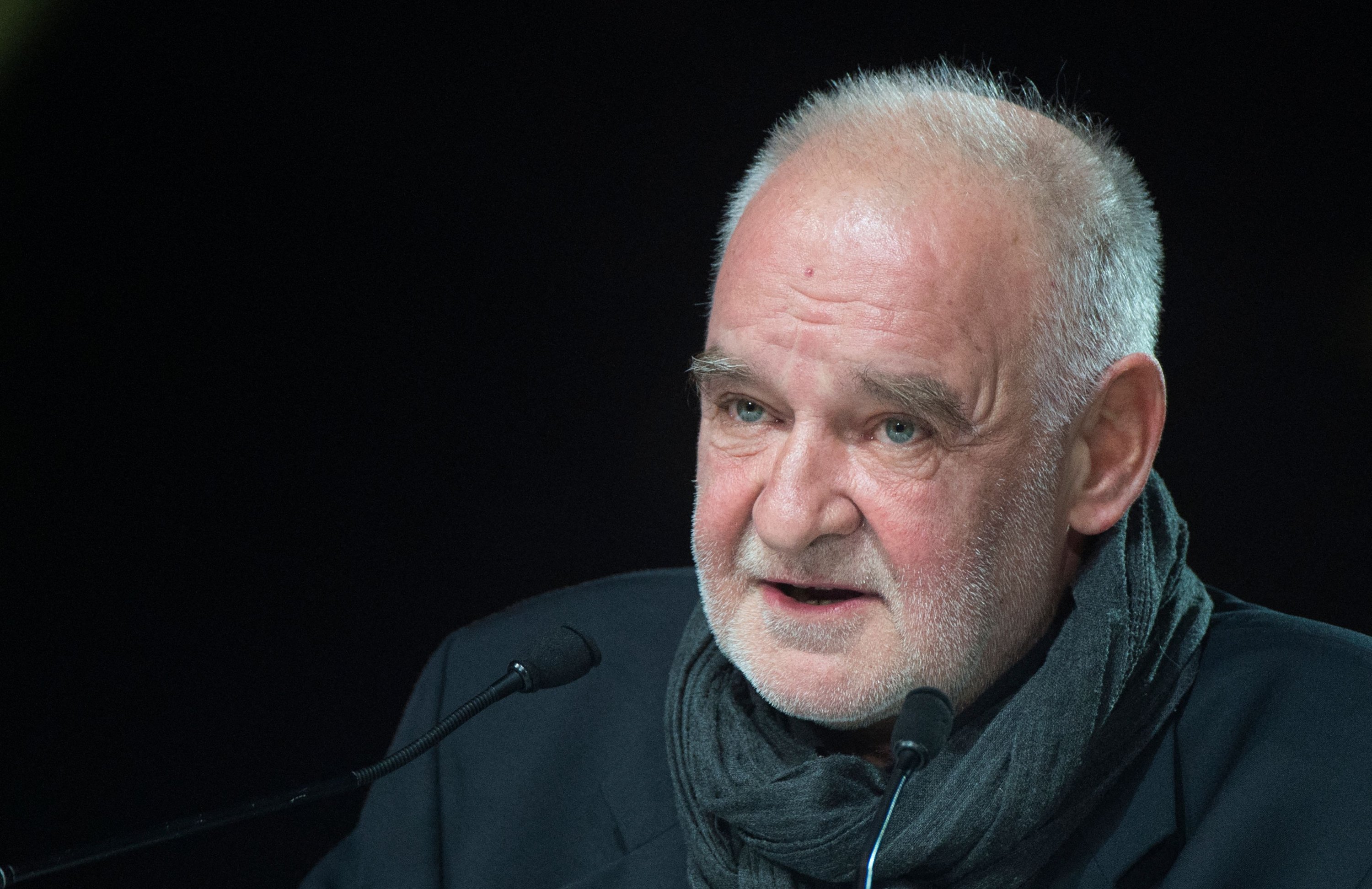
Legendary Hungarian filmmaker Bela Tarr, known for his long takes, monochromatic films and depictions of desolate landscapes on the silver screen, died on Tuesday at the age of 70.
Hungary's national news agency MTI reported his death citing a statement director Bence Fliegauf made on behalf of the family.
"It is with deep sorrow that we announce that film director Bela Tarr passed away early this morning after a long and serious illness" local news site Telex quoted the statement as saying.
Bela Tarr was born in the southern Hungarian university town of Pecs in 1955.
He started filmmaking as an amateur at the age of 16 with a camera his father gifted to him.
Tarr then joined Hungary's leading experimental film studio Bela Balazs Studio, which enabled him to make his first feature film, "Family Nest," in 1977.
He made the first Hungarian independent feature film, "Damnation," which was screened at the Berlin International Film Festival in 1988.
The film was co-written by Laszlo Krasznahorkai, whom he frequently collaborated with and who, in 2025, won the Nobel prize for literature.
Tarr was best known for the best known for the movie "Satantango" (1994), a seven-hour epic about the collapse of communism in Eastern Europe and its material and spiritual decline.
It was adapted from one of Krasznahorkai's best-known novels.
After completing his last feature film, "The Turin Horse" in 2011, Tarr announced his retirement, although he still did two short movies, in 2017 and 2019.
In recent years, Tarr devoted himself to educating a new generation of directors, teaching at multiple film academies in Hungary, Germany and France.
"I had done everything I wanted to" he told Hungarian weekly HVG in a 2019 interview.