Daily Sabah logo

Politics
Diplomacy Legislation War On Terror EU Affairs Elections News Analysis
TÜRKİYE
Istanbul Education Investigations Minorities Expat Corner Diaspora
World
Mid-East Europe Americas Asia Pacific Africa Syrian Crisis Islamophobia
Business
Automotive Economy Energy Finance Tourism Tech Defense Transportation News Analysis
Lifestyle
Health Environment Travel Food Fashion Science Religion History Feature Expat Corner
Arts
Cinema Music Events Portrait Reviews Performing Arts
Sports
Football Basketball Motorsports Tennis
Opinion
Columns Op-Ed Reader's Corner Editorial
PHOTO GALLERY
JOBS ABOUT US RSS PRIVACY CONTACT US
© Turkuvaz Haberleşme ve Yayıncılık 2025

Daily Sabah - Latest & Breaking News from Turkey | Istanbul

  • Politics
    • Diplomacy
    • Legislation
    • War On Terror
    • EU Affairs
    • Elections
    • News Analysis
  • TÜRKİYE
    • Istanbul
    • Education
    • Investigations
    • Minorities
    • Expat Corner
    • Diaspora
  • World
    • Mid-East
    • Europe
    • Americas
    • Asia Pacific
    • Africa
    • Syrian Crisis
    • Islamophobia
  • Business
    • Automotive
    • Economy
    • Energy
    • Finance
    • Tourism
    • Tech
    • Defense
    • Transportation
    • News Analysis
  • Lifestyle
    • Health
    • Environment
    • Travel
    • Food
    • Fashion
    • Science
    • Religion
    • History
    • Feature
    • Expat Corner
  • Arts
    • Cinema
    • Music
    • Events
    • Portrait
    • Reviews
    • Performing Arts
  • Sports
    • Football
    • Basketball
    • Motorsports
    • Tennis
  • Gallery
  • Opinion
    • Columns
    • Op-Ed
    • Reader's Corner
    • Editorial
  • TV
  • Arts
  • Cinema
  • Music
  • Events
  • Portrait
  • Reviews
  • Performing Arts

Luxurious trash: Why Roman elite liked floor mosaics adorned with trash

by Agencies

Jun 11, 2024 - 11:35 am GMT+3
Edited By Buse Keskin
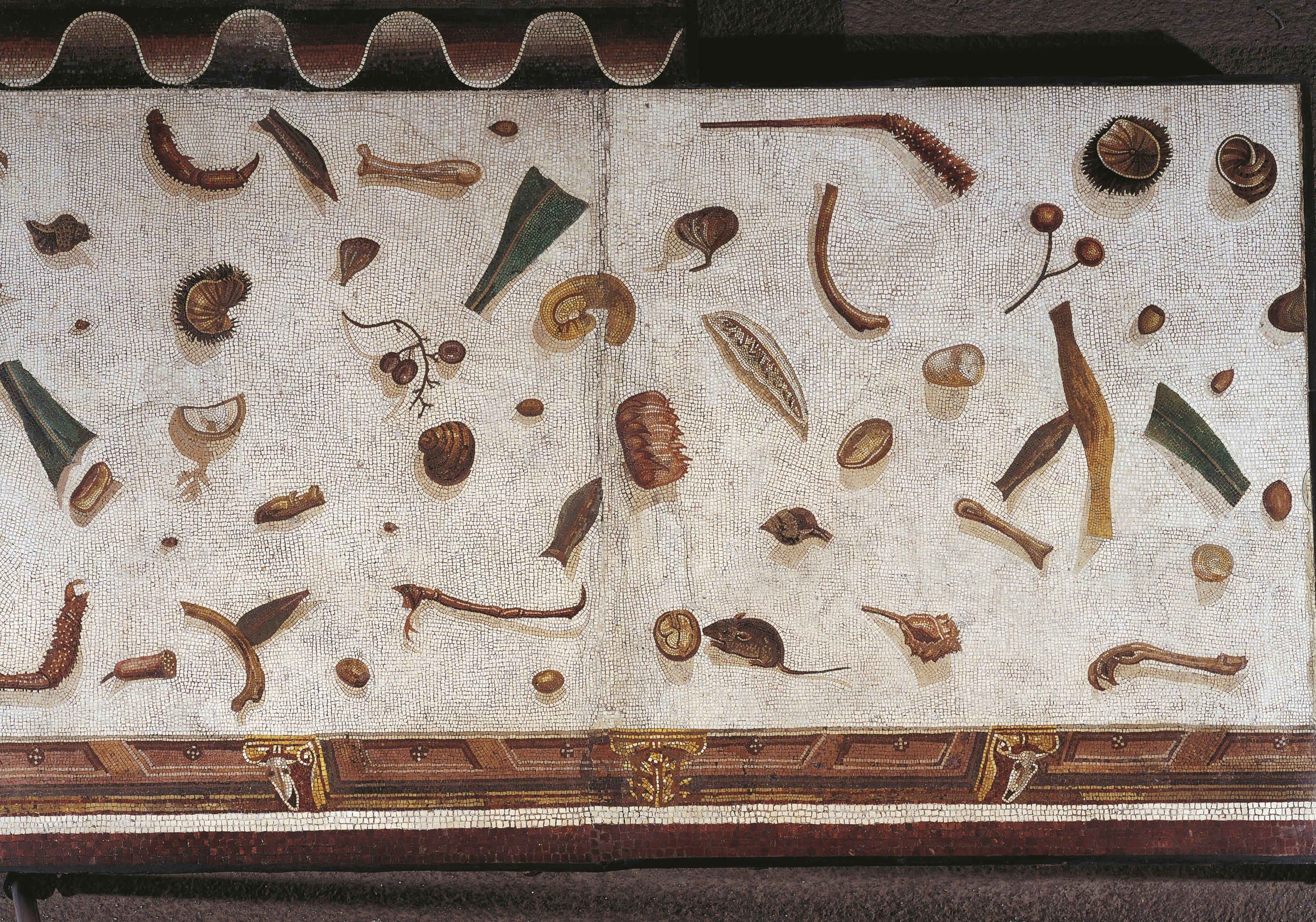
Asarotos oikos mosaic (unswept room), depicting a mouse feeding on food remains on the floor, Museo Gregoriano Profano, Vatican. (Getty Images Photo)
by Agencies Jun 11, 2024 11:35 am
Edited By Buse Keskin

In the Vatican’s Profane Museum, amid the ornate sarcophagi and marble statues, lies an artifact that seems oddly out of place: a mosaic floor that appears to be littered with the remnants of a meal.

At first glance, it looks like kitchen refuse scattered across the floor – nutshells, olive pits, fruit rinds and grape stems. However, upon closer inspection, these food scraps reveal themselves to be intricately crafted pieces of stone and glass. This trompe l’oeil mosaic is exceptionally detailed, with gleaming shells, spiny chestnut husks and grapes covered in a soft, velvety bloom.

Such mosaics once adorned the triclinia, or dining rooms, of ancient Rome, where guests reclined on couches, savoring various delicacies. This particular mosaic was discovered in the ruins of a villa on Aventine Hill and still exudes the atmosphere of those lavish Roman feasts. The scattered food casts long, irregular shadows as if illuminated by flickering oil lamps, and even a small mouse in the corner, nibbling on a nut, has a glimmer of lamplight in its eye.

This mosaic motif, known as "asarotos oikos" or “unswept room” in Greek, was popular enough to have its own name. Although Greek artists created these mosaics, the versions we have today are Roman copies made during a period of intense admiration for Greek culture. But why would wealthy Romans go to such lengths and expense to decorate their dining room floors to resemble trash-strewn surfaces?

Firstly, it served as a clever status symbol. The refuse depicted in the mosaic from the Profane Museum represents luxury trash. It includes fresh seafood like lobster and oysters, the spiny shell of a Murex Brandaris (the source of the elite Tyrian purple dye) and exotic imports such as mulberries from Asia, ginger from India and figs from the Middle East. The mosaic portrays the wealth and reach of the Roman Empire, scattered casually on the floor.

The “unswept room” motif is often paired with designs of theatrical masks and central scenes from the Nile. Additionally, the mosaic suggests a feast so opulent that it could have violated Roman sumptuary laws, which restricted how much a host could spend on a banquet. The Lex Orchia of 182 B.C. limited the number of guests at a meal, and later laws banned the consumption of luxurious items like fattened fowl, shellfish and sow’s udders. However, historical accounts suggest these laws were frequently ignored, as hosts sought to impress their guests by flaunting these restrictions.

Art historians also link this motif to the Roman tradition of "memento mori," or reminders of death. Such references to mortality were common at Roman banquets. For example, little jointed bronze skeletons called larva convivalis were used as party entertainment, as seen in the Satyricon, where one skeleton dances on a table while the host reminds the guests of their mortality. The mosaic, therefore, serves as a reminder that even the finest feast quickly turns to refuse, just as diners themselves will eventually become bones and dust. It urges guests to enjoy their meal, as it might be their last.

Nearly 2,000 years separate us from those who once dined over this mosaic. While the imagined deaths of those diners have long since occurred, their "trash" remains preserved in this artistic illusion. James Davidson, a professor of ancient history, notes in his book "Courtesans and Fishcakes" that some of the food remnants in the mosaic don't quite meet their own shadows, suggesting they are still in the process of falling. This detail adds a sense of continuity, implying that although the diners are long gone, the feast continues.


  • shortlink copied
  • Last Update: Jun 11, 2024 1:33 pm
    KEYWORDS
    roman elite vatican vaticans profane museum
    The Daily Sabah Newsletter
    Keep up to date with what’s happening in Turkey, it’s region and the world.
    You can unsubscribe at any time. By signing up you are agreeing to our Terms of Use and Privacy Policy. This site is protected by reCAPTCHA and the Google Privacy Policy and Terms of Service apply.
    No Image
    Madrid Fashion Show 2022 also has live catwalk parades
    PHOTOGALLERY
    • POLITICS
    • Diplomacy
    • Legislation
    • War On Terror
    • EU Affairs
    • News Analysis
    • TÜRKİYE
    • Istanbul
    • Education
    • Investigations
    • Minorities
    • Diaspora
    • World
    • Mid-East
    • Europe
    • Americas
    • Asia Pacific
    • Africa
    • Syrian Crisis
    • İslamophobia
    • Business
    • Automotive
    • Economy
    • Energy
    • Finance
    • Tourism
    • Tech
    • Defense
    • Transportation
    • News Analysis
    • Lifestyle
    • Health
    • Environment
    • Travel
    • Food
    • Fashion
    • Science
    • Religion
    • History
    • Feature
    • Expat Corner
    • Arts
    • Cinema
    • Music
    • Events
    • Portrait
    • Performing Arts
    • Reviews
    • Sports
    • Football
    • Basketball
    • Motorsports
    • Tennis
    • Opinion
    • Columns
    • Op-Ed
    • Reader's Corner
    • Editorial
    • Photo gallery
    • DS TV
    • Jobs
    • privacy
    • about us
    • contact us
    • RSS
    © Turkuvaz Haberleşme ve Yayıncılık 2021