When the debate over artificial intelligence began in the music industry, record companies were uncompromising.
“Our works are being used without permission.”
“Artists’ labor is being stolen.”
“Copyrights are being violated.”
Lawsuits were filed. Statements were issued. Technology companies were publicly confronted.
But the music business has an enduring rule: When enough money is on the table, yesterday’s enemy can become today’s business partner.
That is why the global licensing agreement between BMG, one of the world’s major music companies, and AI music generation company Suno is more than an ordinary technology story. It signals a change in direction in the music industry’s fight over artificial intelligence.
Record companies are no longer simply trying to stop AI. They are negotiating over how the money it generates will be divided.
Under the announced system, artists and songwriters represented by BMG will have the choice to participate. Rights holders who authorize their works to be used to train Suno’s AI models will be compensated for both past uses and future work.
On paper, it sounds reasonable: Permission will be obtained, the work will be used and the rights holder will be paid.
But that leads to the more difficult question: How much?
How do you put a price on the musical language an artist has spent years developing when that language is used to train an artificial intelligence model? Is using an entire song the same as teaching a system its style, vocal character, or melodic sensibility? And if an artist gives permission today, will that artist be able to say tomorrow, “I want my work removed from the system?”
There is an even bigger question.
If AI learns from millions of songs and then produces an effectively unlimited number of new works, should the owners of those original songs receive a share of the revenue generated by the resulting music?
Those are the questions around which the music industry is now negotiating.
On one side are record companies that say they are protecting the rights of creators. On the other are billion-dollar technology companies capable of producing songs in seconds. In the middle is the artist, who still does not know exactly how much – or under what rules – they will be paid.
In Türkiye, figures at the center of the digital music business are watching the transformation closely. Yavuz Selim Akgül, CEO of Fellas Music, whose projects reach audiences from Türkiye to Europe and other parts of the world, argues that AI can no longer be treated as a technology that belongs somewhere in the distant future.

“AI is no longer simply preparing the backing track for a song,” Akgül said. “It can play the guitar, generate synthesizer parts, intervene in the arrangement and combine different vocal qualities into a single voice. Rather than simply opposing the technology, we need to discuss how human labor will be protected. As production becomes faster, the role of the musician, arranger and rights holder in the system is becoming increasingly unclear.”
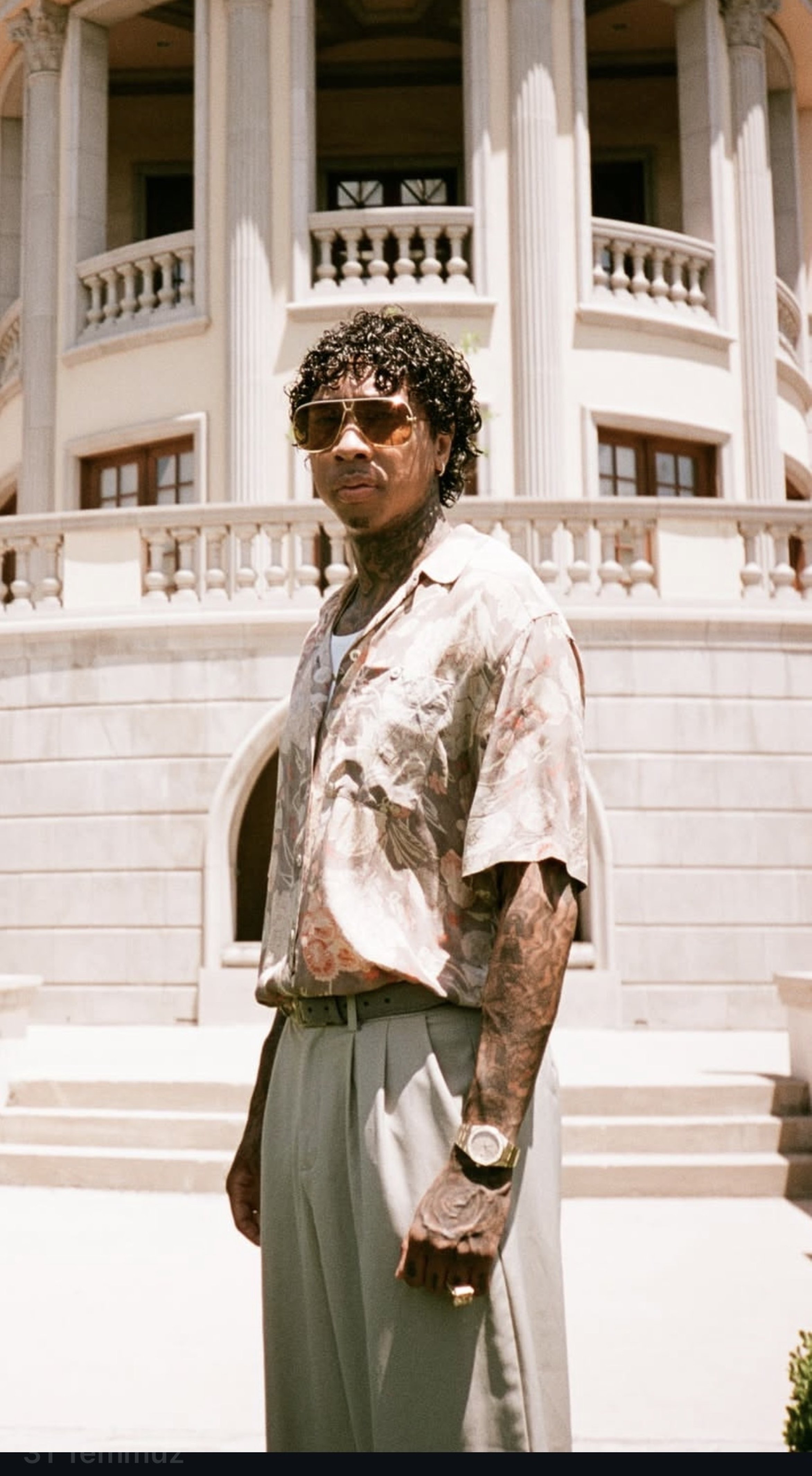
Akgül points to rapper Tyga as evidence that the debate is no longer theoretical.
Tyga has said he used AI to create 1980s-style synthesizer and guitar parts for his album “$TARFACE.” He said the lyrics and vocals were his own and compared his use of AI to the early days of Auto-Tune.
That comparison gets to the heart of the debate.
If the vocal is human, is the song entirely a human creation?
When AI plays a guitar solo, who speaks for the guitarist who was never called into the studio? When an algorithm creates a synthesizer part, what happens to the arranger who spent years developing that skill? Is AI simply another tool in an artist’s hands, or is it becoming an invisible studio employee that works without asking for a fee?
Technology companies will call it creative freedom. Record companies will call it an innovative business model. Some artists will defend it by saying it saves time.
But the musicians whose jobs disappear may ultimately be the ones paying for that saved time.
Auto-Tune is not a perfect comparison, either.
Auto-Tune altered an artist’s voice. AI can potentially replace the artist, composer, arranger and musician at the same time. One was a tool for processing sound. The other is emerging as an actor capable of participating in – and potentially taking over – the entire production process.
That is why the AI debate cannot be reduced to a single question: Is the song good?
We also need to ask how the song was made, what data was used to train the system and whose labor has become invisible inside it.
Artists, production companies and collecting societies in Türkiye should not watch these developments from a distance. The agreements global companies sign today could help establish the framework for the copyright system that will eventually be applied in Türkiye.
If a Turkish artist’s voice or musical style is used to train an AI system, who gives permission? The artist? The producer? The songwriter? Who gets paid and according to what measure? Will songs created with AI be required to disclose that fact in their credits?
If those questions are not answered in advance, technology will once again arrive first, leaving the law running behind it.
Record companies have not surrendered to AI. They are doing something more pragmatic: They are sitting down at the same table and negotiating their share. But if there is no seat at that table for the artist, then the agreement should not automatically be called progress. It may simply be a new way of dividing up human labor.
Yesterday, record companies decided which artists would get heard.
Today, algorithms are beginning to decide how songs are made.
Tomorrow, perhaps, the industry will decide that it does not need artists at all.
Music still comes from human emotion.
But increasingly, it appears that the money generated by that music will be determined by contracts between humans and machines.