
Baku, a city of diverse experiences, boasts a unique blend of elements: It is a city of gusty winds and serene beaches, a hub of cozy teahouses, and a muse for countless artists and poets. But, perhaps most notably, Baku has a deep-rooted and enduring love affair with jazz music that spanned over six decades.
During the Soviet era, Baku was one of the three renowned jazz cities, alongside St. Petersburg and Riga. The year 1922 marked a significant milestone when the city hosted its inaugural jazz concert. Niyazi and Tofig Guliyev, accomplished composers, later spearheaded the formation of the first Azerbaijani jazz band in the late 1930s.
However, the Cold War ushered in a harsh crackdown on jazz, eventually extending to the prohibition of saxophones and other instruments synonymous with the genre. Tragically, this era claimed the life of Parviz Rustambekov, a prominent Azerbaijani saxophonist who was imprisoned under suspicion of ties to the United States. He met an untimely demise in 1949, at the tender age of 27, shrouded in suspicious circumstances.
Despite these obstacles, some American jazz records managed to trickle into Baku, thanks to resourceful Soviet bootleggers who pressed these records onto discarded X-rays. Adorned with eerie images of bones and skulls, these illicit records earned the moniker "ribs" or "roentgenizdat."
In the midst of these struggles, Azerbaijani jazz enthusiasts found solace in fleeting snippets of American jazz icons like Duke Ellington, Louis Armstrong and Ella Fitzgerald, as they tuned into static-laden radio broadcasts that Soviet authorities desperately tried to obstruct. For many, jazz became a symbol of freedom and a catalyst for political and social change.
The thaw under Khrushchev's leadership breathed new life into Baku's jazz scene. Jazz clubs flourished, and a dissident community coalesced around the music. It was during this period that the pioneering pianist Vagif Mustafazadeh, in collaboration with Rafiq Babayev, ingeniously fused jazz with mugham, traditional Azerbaijani folk music. The resulting syncopation married mellifluous melodies and groovy rhythms, creating an enchanting fusion of keyboard and percussion instruments. Decades later, Mustafazadeh's daughter, Aziza, emerged as a prominent artist, crafting a distinctive blend of classical jazz, scat singing and folk music.
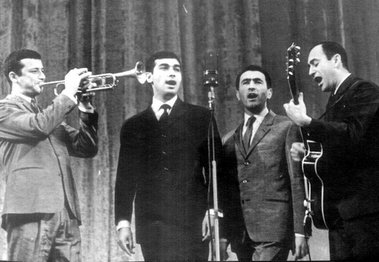
The 1970s witnessed the rise of the Azerbaijani vocal quartet Qaya, which began interpreting American songs alongside Azerbaijani folk classics, laying the foundation for Azerbaijani jazz vocals. Their cheerful, polyphonic sound, coupled with whimsical lyrics, resonated with audiences in Baku, Moscow and beyond. Hits like "Lachin," "When You Speak" and "The Girls of Baku" solidified their status as one of Azerbaijan's most celebrated musical acts.
Berlin-based guitarist Ayaz Hajiyev, who witnessed Qaya's performance in Baku in 1968, reminisces, "Qaya transcended being just another music band – they forever transformed the musical landscape. Many subsequent bands have tried to capture the essence of Qaya filtered through jazz and pop, but they remain as mere echoes of a unique original."
Following the disintegration of the Soviet Union, Azerbaijani jazz confronted an array of challenges, particularly during the First Nagorno-Karabakh War. While some jazz musicians faded into obscurity, others, like saxophonist Rain Sultanov, embarked on global tours, introducing Azerbaijani jazz to new audiences. In 2005, Sultanov spearheaded the Baku International Jazz Festival, a global celebration of the city's enduring jazz heritage, attracting luminaries such as Herbie Hancock, Al Jarreau and Diana Krall in recent years.
Today, a fresh generation of artists, including Isfar Sarabski, Shahin Novrasli and Etibar Asadli, are revitalizing Azerbaijani jazz by infusing it with global influences and pushing the boundaries of creativity. Whether driven by nostalgia, an aesthetic journey, or simply the sheer joy of savoring the crackle of vinyl records, the revival of Azerbaijani jazz underscores the timeless human desire to connect with music in evocative and innovative ways.



