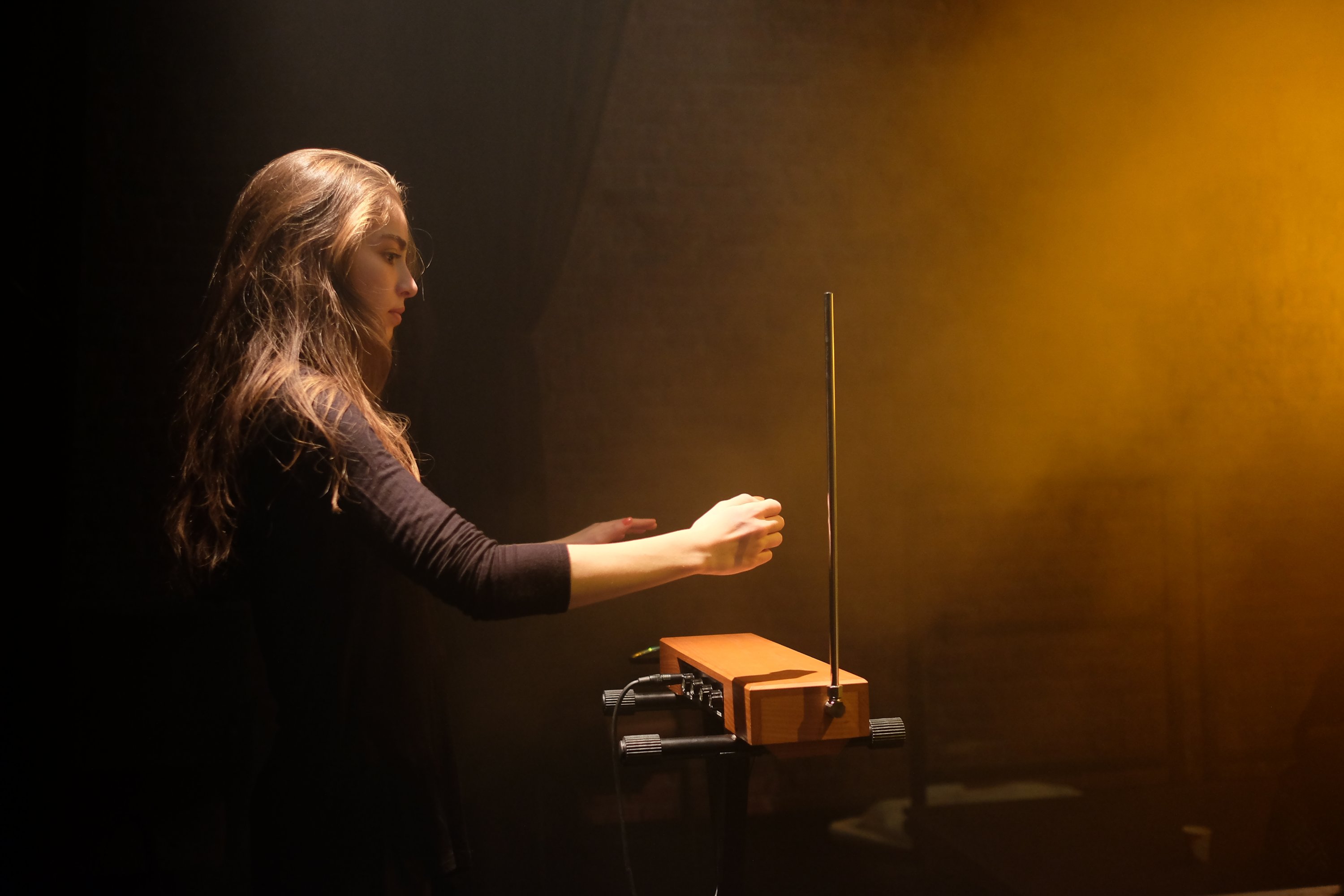
During the years of the Bolshevik Revolution, an inventor named Lev Sergeyevich Termen created a musical instrument called the "Theremin." This instrument produces sound through the interaction of the player’s hands with electromagnetic waves emitted by its antennas. In 1922, Termen was invited to the Kremlin, where he played the instrument for Lenin. Lenin famously remarked, "Communism equals socialism plus electrification," and sent Termen to the West to promote Soviet technology. This reveals that the era’s conflicts were not only military but cultural as well. For example, jazz music was banned in Soviet Russia because it was considered American.
Termen introduced his instrument at Carnegie Hall in New York City, where he performed and garnered significant attention. He later made a production and distribution agreement with RCA. RCA’s advertising promoted the instrument as "not a radio, not a gramophone; something you have never heard or known before." People were fascinated by how it could create sounds seemingly out of thin air, without touching anything tangible. Termen became very famous and his name was Westernized to Leon Theremin. Although the patent was officially named "Thereminovox," the instrument has been known simply as the Theremin ever since.
The Theremin uses two capacitive oscillator tubes to produce musical notes with varying pitch, rhythm and tempo. It also features a radio antenna to control dynamics. The player moves a rod-like lever with one hand to alter rhythm and tempo, while simultaneously manipulating the antenna with the other hand to adjust pitch. Composers such as Varese, Messiaen, Milhaud, Dutilleux and Honegger have written pieces for the Theremin. In Türkiye, musician Cihan Gülbudak performs on the Theremin, and those interested can listen to his work.
Inventing an instrument like the Theremin is undoubtedly significant in the history of music. I would also like to encourage my readers to listen to a unique acoustic instrument created by Turkish musician Görkem Şen in 2010, called the Yaybahar. Like the Theremin, it has its own distinctive sound and is woven with unique frequencies. At first listen, the Yaybahar may remind you of the early synthesizer experiments from the 1950s, but after a while, you realize you are hearing something much more organic – a fusion of sounds reminiscent of various Eastern instruments.
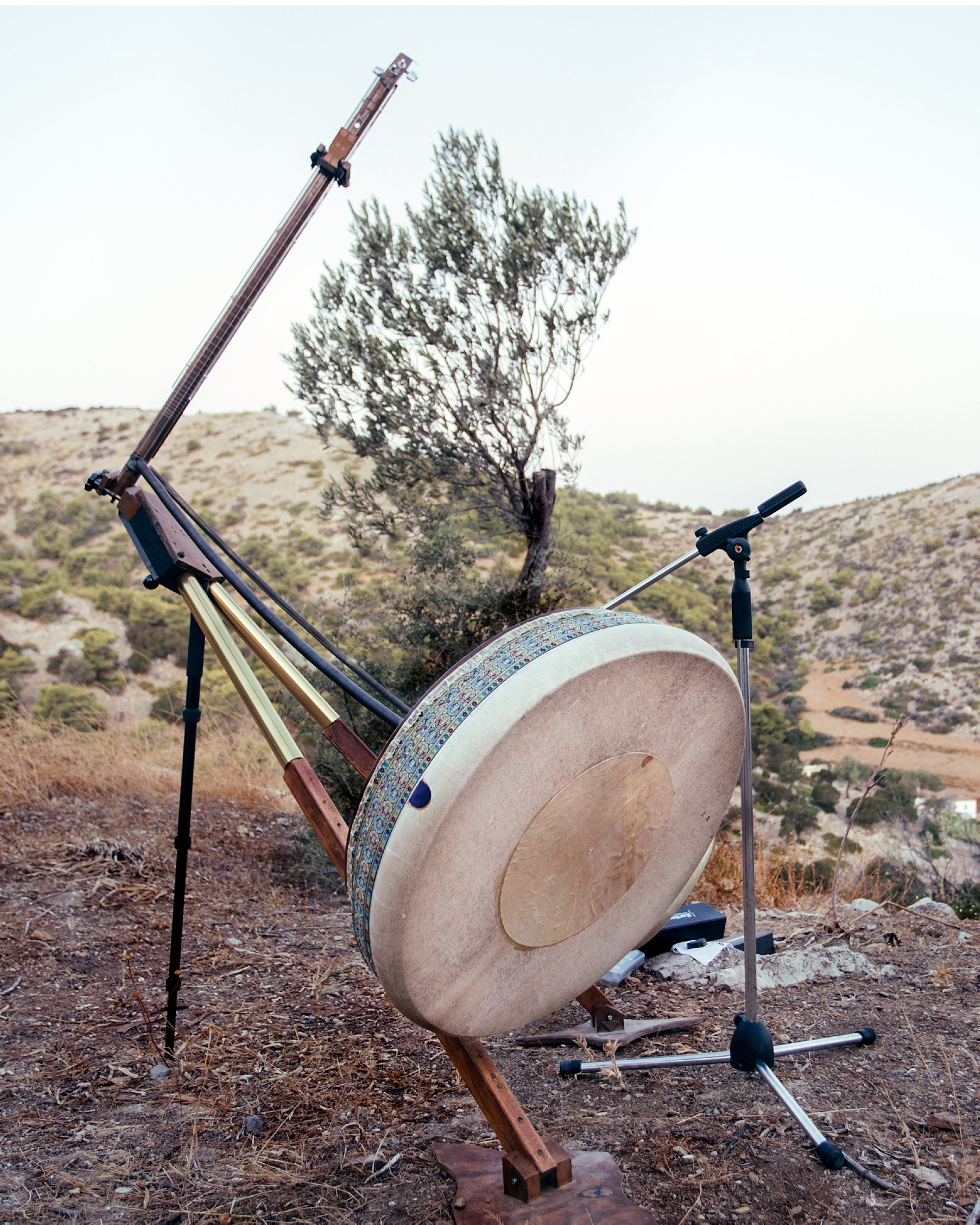
Görkem Şen began designing the Yaybahar after reading the book Music: "The Bridge Between Humans and the Universe" by the Indian Sufi master Inayat Khan, whom I also deeply admire. The book discusses the existence and structure of a hidden music, inspired by the spiritual insights of a monk living in the mountains who created an instrument to convey these experiences. Şen’s Yaybahar represents the trio of discovery, invention and creativity.
Finally, I want to say that Lev Sergeyevich Termen and Görkem Şen have given us two remarkable instruments in the past century. I believe the coming century will bring many more inventions like these. As the world fills with new sounds, those sounds will continue to inspire the creation of new instruments.