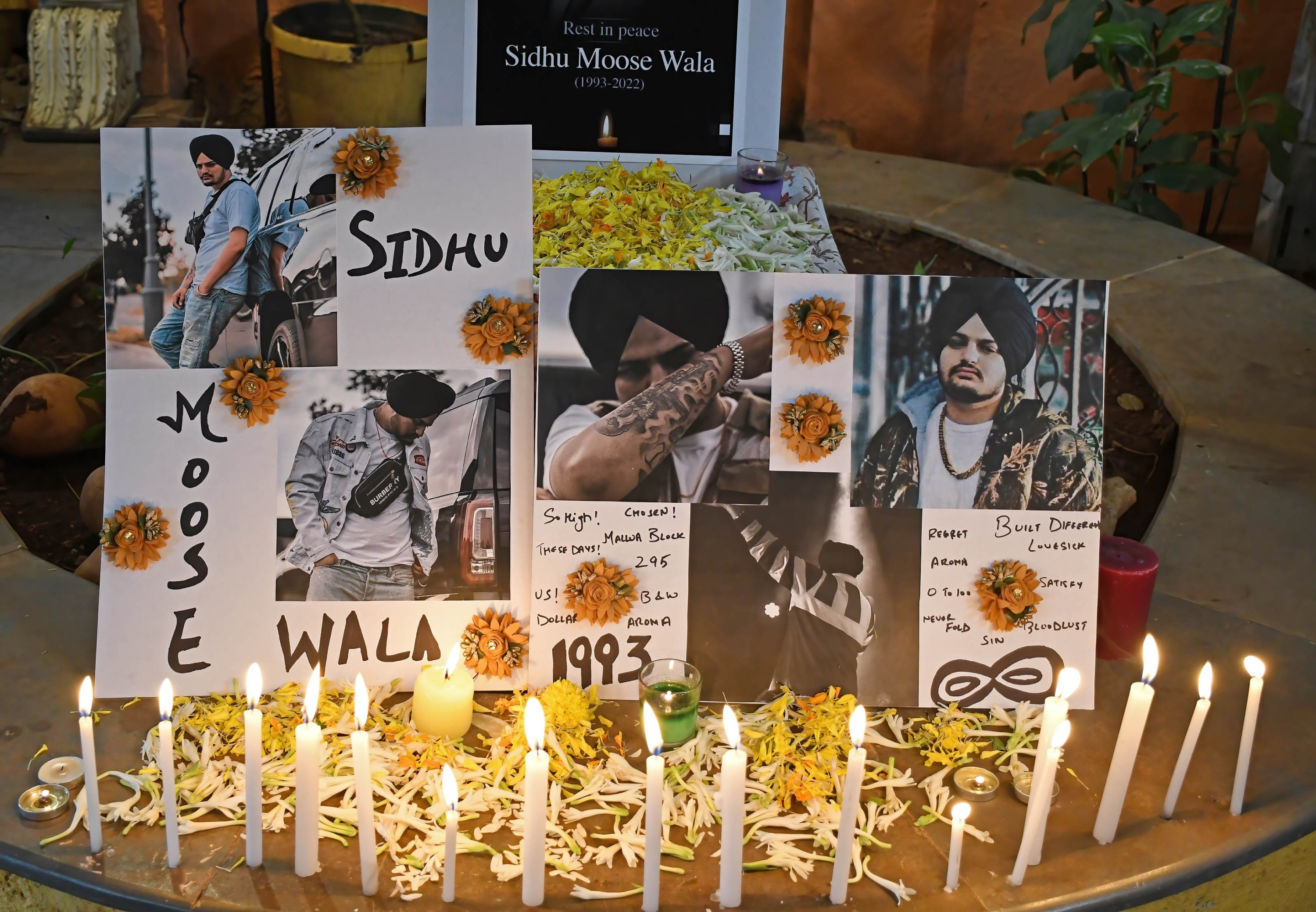
Four years after his death, rapper Sidhu Moose Wala is set to return to the “stage” in October. But this is not a one-night memorial. He is preparing to go on a world tour in hologram form. In the music industry, death may no longer necessarily mean the end of a tour.
Once an artist died, what remained were their songs, albums, concert recordings and memories.
Now, a tour can remain, too.
One of the biggest stars of Punjabi music, Sidhu Moose Wala was killed on May 29, 2022, at the age of 28. Four years have passed. Yet his name is once again appearing on concert posters.
The “Signed to God World Tour” will begin Oct. 9 at Scotiabank Arena in Toronto, Canada. The person taking the stage, however, will not be Moose Wala himself, but a three-dimensional holographic representation of the artist.
The project will combine the artist’s original vocals with 3D projections, cinematic visuals and stage effects. It is being carried out with the knowledge and support of his family.
One detail is particularly important here.
This is not a project that uses artificial intelligence to make Sidhu Moose Wala sing a new song. According to the production team, the aim is to recreate his presence onstage using existing footage and his original voice recordings.
In other words, the technology is not creating a new artist. It is bringing the performance of a late artist back to the stage.
But the issue goes far beyond Moose Wala.
A much bigger door is opening in the music industry.
London-based Unit1 Studio recently secured $20 million in new investment to develop avatar concert technology. The company aims to bring digital versions of both living artists who do not tour and musicians who have died into concert venues.
What makes the system particularly significant is that it is not dependent on a single dedicated venue, as with ABBA Voyage. The same production can be taken to different cities and existing concert halls.
This is where the new economics of the music industry begin.
Think about it: The artist does not have to board a plane. They do not have to stay in hotels. They do not experience the exhaustion of touring. Aging is no longer an issue. In fact, the artist’s continued existence is no longer, technically speaking, an absolute requirement for a concert to take place.
What remains are the catalog, image rights, voice recordings, name rights and the heirs or companies that manage them.
When all of these come together, a new “touring brand” can emerge independently of the artist themselves.
Alongside the commercial side, however, there will be ethical questions.
Who gets to decide what an artist does onstage after their death?
Their family? Their record label? Their manager? An investment fund that has acquired their catalog and image rights?
More importantly, if an artist did not give permission for such a show while they were alive, how appropriate is it to put their digital likeness onstage years later?
Today, the issue is holograms. Tomorrow, once artificial intelligence enters the picture, the boundaries could become far more blurred.
A digital copy could emerge that says things the artist never said, performs songs they never recorded and gives concerts they never performed.
Would that still be the artist standing before us, or would it be a new commercial product operating under their name?
The Moose Wala tour is therefore more than a technological spectacle. It is a window into the future of the music industry.
Because we are entering a strange but very real era:
An artist can die. But their brand can continue to live, sell tickets and even go on a world tour.