Last Tuesday, March 31, I watched a medley at the Antalya Opera that resembled a 1990s folk music video clip. Seeing such a production on an opera stage was deeply disappointing. Fortunately, the “work” lasted only 55 minutes.
The performance they call a “work,” though accompanied by poetry and dressed up with elements of classical ballet and modern dance, fully deserves to be called a monstrosity. Despite its ambitious title, “Nefes” (“Breath”), having seven opera singers perform 12 folk songs does not produce an original work. If opera singers are to perform folk songs, then what, exactly, is the purpose of state Turkish folk music choirs and artists?
A “world premiere” built from loosely assembled folk songs is no world premiere at all. Calling such a production a “world premiere,” when its rights cannot be sold and it draws no interest beyond its own context, has effectively turned into a form of artistic fraud. A similar case appeared recently at the Ankara Opera, where a ballet pieced together from different works of P.I.Tchaikovsky, G. Bizet, R. Wagner, G. Holst, G.F. Handel and M. Petrovich Mussorgsky was presented under the title “JEANNE D’ARC” and promoted as an original world premiere. You cannot mask artistic shortcomings this way.
A recent surge of so-called “folk-opera” performers has emerged, many claiming to make opera more appealing to the public. In reality, singing folk songs promotes Turkish folk music, not opera.
The “Breath” performance resembled nothing more than a high school graduation ceremony, with teenagers awkwardly dressed in folkloric costumes. Turkish folk music, unlike Western classical music, is written not just in major and minor keys but in hundreds of melodic modes called "makams." The performers’ lack of understanding of these modes left the interpretations weak and unconvincing. Instead of staging semi-theatrical folk concerts, Antalya Opera’s new director, Özgür Aslan, would be better served focusing on original opera and ballet works.
Among the performers, tenor Burak Pektaş was a rare bright spot. His performance surpassed anything I had seen from him before. Despite occasional intonation flaws, he was one of the evening’s strongest, though he should keep in mind his physical presence – he is not Pavarotti.
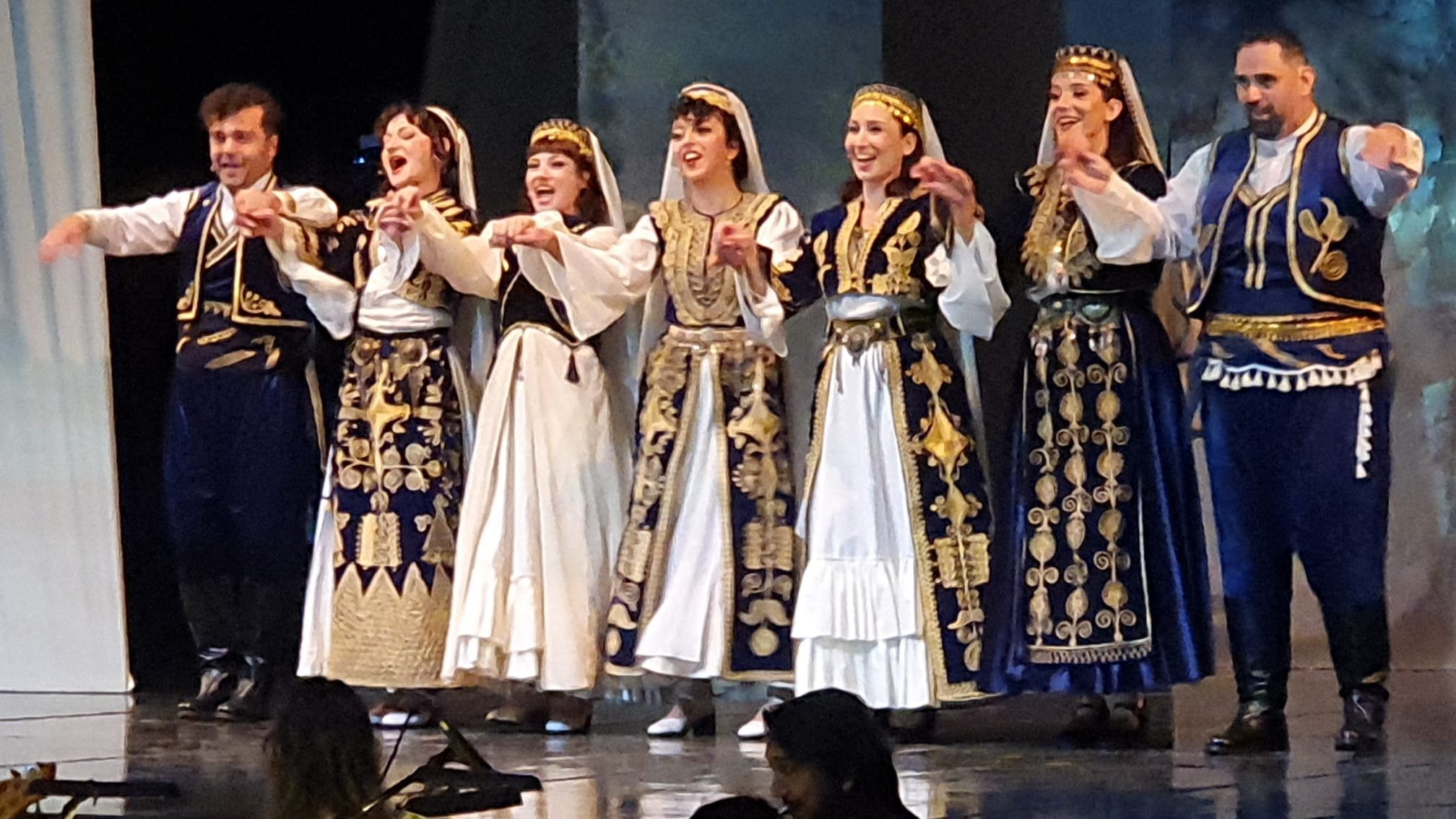
Soprano Işılay Meriç Karataş, usually captivating on the opera stage, fell flat in the folk concert. Her performance sounded as if she were singing Violetta in “La Traviata” and her overblown rendition of “Çalın Davulları” resembled an opera aria more than a folk song.
Mezzo-soprano Tuğçe Oğuzülgen impressed with her rich, dark timbre, evoking Azucena from “Il Trovatore.” Yet she completely missed the mournful character of “Aman Avcı,” turning it into a trivial dance tune instead.
Seçil Fenercioğlu showed she could handle major operatic roles, but her flashy delivery in “Bülbülüm Altın Kafeste” clashed with the song’s compressed, restrained emotion. Her excessive use of bel canto legato made the lyrics unintelligible, transforming the folk song into nothing more than a salon number.
Betül Uzunoğlu opened “Sabahın Seherinde” with a bright, stage-ready tone. However, she failed to capture the song’s quiet, introspective melancholy. Still, her vocal technique suggests she could shine in opera roles.
Dağhan Ergün drew attention with his pure, bright voice, delighting the audience with ease in the high notes. His duet with his wife provided some lively moments and deserved praise. However, their rendition of “Çayeli’nden Öteye” ("Beyond Çayeli") veered into caricature, descending into vulgarity. Still, he shone in “Ağasarın Balını” ("Ağasar's Honey"), easily the highlight of the evening. His wife, Şevra Ergün, also revealed remarkable operatic potential.
The dancers who took the stage tried, with all their goodwill, to accompany the folk songs. Deniz Özbek, Eylül Aras, Seyhan Ecem, Özde Serter and Egemen Kunt earned applause for their efforts. Unfortunately, the ballet and modern dance figures never aligned with the folk songs, creating a jarring disconnect, not their fault.
In a project doomed from the start, director Aydın B. Güven seems to have done his best. But in a production that came together like a Chimera – one body, another head – there was little he could do. Considering that I have previously watched him stage “The Elixir of Love” ("L'elisir d'amore”) and seen him successfully mount operas in different cities, it is striking that the same director would be entrusted with such absurd shows instead of being given new, serious opera productions.
Instead of importing underqualified foreign directors, Turkish opera should give frequent opportunities to capable local directors like Aydın B. Güven. The habit of bringing in foreign directors and conductors, which often results in waste, hinders the growth and development of our own directors. Local artists should be given real opera works to develop their craft – not subjected to grotesque productions like “Breath.”
Onur Altıparmak’s arrangements, which are harmonious and balanced in isolation, faltered in the transitions between pieces. The result resembled a disjointed high school folk concert. Shoddily prepared sets, monotonous lighting and performers lined up like a folkloric ensemble completed the amateurish picture.