

There is a haunting story about Mark Rothko, one that says he once destroyed his own paintings, covering them in black or burning them in a fit of despair. It is not entirely true, yet not entirely false either. Rothko never burned his canvases; he buried them. He layered darkness over light, silence over emotion, but not out of madness, as a kind of spiritual purification.
Each act of overpainting was his way of mourning what no longer spoke to him. He didn’t destroy; he transfigured. The old colors became ashes; the new ones, prayers.
From this threshold of creation and erasure, Rothko’s art emerges not as a product of chaos, but of conscience instead. His colors, even when darkened, pulse with the stubborn heartbeat of life itself. Artists may look like painting with their hands, yet some deeper souls indeed paint with their souls. Mark Rothko belonged irreversibly to the latter. His canvases do not simply display color; they breathe it, meditate on it, dissolve within it. They ask us not to “look” only, see and feel as well.
And feeling, in Rothko’s case, is a slow and sacred act of witnessing, the very opposite of consumption. Rothko’s life remains one of the most paradoxical in modern art history: an immigrant boy from Dvinsk (today’s Latvia), raised in poverty, who later became one of the most spiritually demanding voices of postwar America. He rejected fame yet craved understanding. He painted fields of transcendent color yet lived in increasing darkness. To understand his art, one must read the silence between his colors and the silence within himself. Rothko once said, “I’m not interested in the relationship of color or form or anything else. I’m interested only in expressing basic human emotions: tragedy, ecstasy, doom.”
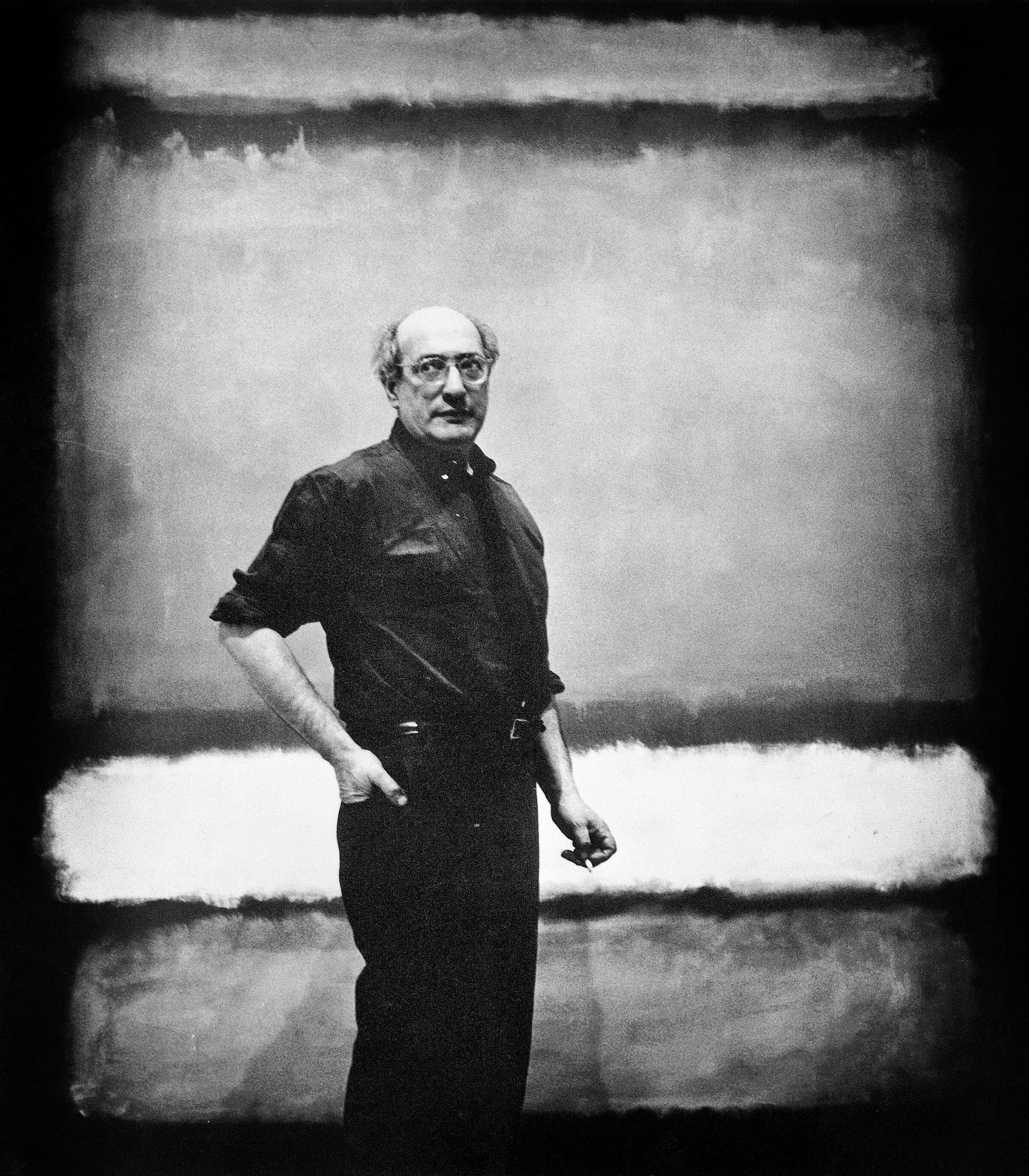
This declaration, both confessional and defiant, sets him apart from his contemporaries. Pollock danced on his canvases, de Kooning wrestled with his figures, but Rothko prayed through his colors. His paintings are chapels.
Every Rothko painting invites us to slow down. The floating rectangles, dissolving edges and the deepening hues, crimson, ochre, violet and black form a kind of psychological landscape. Yet these are not landscapes we visit; they are landscapes that visit us.
Standing before a Rothko is not about art appreciation but about endurance. The longer you stay, the more the painting breathes back at you like a mirror of your emotional temperature.
What makes Rothko’s life so astonishing is his contradictions. He was a teacher of children and a philosopher of despair. He sought transcendence yet feared oblivion. His greatest triumph, the commission for the Seagram Murals in 1958, ended with his own moral rebellion. He refused to let his works hang in a luxurious restaurant, saying, “Anybody who will eat that kind of food for those kinds of prices will never look at a painting of mine.”
He painted them anyway, then withdrew them, an act both rebellious and tragic, as though he wanted to protect the sanctity of his art from the appetite of the world.
There is something deeply theatrical in this contradiction. Rothko was not simply painting; he was staging the experience of being human, the drama of color, the weight of silence, the impossibility of peace. His colors, like emotions, never stay still. They expand, retract, quiver. They are his breath and his burden.
In his later years, Rothko’s palette darkened. The glowing reds of the 1950s gave way to black, gray and maroon. These colors were more than just aesthetic choices; they were psychological reflections of the artist. His health declined, his marriage crumbled and yet he painted with a monastic devotion. Critics called these works “somber,” but I see them as purified. Stripped of ornament, stripped of pretense, they are the ultimate act of honesty.
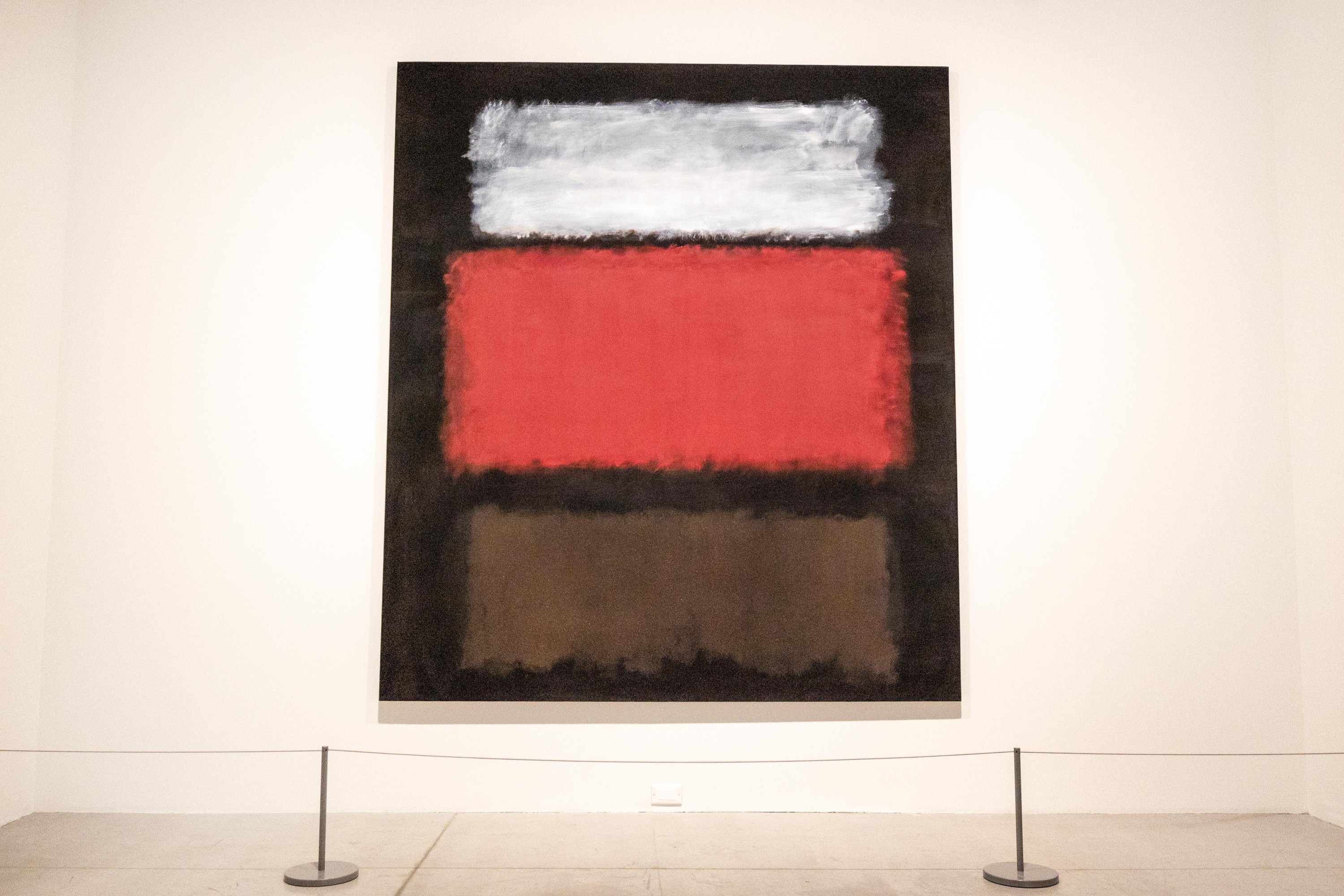
When Rothko was found dead in his New York studio in 1970, it was as if the light in his paintings had finally dimmed in the world. He had cut his wrists in front of one of his black canvases. The art world mourned him as a martyr of sensitivity, a man who had seen too much, felt too deeply and could no longer mediate between heaven and earth.
But I prefer to see him not as a victim, but as someone who lived entirely inside his own truth. His art was the architecture of feeling, a cathedral built out of silence and color.
Perhaps the most astonishing testament to Rothko’s vision is the Rothko Chapel in Houston. Fourteen immense, nearly black canvases cover the octagonal space. When you enter, nothing “happens.” No spectacle, no image, no horizon. And yet everything happens inside you.
Time slows. Your breathing changes. The silence of the room becomes almost audible. It’s not a church, not a gallery, it’s a human interior turned outward.
The Chapel embodies what Rothko sought his entire life: the point where art and spirituality dissolve into one another. It is a place where the ego disappears. You are left with the trembling presence of being; fragile, mortal, infinite.
When I visited the Chapel for the first time, I understood why Rothko refused to call himself an “abstract” painter. His work is not about abstraction but absolution. It offers the possibility that art, when stripped of everything decorative, becomes pure prayer.
Despite his mythic image as a tragic genius, Rothko was not without humor or warmth. His former students recalled his tenderness and his childlike curiosity. He loved conversation, often quoting Nietzsche or Kafka over coffee, speaking about art as a moral responsibility.
He was fiercely protective of younger artists, warning them against the corruption of fame. His belief in art’s ethical power was absolute, even naive. But perhaps all great art requires that kind of naivete: the refusal to accept that the world cannot be redeemed through beauty.
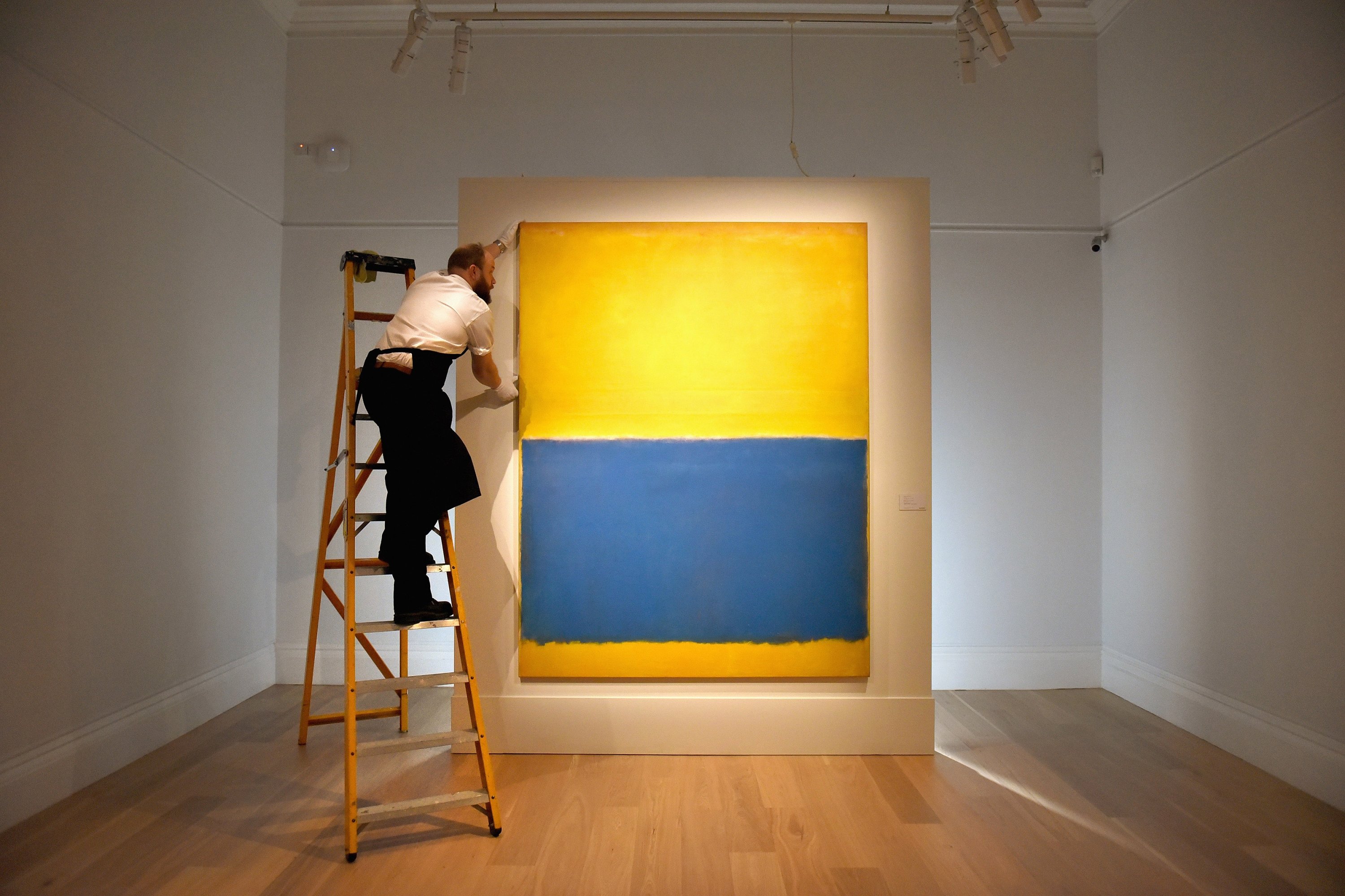
To many, Rothko’s paintings appear minimalist, but they are in fact maximal in feeling. They contain multitudes, fear, desire, melancholy, transcendence.
When you stand before a large Rothko canvas, you are surrounded, not by pigment, but by atmosphere. The color becomes a form of empathy; it absorbs your emotions, reflects them and finally releases them transformed.
I often think of his reds and purples as emotional climates. His dark maroons as whispers of mortality. His glowing oranges as the faint pulse of joy that refuses to die, even in the face of despair. Rothko reminds us that art’s greatest act is not decoration, but consolation.
Every generation rediscovers Rothko differently. In a world of constant noise, his silence feels revolutionary. In a culture obsessed with surface, his depth feels subversive.
He painted what cannot be seen, the invisible radiance of existence. And in doing so, he forced us to confront ourselves. Because, ultimately, every Rothko painting is a mirror. What we see depends on who we are when we enter the room.
In one of his rare interviews, he said, “I am interested only in expressing the basic human emotions, the tragic and the timeless.”
This is the confession of a man who saw art not as a career, as a calling; not as a profession, as a way of survival. Mark Rothko’s life teaches us something urgent: sensitivity is not weakness; it is the strength of the highest order.
To feel deeply in a world that celebrates detachment is an act of rebellion. To paint silence in an age of noise is a form of courage. And to turn suffering into light that is transcendence.
Rothko’s colors may have faded in pigment, but not in resonance. Each time we face one of his canvases, we are reminded of our own capacity for empathy, despair, and awe.
His art, like a prayer whispered in color, continues to breathe where words fall silent. And perhaps this is Rothko’s greatest gift: the courage to feel what others refuse to feel, and to turn that feeling into a universe of color, like many other genuine artists who put a track of themselves on this Earth.


