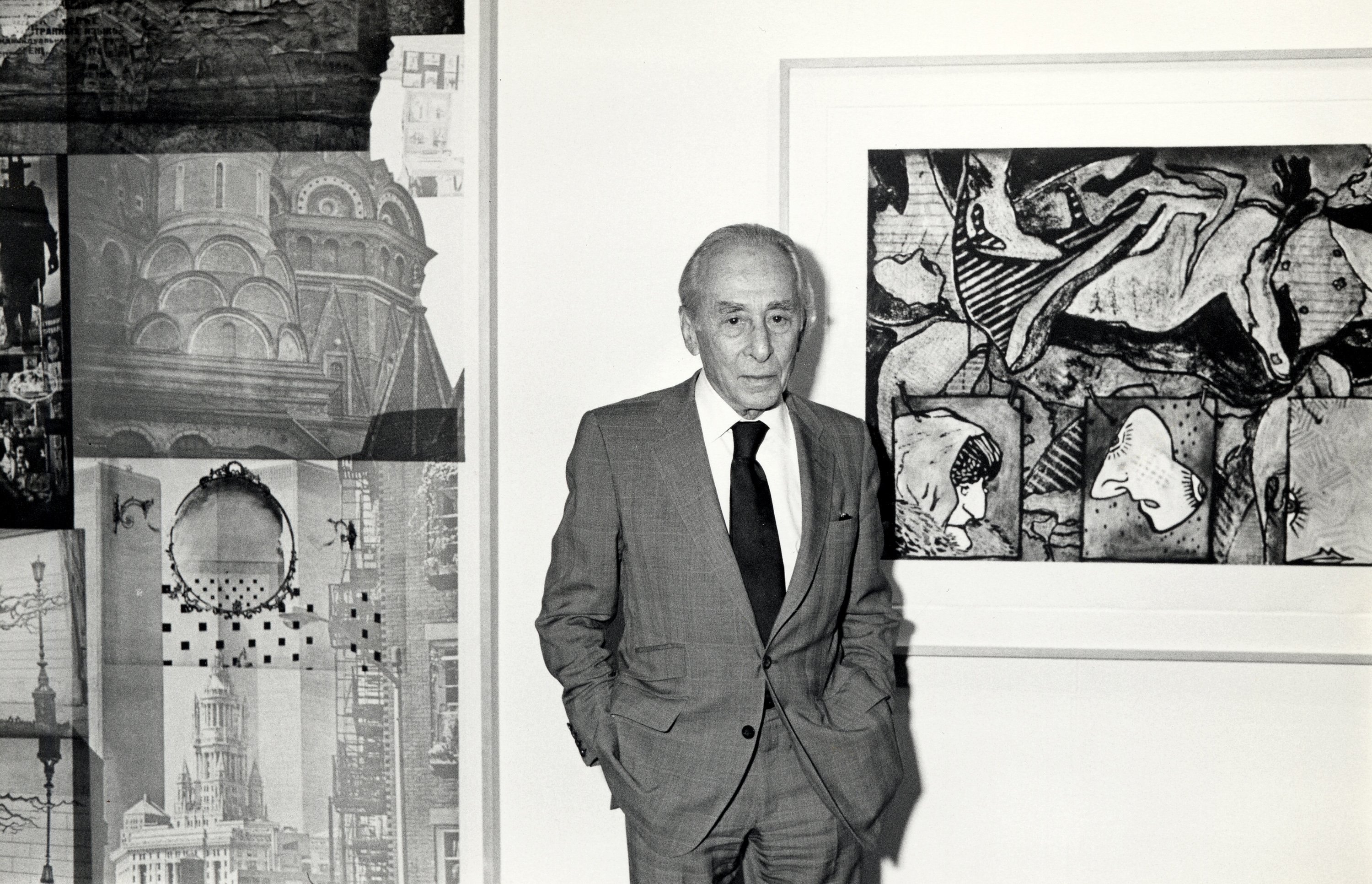
Leo Castelli was the invisible architect of contemporary art. He was the figure who reshaped the destinies of artists, transformed the perspectives of collectors and kept his finger on the pulse of the 20th-century art market. He did not merely sell artworks; he built an ecosystem founded on trust and vision, connecting artists, collectors and institutions. The “modern gallery” system operated today by giants such as Gagosian, Hauser & Wirth, David Zwirner and Thaddaeus Ropac did not emerge by chance.
The foundations of this model rest on strategies that Leo Castelli constructed decades earlier with almost engineering-level precision. Castelli is widely regarded as not only the most influential contemporary art dealer of his era, but of all time. His story begins in the cosmopolitan streets of Trieste and unfolds into a transformation that would make New York the global capital of contemporary art. Anyone seeking to understand the workings of today’s gallery system will, sooner or later, arrive at Castelli.
Castelli’s story begins even before New York – indeed, even before art itself. He was a man of a multilayered life that could not be confined to a single geography or a single identity. Born in 1907 in Trieste, a port city in northeastern Italy that was still part of the Austro-Hungarian Empire, he was the child of a Jewish family. His father, Ernesto Krausz, was a banker of Hungarian origin. His mother, Bianca Castelli, bore the surname that Leo would carry throughout his life – one that would ultimately lend him a sense of universality. (In the mid-1930s, when Benito Mussolini’s government mandated the Italianization of surnames, the family first adopted “Krausz-Castelli” and later shortened it to “Castelli.”)
During Castelli’s childhood, Trieste was not merely a city but a multilingual, multicultural gateway. Growing up in an environment where Italian, German, Slovene and Croatian could all be heard on the same street, Leo Castelli learned at an early age to move fluidly between cultures. When World War I broke out, he left Trieste with his family at the age of 7. After four years of displacement, they returned from Vienna to Trieste; by then, he was no longer just a child but a remarkably educated young mind, fluent in four languages and endowed with an exceptional intellectual capacity.
Later, during his secondary-school years, and encouraged by his father, he studied piano, horseback riding and German. The sense of discipline cultivated during this period shaped Castelli’s aesthetic relationship with the world – one that would later be reflected in the artists he chose to represent. In those artists, he would seek both boundary-pushing creativity and a refined sense of aesthetic elegance.
When he left Trieste for university, Castelli turned his attention to Milan – one of Italy’s intellectual centers – where he studied law. In 1932, he moved once again, this time to Bucharest, to work at an insurance company at his father’s initiative. It was precisely there, far removed from the art world, that he began to establish his first global connections. Business ties forged with Paris, Berlin, and Vienna would later shape the model through which he would carry art beyond borders in much the same way.
After a year in Bucharest, he married Ileana Schapira in 1933. Compared to the Castelli family, the Schapiras belonged to a far more intellectual and upper-class milieu. Art, literature and culture were integral parts of their everyday lives. Leo and Ileana initially moved to Paris. At the time, Paris was virtually the capital of art and modern life; while Leo continued working in banking, he began to immerse himself fully in the city’s rich cultural atmosphere. By 1939, however, their marriage had begun to falter.
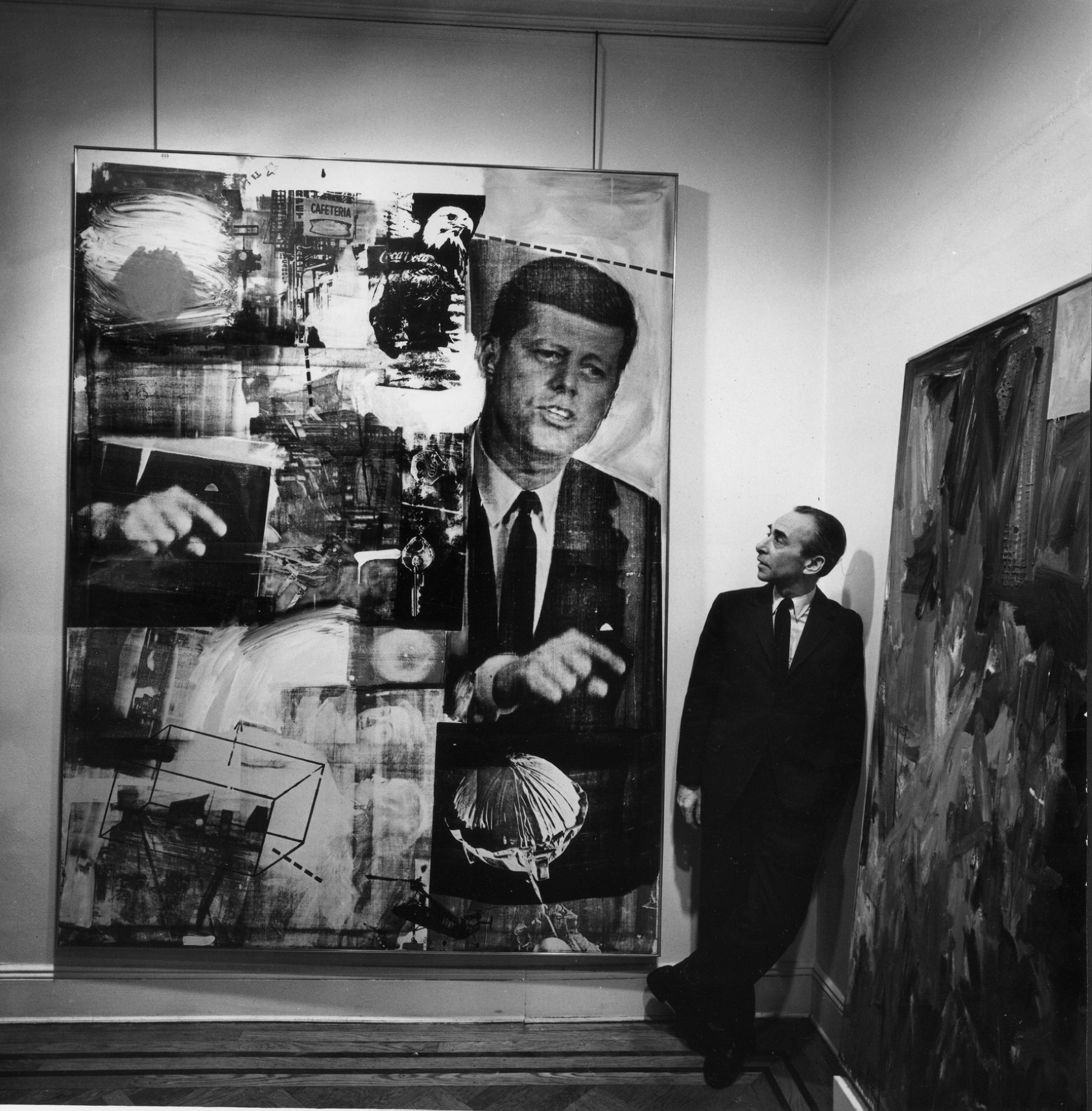
It was during this period that his father-in-law, hoping to help repair the relationship, lent him 500,000 francs to open a gallery. Castelli partnered with decorator and designer Rene Drouin. Located on Place Vendome, between the Ritz Hotel and the Schiaparelli fashion house, Galerie Rene Drouin embodied a concept that combined modern and antique furniture with a strong focus on modern painting. Among the artists they exhibited were major figures of the era such as Salvador Dalí, Leonor Fini, Max Ernst and Pavel Tchelitchew.
With the outbreak of World War II, however, the gallery was forced to close. Following France’s defeat and the Nazi occupation, the Castellis embarked on a perilous journey. In 1941, they crossed the Atlantic aboard an aging ship departing from Spain’s northern coast and arrived in New York.
A year later, Castelli volunteered for the U.S. Army. He served in Romania with the Allied Control Commission as a sergeant, intelligence officer and translator. Through this service, he obtained American citizenship. After his discharge, the couple moved into his father-in-law’s mansion at 4 East 77th Street in New York, and Castelli began working at his father-in-law’s factory. While working there during the day, he spent his free time wandering the streets of New York, most often visiting his newly discovered Museum of Modern Art. It was there that he met the museum’s founding director, Alfred H. Barr Jr. He would later recall this encounter by saying: “Until I went there, I realized I knew nothing about art.”
His admiration for European art at MoMA, in particular, proved transformative and broadened Castelli’s horizons. He was 39 years old; up to that point, his only engagement with painting had been co-running a small gallery in Paris that sold decorative furniture and mounting a single painting exhibition there. In this sense, it is fair to say that he was still an amateur in the field of painting at the time. To understand him more fully, one must also note his lifelong devotion to literature, an essential component of art and a discipline that enriches and informs others.
Over the following decade, Castelli continued to remain close to Alfred Barr, learning from him and visiting MoMA regularly. It was precisely during this period that the New York School began to take shape. Influenced by this emerging movement, Castelli gradually found his place in the art world, initially taking on roles as an intermediary, independent curator, and adviser. In doing so, he blended his European mindset and strategic perspective with America’s dynamic art environment, introducing a new way of thinking.
Leo Castelli was not a conventional “American success story.” Rather, he was a pioneer who fused the aesthetic thinking of Europe’s Old World with the energy and dynamism of America. He did not form merely commercial relationships with artists; he took on the mission of believing in them, creating space for them to live and work and at times even rescuing them. On the slippery ground where art and commerce intersect, Castelli possessed his own ethical compass – and that compass helped set the course for some of the greatest artists of the 20th century.
Leo Castelli’s rise in the art world was grounded not only in his commercial intelligence, but also in the strength of his social relationships and his strategic intuition. His first truly meaningful encounter with American art came through Robert Motherwell. By 1946–47, he was closely following Peggy Guggenheim’s activities and, through Guggenheim and Clement Greenberg, gaining opportunities to engage more directly with artists. Among those he encountered during this period were Jackson Pollock and Arshile Gorky – figures who would soon assume particular importance in his intellectual and emotional landscape.
Living in his father-in-law’s mansion was another factor that helped solidify Castelli’s position within the art world. The gatherings he hosted there and the artists, collectors and critics he brought together, gradually turned him into a significant collector in his own right. At these soirees, Castelli - despite his relatively short stature - captivated everyone with his charm, sharp intelligence, refined manners and his ability to sustain deeply engaging intellectual conversations. Although he did not initially possess a vast archive, the intensity of his passion for art drove him to build his collection, sometimes by borrowing money, sometimes by selling works he already owned. He held a deep admiration for Paul Klee and Piet Mondrian; in fact, a Mondrian he acquired during this period would later be sold for four times its original price.
One of the most consequential experiences of this era was his collaboration with Nina Kandinsky. In 1947, through the Drouin Gallery in Paris, Castelli was entrusted by Kandinsky’s widow, Nina, with the representation of approximately one hundred paintings in the United States. The process was far from straightforward: the works were entangled in creditors’ claims and complex legal disputes and Nina Kandinsky herself was an extremely difficult character. She frequently accused Castelli of dishonesty and exhausted him with her relentless demands. Eventually, in a rare moment of visible frustration, Castelli remarked: “I would like to remind you that I enabled the sale of a very important group of paintings in America, that this required an enormous amount of effort on my part, and that I did not earn a single cent from it.”
Despite its challenges, this experience taught Castelli the diplomatic subtleties of high-level art dealing, the mechanics of behind-the-scenes negotiations and the inner workings of the international art market. Moreover, he played a decisive role in placing Kandinsky’s works in major American private collections, significantly expanding the artist’s recognition in the United States.
In the 1950s, Castelli severed his gallery ties in Paris and turned his full attention to New York. He formed a close friendship with the renowned art dealer Sidney Janis and grew increasingly connected to leading figures of the time, including Jackson Pollock and Lee Krasner, Willem and Elaine de Kooning and Hans Hofmann. He played an active role in organizing Young Painters in the U.S. and France at the Janis Gallery, an exhibition that brought together emerging artists from both sides of the Atlantic. Among the participating painters was Nejad Melih Devrim, a figure of particular significance for us.
At this moment, it would not be inaccurate to say that American art had yet to fully define its own identity. Artists such as Robert Rauschenberg, Willem de Kooning, Franz Kline and Ad Reinhardt were living with severe financial limitations; many lacked proper studios, reliable collectors, or stable gallery representation. It was precisely under these conditions that an informal collective known as “The Club” emerged. The group consisted primarily of artists, with Leo and Ileana Castelli among the rare non-artist members. Through weekly meetings, lectures and debates, The Club created both a space of solidarity and a sense of belonging for those who believed in American art. Closed to the outside world, the group quickly earned a reputation for intellectual seriousness and cultural significance.
Although European by origin, Castelli became one of the most passionate advocates of the American art movement. While he deeply admired European art - introduced to him under the guidance of Alfred H. Barr Jr. at MoMA - he believed wholeheartedly that America could develop an original artistic language of its own. In many ways, Castelli’s entire career was the systematic realization of this conviction: to introduce American art to the world and secure for it the place it deserved.
A major turning point in Castelli’s career came in 1951 with the Ninth Street Show. Staged in an empty storefront at 60 East Ninth Street, the exhibition brought together more than 50 artists from the emerging new generation of the period. Among the participants were members of The Club, key figures of Abstract Expressionism. Willem de Kooning exhibited his Woman, Joan Mitchell presented one of her Untitled works for the first time, and Jackson Pollock introduced "Number 1," created using the drip technique that would soon become iconic.
Although many of these artists had previously been rejected by galleries, the exhibition received strong critical acclaim. The Ninth Street Show is now regarded as a watershed moment in the history of modern art, heralding the arrival of a new era. The vibrant community of living artists in New York who took part in the exhibition paved the way for a movement that would come to be defined as the vanguard of modernism. Castelli’s active role in the show marked one of the most significant achievements through which he first established his name in the art world.
Castelli finally opened his first gallery on Feb. 1, 1957, at the age of 50, in his apartment on New York’s Upper East Side. This step marked the beginning of a major career in the art world. The space would soon become one of the most important centers of modern art. About a year later, Castelli organized the first solo exhibition of a young Southern artist who had not yet turned 30: Jasper Johns. Castelli had first encountered Johns’s work in a group exhibition at the Jewish Museum – one of New York’s leading institutions – and was immediately struck by it. Shortly afterward, while visiting the studio of another young Southern artist, Robert Rauschenberg, he had the chance to meet the artist in person.
Rauschenberg and Johns were neighbors; in fact, they even shared the same refrigerator. When Castelli asked Rauschenberg for ice for a drink and was told that the refrigerator was shared with Johns, the name rang a bell. Castelli suggested they go together to get the ice, and that was how he met Jasper Johns. Upon seeing Johns’s studio – filled with paintings of flags, targets and alphabets – Castelli was so impressed that he decided that very day to give exhibitions to both artists.
At the time, Jasper Johns was virtually unknown. By bringing Johns into the art world, Castelli not only transformed the artist’s career but also strengthened his own vision. And his innovative approach did not stop there. After founding his gallery, Castelli began paying his artists a regular salary, whether or not their works sold. This system – unprecedented in the American art market – freed artists from economic anxiety and allowed them to produce without interruption. In doing so, Castelli liberated them both financially and psychologically, creating the conditions for sustained creativity. His commitment to American art was so deep that, as an outsider, he understood he would need to build an entirely new system in order to exist – and succeed – within it.
Indeed, the system Castelli created was not merely a sales-driven model of gallery practice; it was an ambitious attempt to construct a progressive, visionary art ecosystem. After divorcing his wife of 25 years, Ileana, in 1959, Castelli – now a single gallerist – devoted all his energy to discovering new artists. Donald Judd, Christo, Richard Serra, Ed Ruscha, Claes Oldenburg, David Salle, Julian Schnabel, Andy Warhol, Cy Twombly, Frank Stella and James Rosenquist – names now considered giants of contemporary art – were all, almost without exception, identified, supported and introduced to the world through Castelli’s radar. His most striking quality was his ability to discover. But discovery alone was never enough: he fought for his artists, integrated them into his system, and worked tirelessly to secure their place on the international stage.
One of Castelli’s key objectives, beyond making sales, was to ensure that his artists entered the permanent collections of museums – especially MoMA. In this sense, he functioned less as a dealer than as a true patron of the arts. Securing the acceptance of American painters into MoMA, an institution originally founded around European art, was among the clearest demonstrations of his strategic brilliance. His sustained efforts to place Rauschenberg’s work in MoMA’s collection stand as the most concrete example of this vision.
By assuming a unique role in the art world, Castelli built an invisible yet extraordinarily powerful bridge between museums, curators and collectors. The system he developed went far beyond the sale of artworks: through museum exhibitions, biennials, and institutional collections, it increased the visibility of his artists and forged lasting, functional connections between the market and the museum world. This approach secured artists’ careers both commercially and institutionally, ensuring that they entered not only private collections, but the very center of art history itself.
Alongside his devotion to history and literature, Castelli was also an extraordinary archivist. From the very founding of his gallery, exhibitions, artworks, and relationships with artists were meticulously documented, photographed, and preserved. The fact that these archives were later opened to researchers, historians, and the public demonstrates that Castelli was not merely a gallerist, but someone deeply intent on leaving a lasting mark on history.
Castelli’s story cannot be confined solely to a passion for discovering new artists; it is equally a singular example of determination to build a sustainable, ethical, and revolutionary system within the art world. From Pop Art to Minimalism, from Conceptual Art to the New Figurative movements, Castelli supported and shaped the leading currents of modern art. He did more than introduce the artists he discovered – he created a powerful platform through which their distinctive visions could be carried into the world.
To reiterate, the “Leo Castelli Model / Method” ensured:
That artists could devote themselves to creativity without the anxiety of selling their work.
That the cultural and commercial dimensions of art were balanced through collaborations between museums and galleries.
That ethical values were elevated within the art market.
The Leo Castelli Model continues to endure as one of the most frequently cited and influential systems in today’s gallery world. Through this approach, modern art has evolved beyond being merely a market, transforming into an expanding, dynamic ecosystem in which creativity is actively supported.
As outlined above, the model Leo Castelli established in the art world proved influential not only in his own time but also in shaping the operations of subsequent generations of mega-galleries. One of the most prominent examples is Larry Gagosian’s vast, globally scaled gallery empire. Gagosian expanded Castelli’s strategic approach to gallery practice through international networks, high-profile PR campaigns and a roster of globally celebrated artists. His gallery no longer merely sells artworks; it turns artists into brands and forges powerful institutional relationships with prestigious museums, biennials and collectors. In this sense, Gagosian successfully translated Castelli’s role as “dealer–curator–investor” into a large-scale, high-visibility enterprise.
David Zwirner, by contrast, has reinterpreted this legacy through a more intellectual, publishing-oriented approach. Beyond art sales, his investments in catalogues, art-historical scholarship, and academic content have transformed gallery practice into a cultural institution. Zwirner’s gallery offers a more refined model within the contemporary art world – one that supports artists’ careers both commercially and intellectually.
Hauser & Wirth has developed Castelli’s model along yet another trajectory. Alongside artist representation, the gallery places strong emphasis on education, publishing, and social responsibility projects, redefining gallery practice as a cultural mission that extends well beyond sales.
The Almine Rech Gallery, meanwhile, combines Castelli’s passion for discovery with new market dynamics by focusing on global market strategies and increasing the international visibility of emerging artists. Through the effective use of social media and digital platforms, the gallery enables artists to reach new and broader audiences.
Ultimately, the system Castelli laid the foundations for is being reinterpreted today in many different forms. Each gallery adapts this core structure to its own vision and to the conditions of its time, aiming to respond to the evolving dynamics of the art world. In short, the system Castelli created continues to serve as a guiding force in shaping the economic, institutional, and cultural dimensions of contemporary gallery practice.
Castelli’s era was one in which art rose through physical spaces and face-to-face relationships. Trust among artists, curators, gallerists and collectors was built through direct communication and close personal contact. Today, however, the art world operates under the transformative influence of digitalization, social media and artificial intelligence. Through online viewing rooms, collectors and art enthusiasts can view and purchase new works from anywhere in the world. Artificial intelligence accelerates discovery within curatorial processes, creating new dynamics by predicting audience interests through data analysis.
These shifts both challenge and transform the fundamental components of the system Castelli established. Physical space remains important, but it is no longer the sole determining factor; digital platforms significantly expand galleries’ global reach. Castelli’s emphasis on one-to-one relationships and meticulous archiving has been reborn in new forms across virtual platforms, through online events, digital archives and social media engagement. Yet these developments also make it more difficult to maintain some of the ethical and quality standards embedded in the Castelli model. While AI-supported curation may enable faster and more efficient artist discovery, digitalization also carries the risk of undermining trust among gallerists, collectors and artists.
In today’s art market, being an “effective” gallerist is increasingly challenging, as competition driven by visibility, speed and technology is unavoidable. Still, those who follow in Castelli’s footsteps can achieve sustainable success by upholding approaches that prioritize ethics, quality and longevity. In short, despite all contemporary pressures, modern gallery practice must continue to preserve the principle that lay at the heart of Castelli’s model: a long-term, deeply rooted relationship with the artist.
The chronological and historical information on Leo Castelli’s life presented in this text is based on Annie Cohen-Solal’s comprehensive study, "Leo Castelli and His Circle." For readers who wish to gain a deeper understanding of Castelli not only as a gallerist but as a multilayered figure within the intellectual and cultural networks of his time, this book is highly recommended.