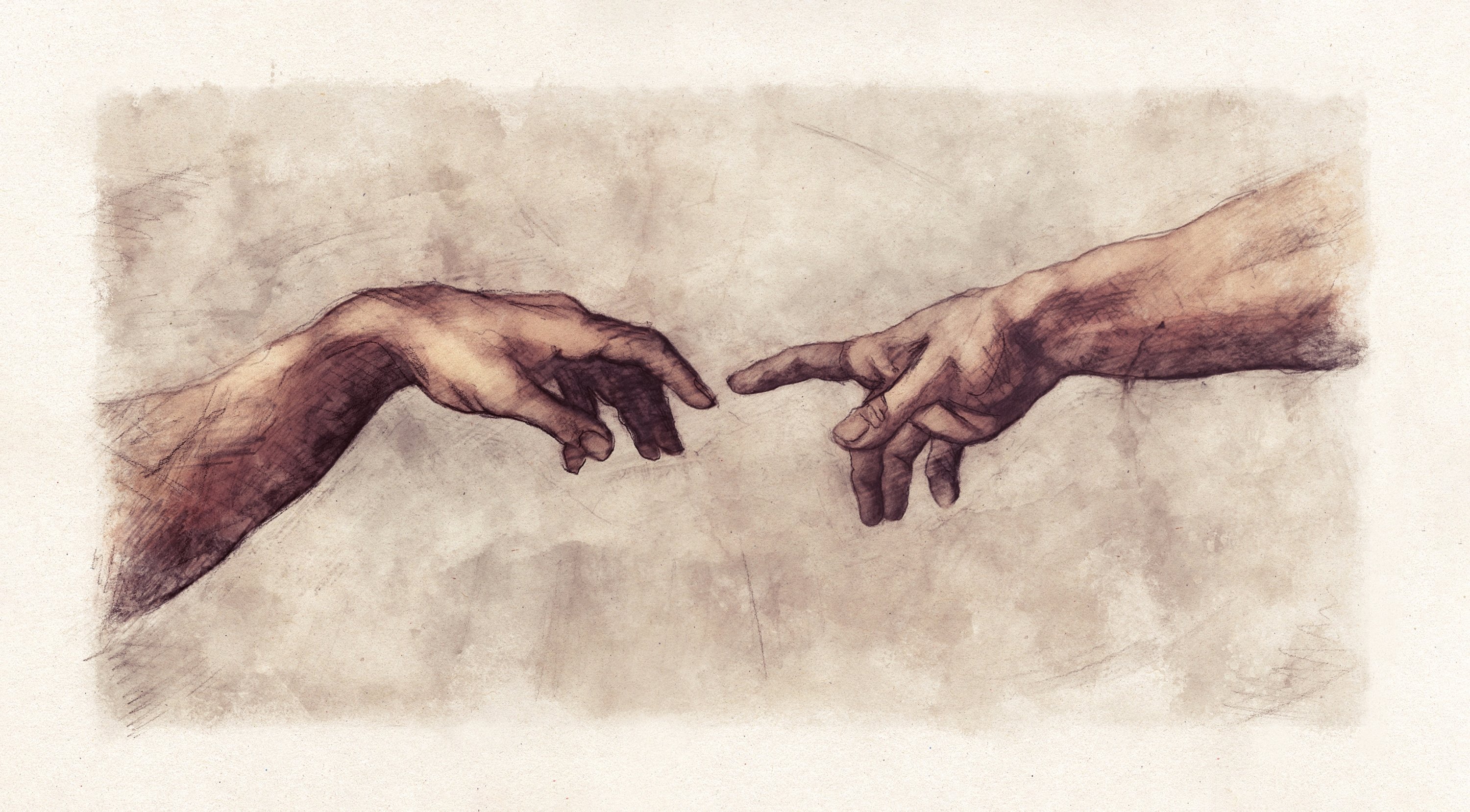
In holding "What Art Can Tell Us About Love" by Nick Trend, one is immediately struck by the quiet audacity of its premise: that art, across centuries and civilizations, is not merely a reflection of love, but one of its most enduring languages, perhaps even its most faithful archive. This proposition invites us into a deeper, more unsettling question: Is love simply a subject within art, or is it, more radically, the very condition that makes art possible at all? To explore this is to move beyond romantic cliche and into the psychological, philosophical and almost metaphysical terrain where desire, absence, memory and imagination converge.
The relationship between art and love is neither linear nor easily definable; rather, it is recursive, a continuous loop in which each generates, sustains and transforms the other. Art does not simply depict love; it reconfigures it, intensifies it, distorts it and, crucially, preserves it beyond the limits of lived experience. Love, in turn, does not merely inspire art; it destabilizes the self, creating the very rupture from which artistic expression emerges. In this sense, to ask whether art originates from love is to ask whether creation itself is born from a fundamental lack, a yearning for connection that can never be fully satisfied within the boundaries of reality.
Trend’s book approaches this dynamic not as a theoretical abstraction but as a lived and historical phenomenon, tracing how artists across time have turned to love fulfilled, unfulfilled, forbidden, imagined as both material and method. What becomes evident through his analysis is that love, in art, is rarely stable; it is almost always in flux, caught between presence and absence, between desire and loss. This instability is precisely what makes it so generative. Love, when disrupted, produces a kind of psychic pressure that demands articulation, and art becomes the medium through which this pressure is released. It is here that the insights of Sigmund Freud become particularly illuminating. Freud’s theory of sublimation offers one of the most compelling frameworks for understanding the connection between love and artistic creation. For Freud, the libido, the psychic energy associated with desire, is the primary driver of human behavior. However, because direct expression of this energy is often constrained by social norms and internal prohibitions, it must find alternative outlets. Art, in this context, is not a luxury but a necessity: a transformation of raw desire into symbolic form.
From a Freudian perspective, the artist is not someone who transcends desire but someone who is uniquely capable of negotiating it. Love, especially when unfulfilled or repressed, becomes a source of tension that cannot be resolved through ordinary means. Artistic creation offers a way to displace this tension, to give it shape and structure without confronting it directly. The artwork thus becomes a kind of compromise formation, a space where desire can be both expressed and disguised.
This duality is crucial. The artwork does not simply reveal love; it encodes it, often in ways that are indirect, fragmented, or symbolic. A portrait, for example, may appear to capture the likeness of a beloved, but what it truly conveys is the artist’s relationship to that figure, their longing, their idealization, their sense of loss. In this sense, art does not present love as it is experienced but as it is remembered, imagined or desired. It is not a mirror but a translation.
Freud’s emphasis on repression and sublimation, however, presents only one dimension of the relationship between art and love. Where Freud sees conflict, Carl Jung sees transformation. Jung expands the conversation by situating love within the broader framework of the collective unconscious, a repository of archetypal images and patterns that shape human experience across cultures and epochs. For Jung, love is not merely a personal emotion but an encounter with these deeper structures, an activation of symbolic forms that transcend the individual.
Central to Jung’s theory is the idea of projection, particularly in the form of the anima and animus, the unconscious representations of the feminine within men and the masculine within women. According to Jung, what we often experience as romantic love is, in part, a projection of these internal figures onto another person. The beloved becomes a screen onto which we project our own unconscious desires, fears and ideals. This process is inherently unstable, as it involves a misrecognition: we believe we are loving another, when in fact we are engaging with a part of ourselves.
Art, in this context, becomes a means of reclaiming these projections. Through the act of creation, the artist begins to recognize and integrate the unconscious material that has been externalized. Love, therefore, is not only a source of artistic inspiration but a catalyst for psychological development, a step in the process of individuation, through which the self becomes more whole.
What distinguishes Jung’s perspective is its emphasis on symbolism. Where Freud interprets art as a disguised expression of personal desire, Jung sees it as a manifestation of universal patterns. Love, in art, is not only about the relationship between two individuals but about the human condition itself, the tension between separation and unity, between individuality and connection. The recurring motifs of lovers, unions, separations and reunions are not merely narrative devices; they are expressions of archetypal dynamics that resonate across time.
If we return to Trend’s book with these frameworks in mind, we begin to see how art functions as both a personal and collective archive of love. Each artwork is a trace of a specific emotional experience, but it is also part of a larger pattern, a network of images and narratives that reflect the evolving ways in which humans understand and express love. The Renaissance idealization of the beloved, the Romantic obsession with longing and loss, the modernist fragmentation of intimacy, each of these moments reveals not only a shift in artistic style but a transformation in the cultural imagination of love itself.
And yet, despite these variations, certain constants remain. Love, in art, is almost always associated with intensity, with a heightened state of perception that alters the way the world is seen and experienced. This intensity is both exhilarating and destabilizing. It disrupts the ordinary, creating a sense of urgency that compels the artist to respond. In this sense, love is not simply a theme but a condition of heightened awareness, a state in which the boundaries between self and other, between subject and object, begin to dissolve.
This dissolution is particularly evident in artistic practices that emphasize immersion and participation, where the viewer is not merely an observer but a participant in the experience. In such contexts, love becomes not only a subject but a method, a way of engaging with the world that prioritizes connection, empathy and openness. Art, here, is not about representation but about relation; it creates spaces in which new forms of interaction and understanding can emerge.
In your own work, this relational dimension is deeply present. The recurring motifs of birds, for instance, function not only as symbols of freedom but as carriers of emotional resonance. They suggest movement, transition and the possibility of transcendence, qualities that are intimately connected to the experience of love. The luminous quality of your compositions, the interplay of light and form, creates a sense of presence that is both intimate and expansive. Here, love is not confined to a single narrative but becomes a field of possibilities, a space in which different emotional states can coexist.
This approach aligns with a broader understanding of art as a form of soft power, a means of shaping perception and fostering connection across boundaries. In a world increasingly defined by division and conflict, the insistence on love as a foundational principle becomes a radical gesture. It challenges the prevailing logic of competition and scarcity, proposing instead a vision rooted in empathy and interdependence. Art, in this context, becomes a site of resistance, not through confrontation, but through the creation of alternative realities in which connection is still possible.
And yet, it is important to resist the temptation to romanticize this process. Love, as both Freud and Jung remind us, is not inherently harmonious. It is fraught with contradictions, marked by ambivalence and often accompanied by pain. The same force that inspires creation can also lead to fragmentation and loss. Art does not resolve these tensions; it makes them visible. It creates a space in which they can be explored, articulated, and, perhaps, transformed. This is why some of the most powerful works of art are those that emerge from the experience of disrupted love, from longing, separation, or unfulfilled desire. These states generate a kind of intensity that cannot be easily contained. They create a gap, a space of absence that demands to be filled. Art inhabits this gap, transforming it into a site of presence. It does not eliminate the absence but reconfigures it, giving it form and meaning.
At the same time, art also has the capacity to imagine forms of love that do not yet exist. It can project possibilities, create new narratives, and challenge existing structures. In this sense, art is not only reflective but generative. It does not merely record what is but proposes what could be. Love, here, becomes not only a memory but a horizon, a direction toward which both the artist and the viewer are oriented.
The answer, perhaps inevitably, is both yes and no. Love is not the only source of artistic creation, but it is one of the most fundamental. It is not always present in a direct or recognizable form, but its traces can be found in the structures, gestures, and atmospheres of the work. More importantly, love is not only an origin but a destination. Art begins in desire but often ends in connection in the moment when the viewer recognizes something of themselves in the work, when the distance between self and other is, however briefly, dissolved.
In this sense, art and love share a common function: they both create bridges. They connect what is separate, make visible what is hidden, and give form to what resists language. They operate in the space between individuals, but also within the individual, linking different parts of the self. To create art is to engage in this process consciously to navigate the tensions, embrace the contradictions, and transform them into something that can be shared.
Ultimately, what "What Art Can Tell Us About Love" by Nick Trend offers is not a sentimental meditation on romance, but a lucid and quietly persuasive argument that art has always functioned as love’s most enduring record its afterimage, its residue, its echo across time. Moving through centuries of visual culture, the book reveals that love, whether sacred or profane, fulfilled or fractured, has persistently shaped the way artists see, select, and render the world, not as a decorative theme but as an organizing force of perception itself. And perhaps this is where the question of origin becomes less important than the question of continuity: not whether art begins with love, but how love survives through art, how it is preserved, transformed and rearticulated long after the original emotion has dissolved. In this sense, Trend’s work leaves us with a more subtle, yet far more profound realization: that every artwork carrying the trace of love is not merely an expression of feeling, but a form of endurance, proof that what once existed between two beings can still speak, still resonate and still be felt, even when everything else has vanished.