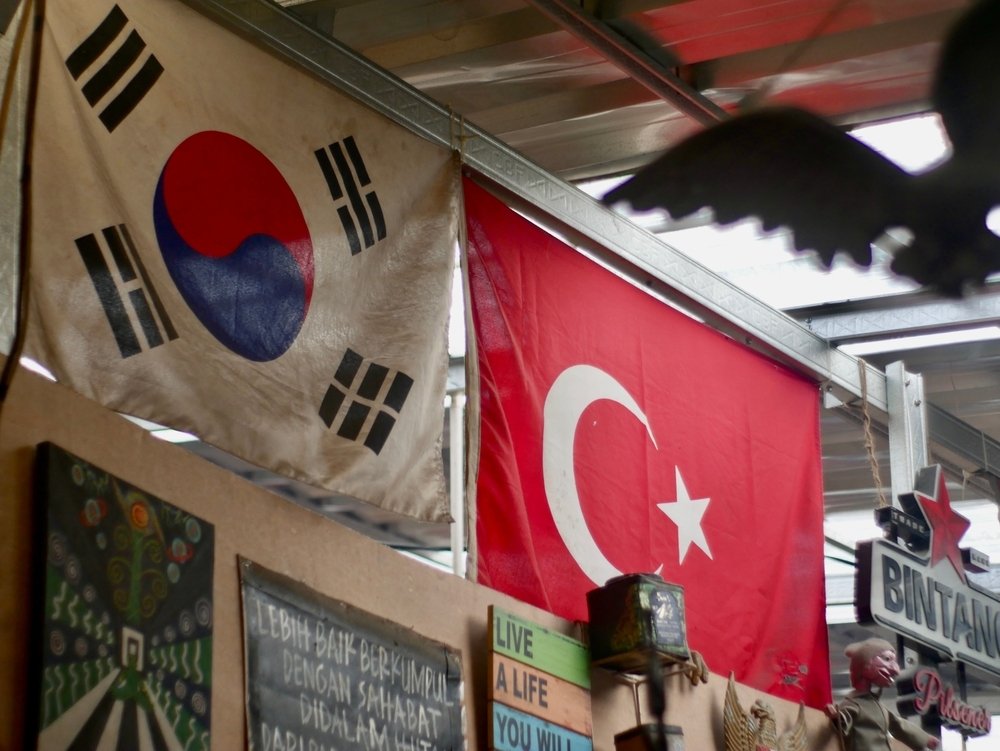
In today’s world, where influence is measured not only by economic and military power but also by cultural presence and intellectual bridges, the role of Turkish Studies around the globe stands out as a vital asset for Türkiye’s soft power. Much like Korea has successfully leveraged Korean Studies programs abroad as a foundation for the Korean Wave (Hallyu) and its growing global image, Türkiye too must recognize that the departments of Turkish Studies in universities worldwide are not simply academic units, but essential platforms of public diplomacy.
This year, the Department of Turkish-Azerbaijani Studies at Hankuk University of Foreign Studies (HUFS) celebrates the 52nd anniversary of Turkish Studies in Korea. Established in 1973 as the Department of Turkish Studies, it has since grown into a unique and respected institution. Over the past five decades, it has graduated more than 1,100 students, many of whom have gone on to serve in academia, government, business, media and diplomacy. These alumni have played indispensable roles in nurturing Korea-Türkiye relations, contributing as cultural mediators, policy advisers, translators, business executives and scholars.
In a way, these graduates have become Türkiye’s voluntary cultural ambassadors, embodying the spirit of “people-to-people diplomacy.” Their careers exemplify how education in Turkish language, history and culture translates into long-term contributions to bilateral relations, mutual understanding and cross-regional cooperation.
Korea’s own experience underscores the strategic importance of supporting area studies. Through institutions such as the Academy of Korean Studies, the Korea Foundation, KOICA, and the Sejong Institute, Korea has systematically supported the growth of Korean Studies worldwide. This sustained investment has cultivated a global community of scholars and professionals who act as natural allies of Korea. The flourishing of Korean Studies has, in turn, bolstered the global success of K-pop, Korean drama, cuisine and brands, showing how academic foundations and cultural industries reinforce each other.
Türkiye’s Asia Anew Initiative and wider cultural diplomacy goals can draw inspiration from this model. Supporting Turkish Studies programs is not simply about teaching language; it is about training future middlemen of dialogue, individuals who can bridge societies, negotiate cooperation, and amplify Türkiye’s voice in the international arena.
If Türkiye aspires to strengthen its influence across regions, from East Asia to Europe and Africa, it must treat Turkish Studies as a strategic project of soft power. Departments like HUFS in Korea, as well as others across Asia, Europe and North America, should be viewed as long-term investments in Türkiye’s global presence. With more structured funding, academic exchanges and joint research projects, these programs can be revitalized and multiplied.
Ultimately, graduates of Turkish Studies programs are more than linguists; they are unofficial envoys who can shape public opinion, foster trust and generate goodwill for Türkiye. By nurturing them, Türkiye invests in a future where its culture, language and diplomacy extend far beyond borders.
As HUFS celebrates over half a century of Turkish Studies in Korea, we are reminded that cultural and academic bridges built by such departments are not just reflections of the past – they are also the foundation for Türkiye’s future in global diplomacy.