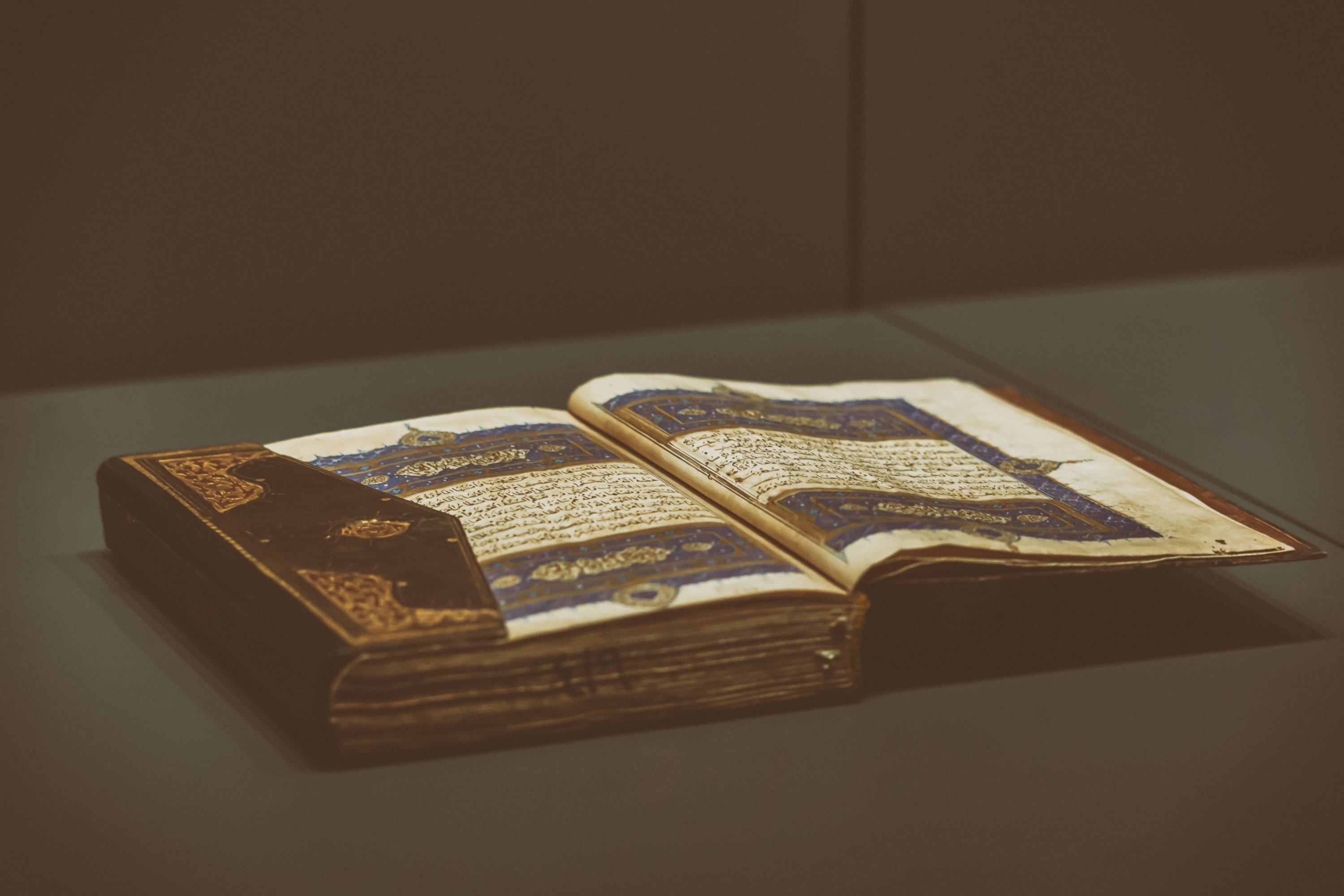
Calls for repatriation aim to decolonize knowledge and challenge stereotypes that minimize Arab and Islamic contributions to intellectual history.
For centuries, Islamic manuscripts – encompassing theology, philosophy, medicine, mathematics, astronomy and the arts – have circulated far beyond their places of origin. Many of these works, however, were displaced through colonial extraction, antiquarian trade or scholarly collection and today reside predominantly in Western institutions such as the British Library and the National Library of France. While their preservation in these institutions has ensured survival and accessibility to specific scholars, their absence from the Arab and Islamic worlds has created a cultural and intellectual gap, disconnecting local scholars from their own intellectual heritage. The repatriation of manuscripts would not only restore cultural ownership but also reintegrate Arab and Islamic intellectual traditions into contemporary debates on science, philosophy, arts and the humanities.
For instance, the "Maqamat al-Hariri," a lavishly illustrated Abbasid Arabic manuscript from early 13th-century Iraq, is considered a masterpiece of Arab miniature painting from an early miniature school that has been overshadowed by later Persian, Mughal and Ottoman schools. This manuscript was taken away from its origin and placed in the British Library, an institution that holds almost 15,000 Islamic manuscripts, making it the owner of one of the world’s richest collections. Other institutions hold later versions of the “Maqamat,” such as the National Library of France and the National Library of Austria.
While guarding these artistic manuscripts keeps them safe, they nevertheless remain inaccessible to a wide audience of scholars, artists and intellectuals. This is just one example of how the acquisition of manuscripts can lead to severe disconnects between people and their artistic legacy. What if this manuscript and its literary content were celebrated in Baghdad, Aleppo, Damascus or Cairo, cities where events took place? Won’t they return to be part of the artistic visual vocabulary? Won’t they inspire artists to transform them into various creative modes, be it classical, folk or pop?
Islamic manuscripts held in Western collections are extensive. Listing them is an almost impossible endeavor, as there are several scientific treaties, astrological as well as mathematical manuscripts, poetry, history and miniatures. The Maqamat is just one example of many that represent diverse fields, including "Kitab al Diryaq" ("The Book of Antidotes"), a richly illustrated 13th-century Arabic manuscript from Mosul, and "Kalila wa Dimna," a collection of fables.
Islamic manuscripts embody centuries of engagement with Greek, Indian and Persian knowledge, as well as original contributions to arts, medicine, science and other fields. Their return would enable local scholars and institutions to directly engage with these primary sources rather than relying solely on digitized substitutes, translations or Western-authored editions. Repatriation would restore continuity between past and present scholarly communities, affirming that Arab and Islamic civilizations were not passive inheritors but active contributors to global intellectual history.
The colonial acquisition of Islamic manuscripts enabled Western scholars to study, translate and publish Islamic texts within Eurocentric frameworks, sometimes portraying Islamic civilization as a transmitter rather than an innovator, highlighting specific aspects while hiding others according to their own agendas. The return of manuscripts would support efforts to decolonize knowledge by enabling Arab and Islamic institutions to curate and interpret their heritage through local perspectives. This shift would reposition Arab and Islamic intellectual traditions as central, rather than peripheral, to world history, thereby challenging stereotypes that minimize scientific and artistic achievements.
Access to original manuscripts provides unparalleled opportunities for researchers. The repatriation of manuscripts would allow universities to establish centers of manuscript studies, attract collaborations and nurture new generations of scholars. This would lead to enriched dialogue and foster collaborative research projects.
Western institutions resist repatriation on the grounds of ownership and preservation. This resistance, or rather refusal to return the manuscripts, represents the imperial nature of these institutions. The negotiations with the cultural institutions require patience, persistence and diplomatic skills. However, unconventional approaches could lead to solutions, such as shared custodianship or long-term loans to libraries and cultural centers in the region. The least that can be done is to have digital repatriation, although the ultimate goal must be the empowerment of Arab and Islamic institutions to be custodians of their own heritage. This requires investment in conservation facilities, training of specialists and sustainable archival systems to unlock the full impact of these manuscripts.
The return of Islamic manuscripts would constitute more than an act of restitution. It would represent the revitalization of distinct cultural and religious intellectual traditions within global scholarship. These manuscripts embody humanity’s shared pursuit of wisdom. By decolonizing knowledge, strengthening education and enriching dialogue, repatriation would positively reinforce the recognition of Arab and Islamic contributions to world history.