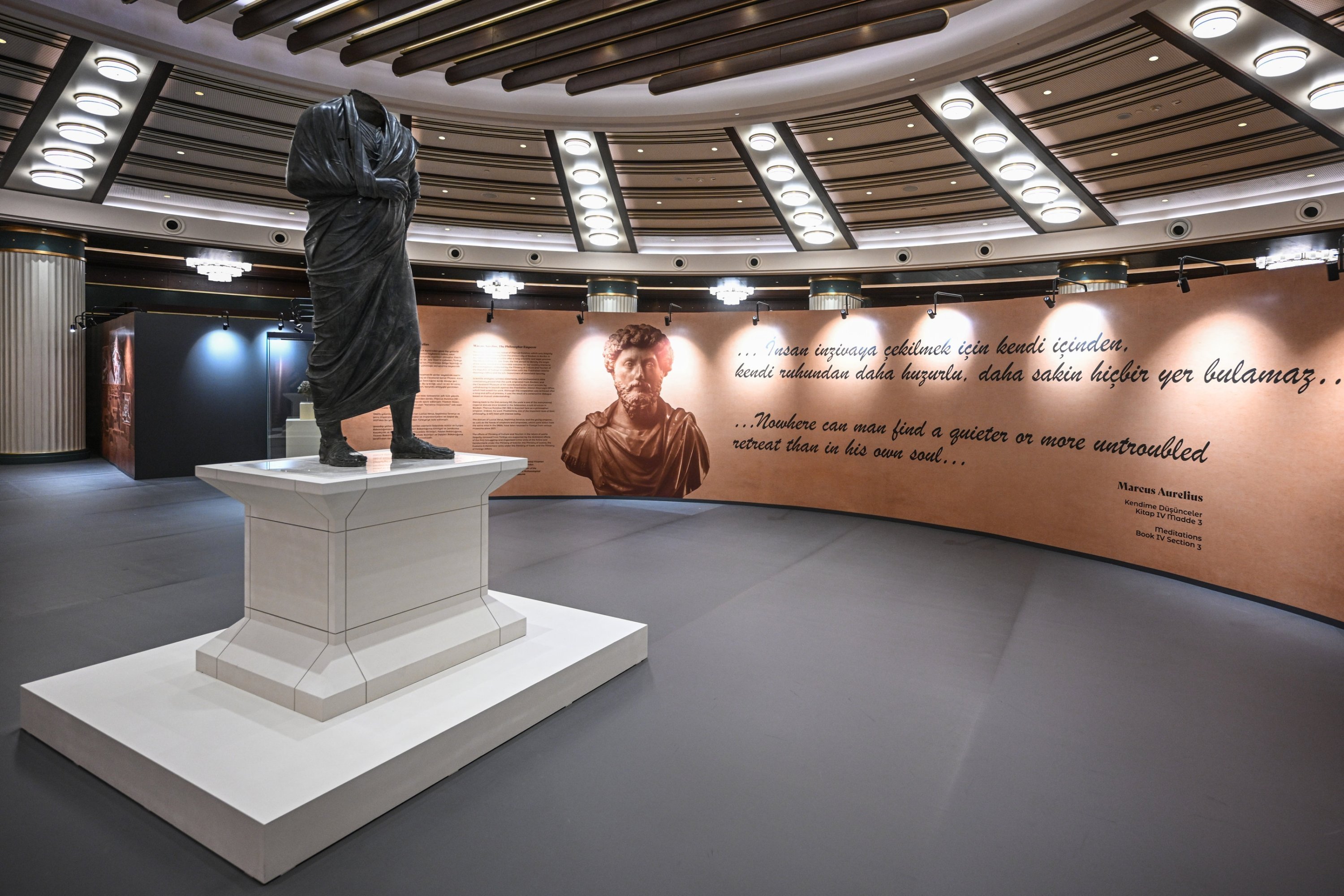
Türkiye repatriated 180 cultural artifacts in 2025, bringing the number of items recovered from abroad over the past 23 years to 13,448, according to the Ministry of Culture and Tourism.
The ministry said cultural assets taken out of the country through illegal trafficking are being located and identified through scientific, legal and diplomatic efforts, with international cooperation accelerating returns.
Culture and Tourism Minister Mehmet Nuri Ersoy said museums, auction houses and private collections abroad are being reviewed and legal processes are pursued in cooperation with relevant authorities.
In a post on Turkish social media platform NSosyal, Ersoy announced that the General Directorate of Cultural Assets and Museums facilitated the return of 180 items this year, adding to long-running recovery efforts that began in 2002.
Among the repatriated pieces is a bronze statue of Marcus Aurelius originating from the ancient city of Boubon in Burdur, which was returned from the U.S.
Cooperation with Switzerland led to the return of seven artifacts of Anatolian origin seized in the Canton of St. Gallen.
Other items returned to Türkiye include a Urartian-period bronze belt, bull-headed helmets, a Lydian silver phiale, a Roman Imperial-period armored emperor statue and 83 bronze coins of Anatolian mint origin.
Over two decades, most repatriations have come from the U.S. through coordination with judicial authorities and the Metropolitan Museum of Art in New York. Switzerland is the second-largest source of returns, with earlier recoveries also recorded from Germany and other countries.
Türkiye’s cultural heritage spans Hittite, Urartian, Lydian, Roman, Byzantine and Ottoman periods, with more than 20 UNESCO World Heritage sites.
UNESCO highlights the protection of cultural property under the 1970 Convention on prohibiting the illicit import, export and transfer of ownership of cultural property, emphasizing the international responsibility to safeguard heritage.
Global trafficking trends show an increase in organized networks operating through conflict zones and online markets. Interpol and UNESCO report expanded operations in 2025.
Operation Pandora IX, coordinated by Spain’s Guardia Civil alongside Europol, INTERPOL and the World Customs Organization, led to about 80 arrests and the seizure of more than 37,700 cultural objects in 2024-2025 efforts, with cyber patrols resulting in 4,298 seizures.
The ministry said strengthened cooperation, targeted investigations and expanded monitoring of international auctions and sales platforms have contributed to the recovery of thousands of items in recent years.