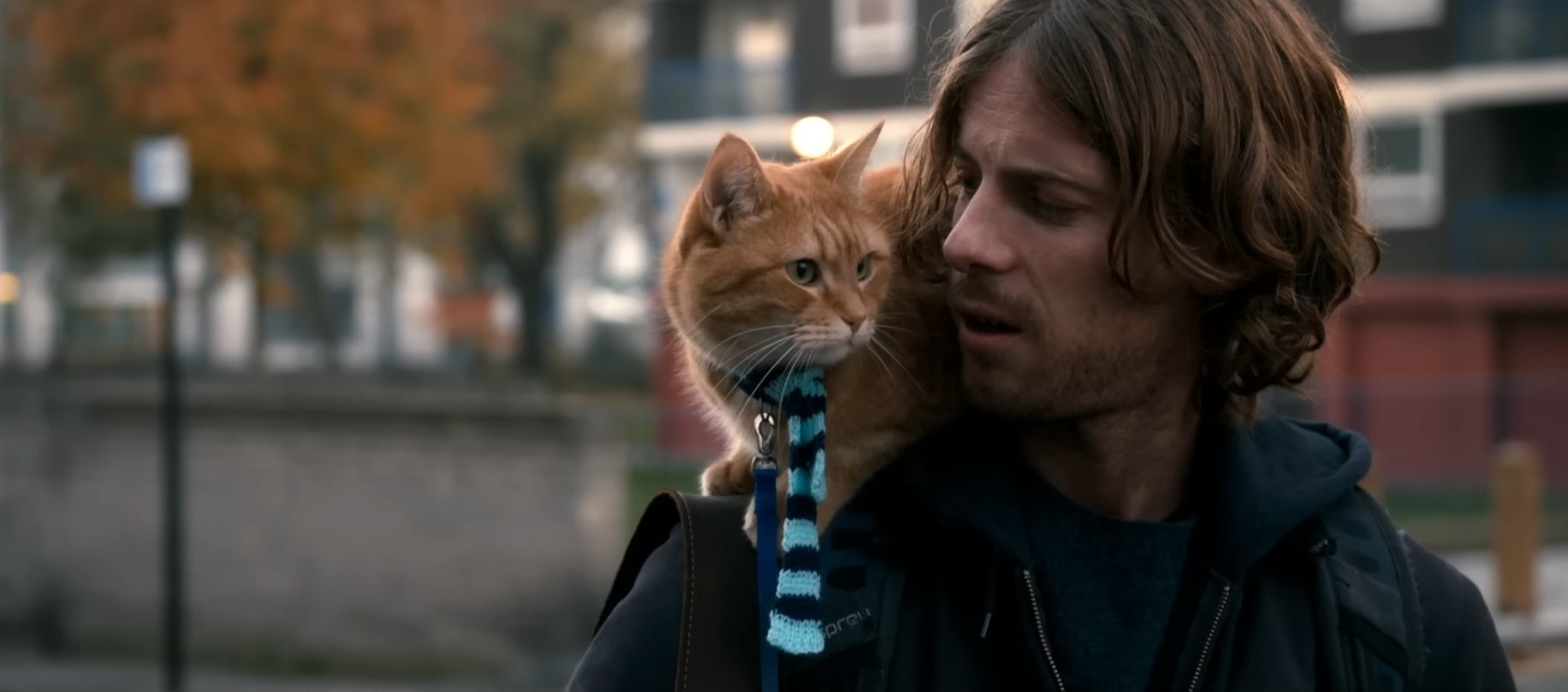
Directed by Roger Spottiswoode, this film tells the true story of how an injured and ill street cat named Bob “adopts” James Bowen (Luke Treadaway), a homeless man struggling with substance addiction and profoundly transforms his life. Through James’s story, the film reflects the loneliness of a cold, merciless London and how that loneliness is quietly reshaped.
Cities do not merely hide some people. They slowly erase them. "A Street Cat Named Bob" tells the story of a man standing at the very center of this erasure, someone who is reshaped not only to keep himself alive, but to keep his silent companion alive as well. James Bowen is less a protagonist than a pendulum suspended in time: worn down by rain, muffled by noise, ignored by crowds that refuse to acknowledge his flesh, his bones and worst of all, his soul.
Bowen’s life is woven more from repetition than meaning. Days relentlessly chase one another, nights challenge the dawn, the body works while the mind never quite returns home. In truth, that home does not fully exist anymore.
This repetition consumes existence to its very end, until Bob enters the scene. The cat’s arrival is more than a turning point. It is like the gentle seepage of sunlight through a crack in life, a sweet ache felt on the skin. Bob is a silent being who enters through a fractured place in existence. He makes no grand speeches, offers no promises, does not guarantee salvation. He does not rage, harbor resentment, destroy, or shatter things. He is simply there. And he exists only to love and to teach love.
The true appeal of "A Street Cat Named Bob" lies in its reverse narrative: a man may appear to save a cat, but in reality, it is the cat who saves the man.
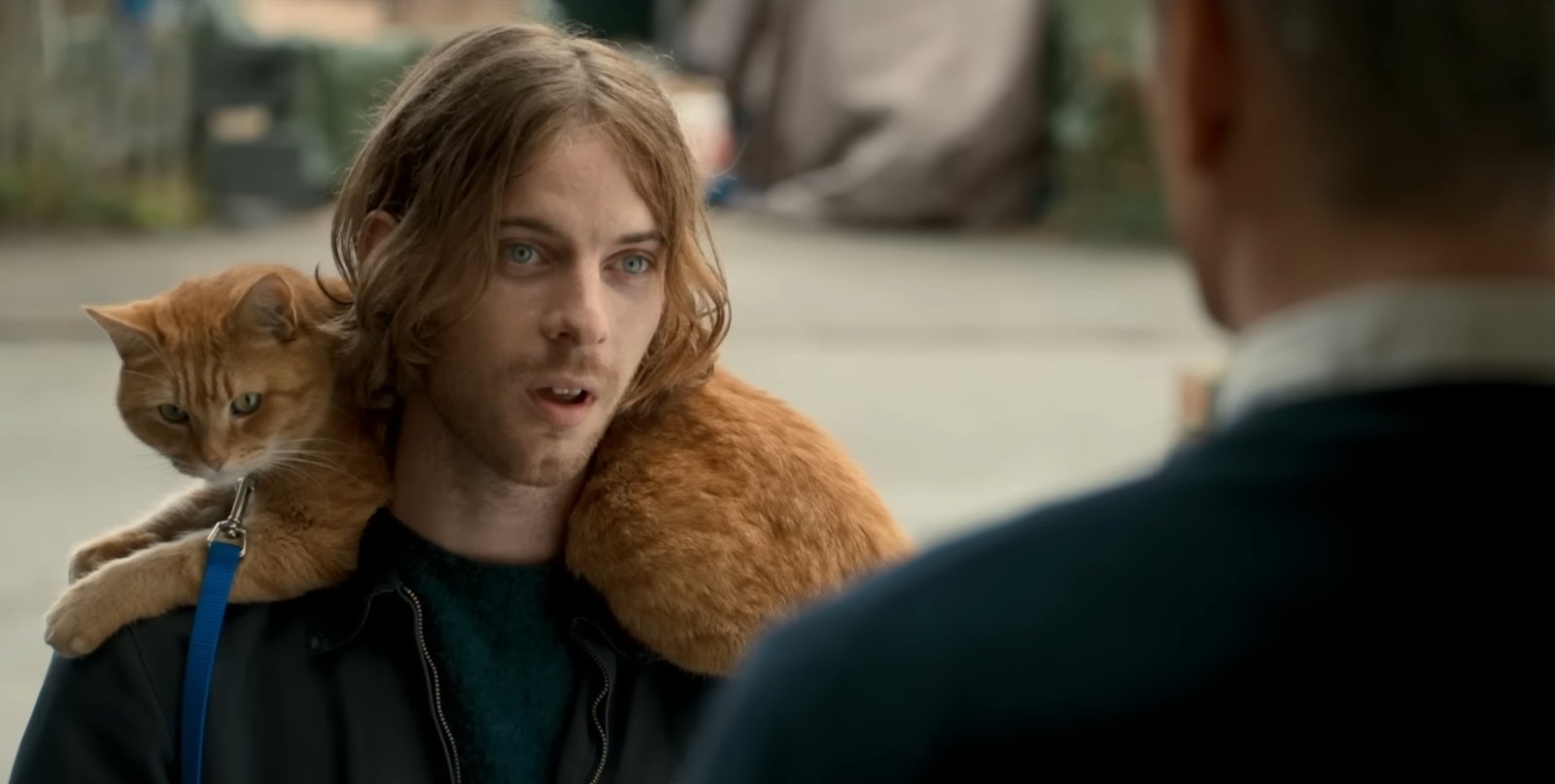
With Bob’s presence, Bowen’s experience of time changes. The day is no longer merely a burden to be endured. It becomes a field of struggle that carries responsibility within it. Caring for another living being forces a person to take their own existence seriously. Bowen establishes, for Bob, the order he could never assume for himself. In this way, compassion heals not by turning inward, but by flowing outward.
James Bowen’s story is a cinematic reflection of trauma-related life patterns frequently encountered in psychological literature. What defines him goes far beyond addiction itself; it is the inner void that makes addiction possible. A disrupted sense of safety in childhood has already undermined the foundation of all the relationships Bowen forms with the world as an adult. Life is not a space to be engaged with; it is a process that must simply be endured.
Bob’s entrance into the narrative constitutes a therapeutic encounter in this context. Yet this relationship does not establish a classical therapeutic dynamic of “healing.” The cat’s influence on Bowen is based less on guidance and more on regulation and affection. The human-animal interaction here becomes a nonverbal form of therapy. Rituals, repetitions and silent companionship soothe Bowen’s nervous system and partially repair the disconnection between his body and mind.
From a philosophical perspective, the film carries the everyday reflections of existential thought. Bowen’s life aligns with the absurdity described by Camus. There is labor, there is repetition, but there is no meaning. With Bob, the repetition remains, but its direction changes. Meaning emerges not from abstract ideals, but from concrete responsibilities. Bowen’s freedom reveals itself in the courage to assume responsibility for another living being.
Bob becomes a kind of regulatory center within Bowen’s inner world. Daily routines, feeding rituals, and shared silent moments gather Bowen’s fragmented attention, making it possible for his body and mind to remain in the same place at the same time. What modern psychology defines as “emotional regulation” is conveyed in the film not through theory, but through lived experience. The cat’s presence restores a sense of continuity to Bowen’s world and continuity is the precondition of trust.
The philosophical layer of the narrative reflects existentialism as it seeps into everyday life. Bowen’s existence is built more on repetition than meaning: playing music on the street each day, standing on the same corner, encountering similar faces. Before Bob, this cycle produces only exhaustion. With Bob, it takes on a different hue. Meaning begins to draw nourishment not from grand ideals, but from small ones. The film does not explicitly present Sartre’s notion of freedom or Camus’s absurd. Instead, it recreates their core questions at street level: Can a human continue living without finding a reason greater than themselves?
At this point, Bob becomes the most quietly powerful carrier of an ethical call. Emmanuel Levinas’s concept of “the face of the Other” appears here as an encounter that requires no words.
Although "A Street Cat Named Bob" is remembered by many viewers as a friendship film, it rests on a distinctly dramatic foundation. The relationship between James Bowen and Bob is not a purely happy union. It is woven with fragility from beginning to end. This companionship, born on the streets, tells us not only about love for animals, but also about the inherently grief-adjacent nature of that love. From a psychiatric perspective, every bond carries the potential risk of loss. Love always contains the possibility of parting.
For psychologists or psychiatrists working with individuals who have lost a companion animal, one of the most common issues is the lack of recognition given to this grief. Society often views the loss of an animal as a “lighter” or simpler pain. Yet clinical observation tells us otherwise. Companion animals are not merely beloved beings in human lives. They are emotional regulators, fixed points in daily routines, and often the sole source of unconditional acceptance and love. Their loss, therefore, signifies not only the death of a loved being but the removal of a psychological stabilizing element.
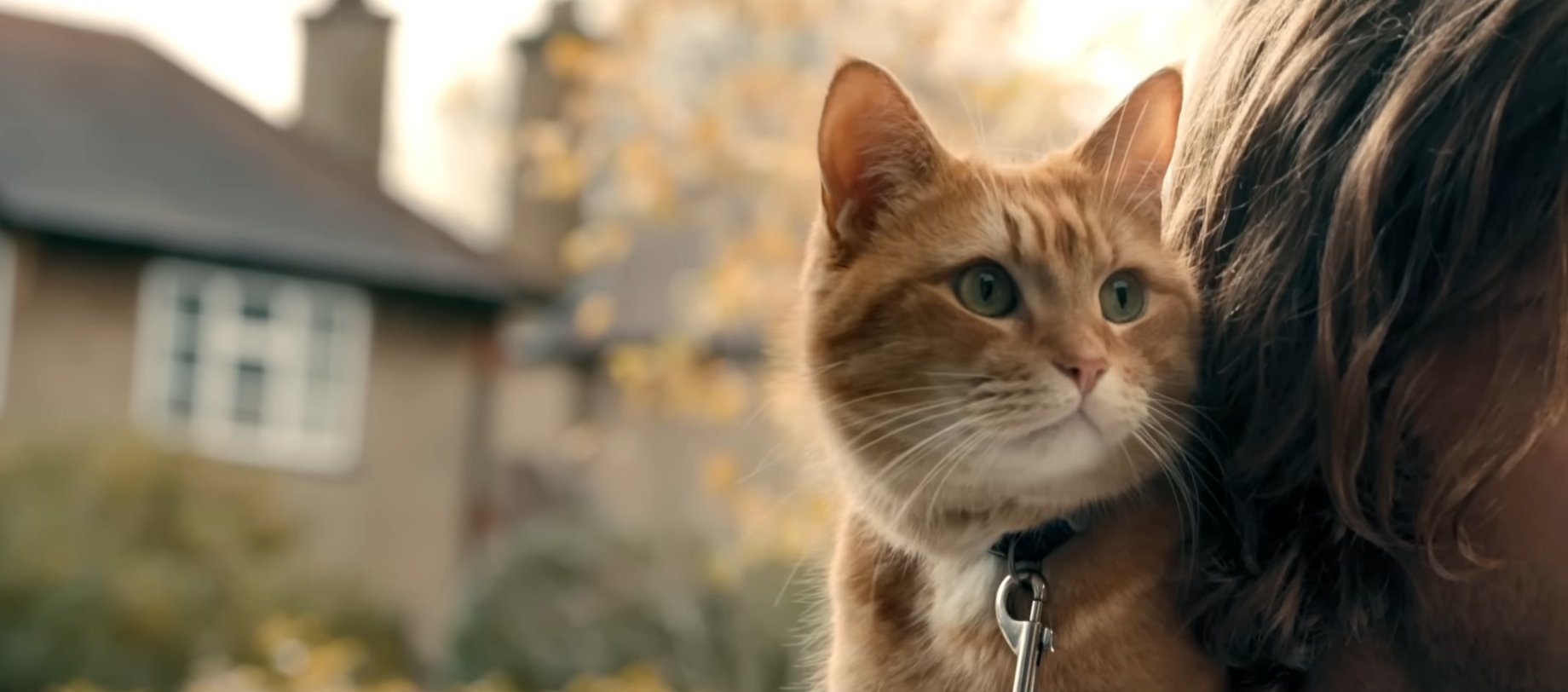
In the film, James Bowen’s attachment to Bob goes far beyond a typical owner-animal relationship. For James, Bob is a partner in survival. For an individual battling addiction, poverty and social exclusion, Bob’s presence also serves a neuropsychological function. Bob calms James’s nervous system, gives rhythm to his days, and instills a sense of responsibility. In psychiatric literature, such relationships are described as “regulatory bonds.” When these bonds are lost, grief manifests not only emotionally but also through physical symptoms.
Insomnia, appetite changes, attention difficulties and intense feelings of guilt – commonly observed in individuals who have lost a companion animal –are therefore unsurprising. James’s panic and helplessness during Bob’s illness resemble a preview of grief itself. James has not yet lost Bob, but he has confronted the possibility of losing him. Clinically, this is known as “anticipatory grief.” The moment a person realizes that a loved being may be harmed, they begin to experience the emotional weight of loss.
One of the most challenging emotions in grief is guilt. People who lose a companion animal often torment themselves with thoughts such as “I should have noticed sooner,” “I could have taken better care,” or “I should have been there.” James’s inner questioning during Bob’s illness is a remarkably realistic example of this mechanism. What matters is recognizing that these thoughts are not evidence of neglect, but a natural consequence of attachment. As love deepens, so does the illusion of control; when this illusion collapses after loss, what remains is intense self-blame.
From a psychological standpoint, the greatest problem of companion animal grief is its invisibility. People often grieve in silence because they are met with responses like “you’re exaggerating” or “it was just an animal.” This leads to suppressed grief. Yet suppressed grief does not disappear. It returns in other forms. Depression, anxiety, somatic complaints, or withdrawal from relationships. The film portrays this silence without judgment. James’s pain is expressed not through shouting, but through stillness.
In this way, the film clearly shows that love also carries weight, responsibility and the risk of loss. While Bob’s presence heals James, it also makes him vulnerable. Psychological maturity begins precisely here: in accepting that love is not safe. A person knows that one day they will lose the animal they love, yet they love it anyway. This is one of the bravest aspects of being human.
Hope in grief is often misunderstood. Hope is not the disappearance of pain; it is the transformation of pain. Clinical experience shows that healthy grieving does not erase loss. It integrates it into one’s life story. There comes a day when mentioning a companion animal’s name brings not only tears, but also gratitude. The memories James shares with Bob demonstrate that such integration is possible. Bob does not leave James’s life. He remains as a transformative imprint.
For this reason, the most honest sentence one can say to someone grieving a companion animal is this: The pain will not disappear, but it will not destroy you either. Over time, it will become more bearable. Love does not end with loss. It changes direction. To anyone reading these words while grieving today: the pain you feel is not a sign of weakness, but of your capacity to form bonds. And for someone who can form bonds, life can still generate meaning, despite everything.
The film quietly reminds us of this: companion animals enter our lives like guests, but leave marks like homeowners. When we lose them, the interior of the house changes, but the walls are still standing. Grief is the process of learning this new order. It cannot be rushed. But when lived fully, it makes a person more sensitive, more compassionate and more alive. And perhaps this is the greatest legacy of Bob’s story: even when tested by loss, love continues to produce meaning.